Friendly Fukuoka – Blooming Cherry Blossoms around Kyushu

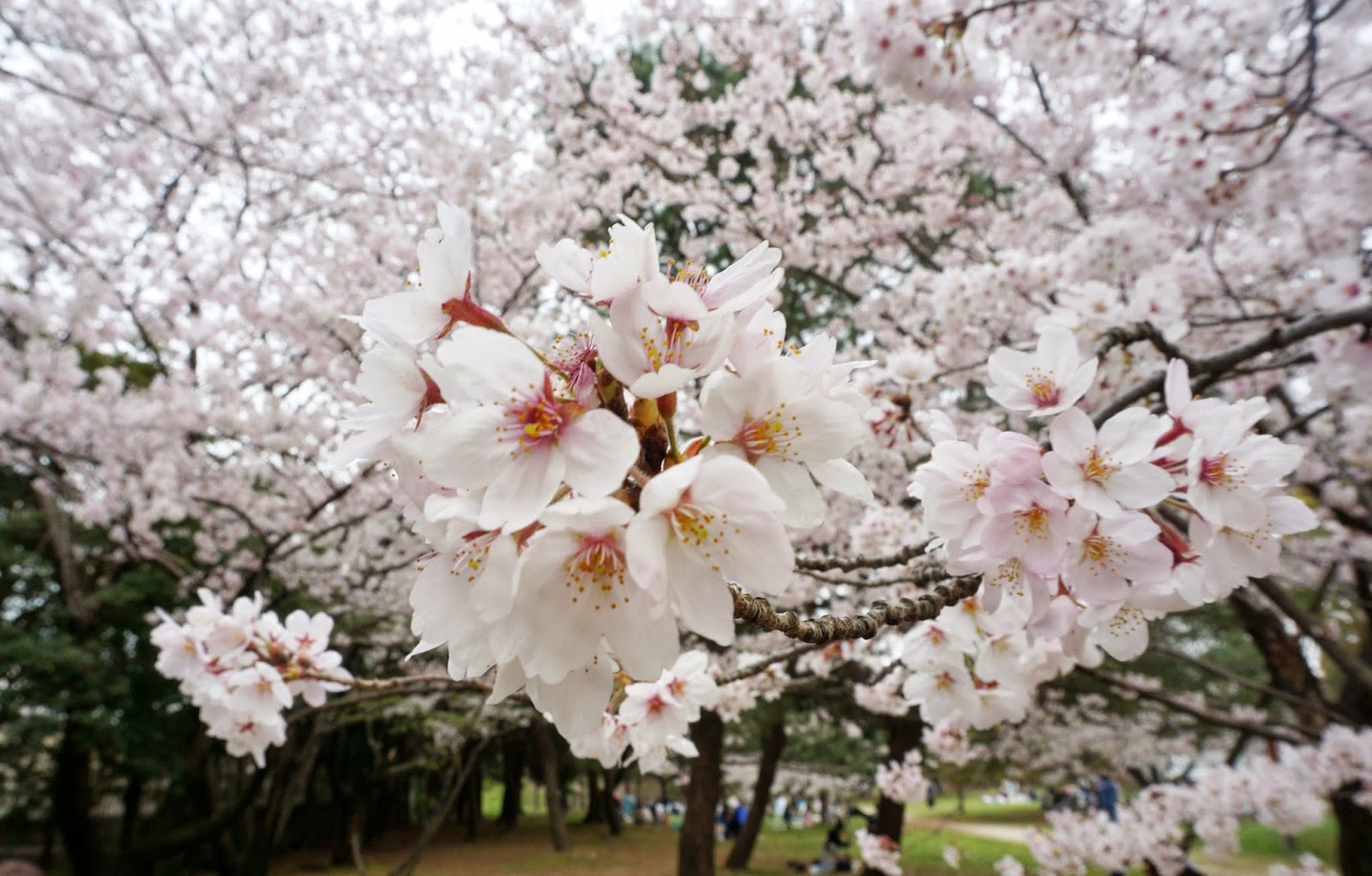
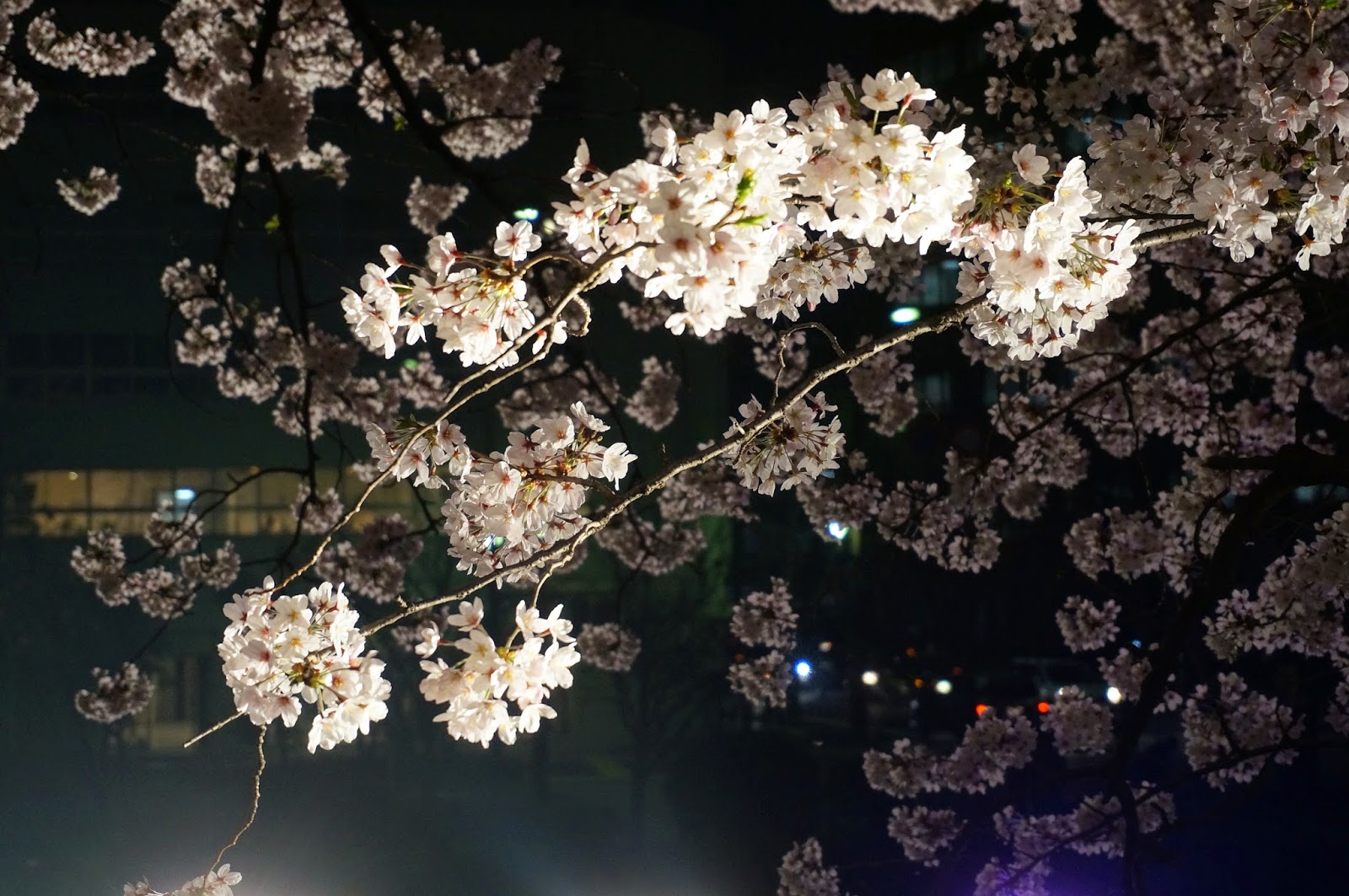
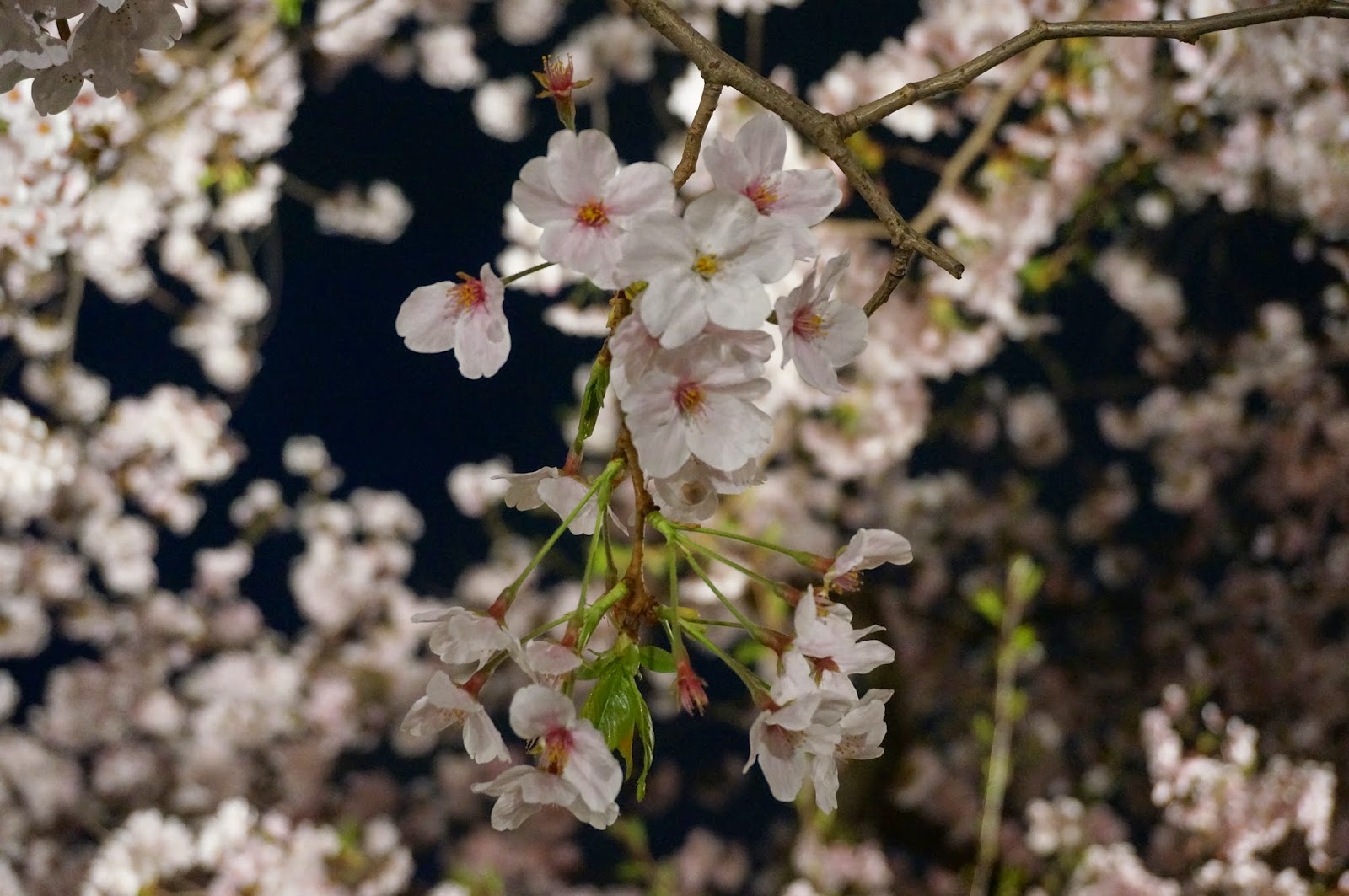
While writing this post the leaves of the cherry blossom trees are already green. The sea of pink petals has fallen down and the contrast with the beautiful blooming trees couldn’t be bigger; piles of dried up brown petals are scattered on the streets instead. Even though we could enjoy the sakura (the Japanese word for cherry blossom) for about a week, that week passes by too quickly. I regret not enjoying them more, not going to a hanami (Cherry blossom viewing party) one more time, not trying to take better photographs, not going to the temple across the street while the tree was blooming… Japanese say that the beauty if the sakura lies in the fact that it blooms so shortly; we should enjoy them in that short time to the fullest, like we should enjoy life to the fullest while it lasts. That’s the beautiful thing of sakura. For me it is a little bit saddening as well, but that’s how it is.

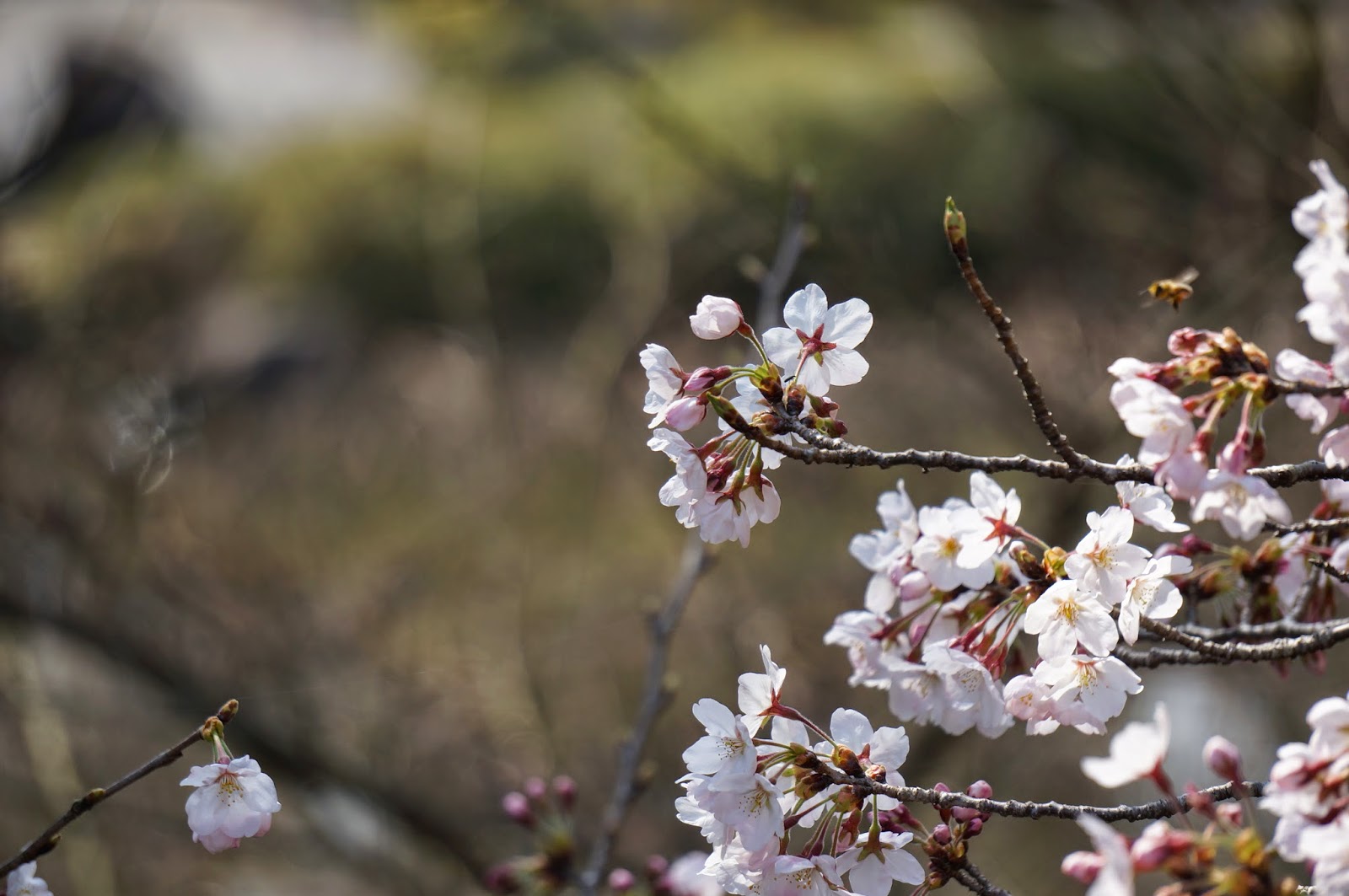
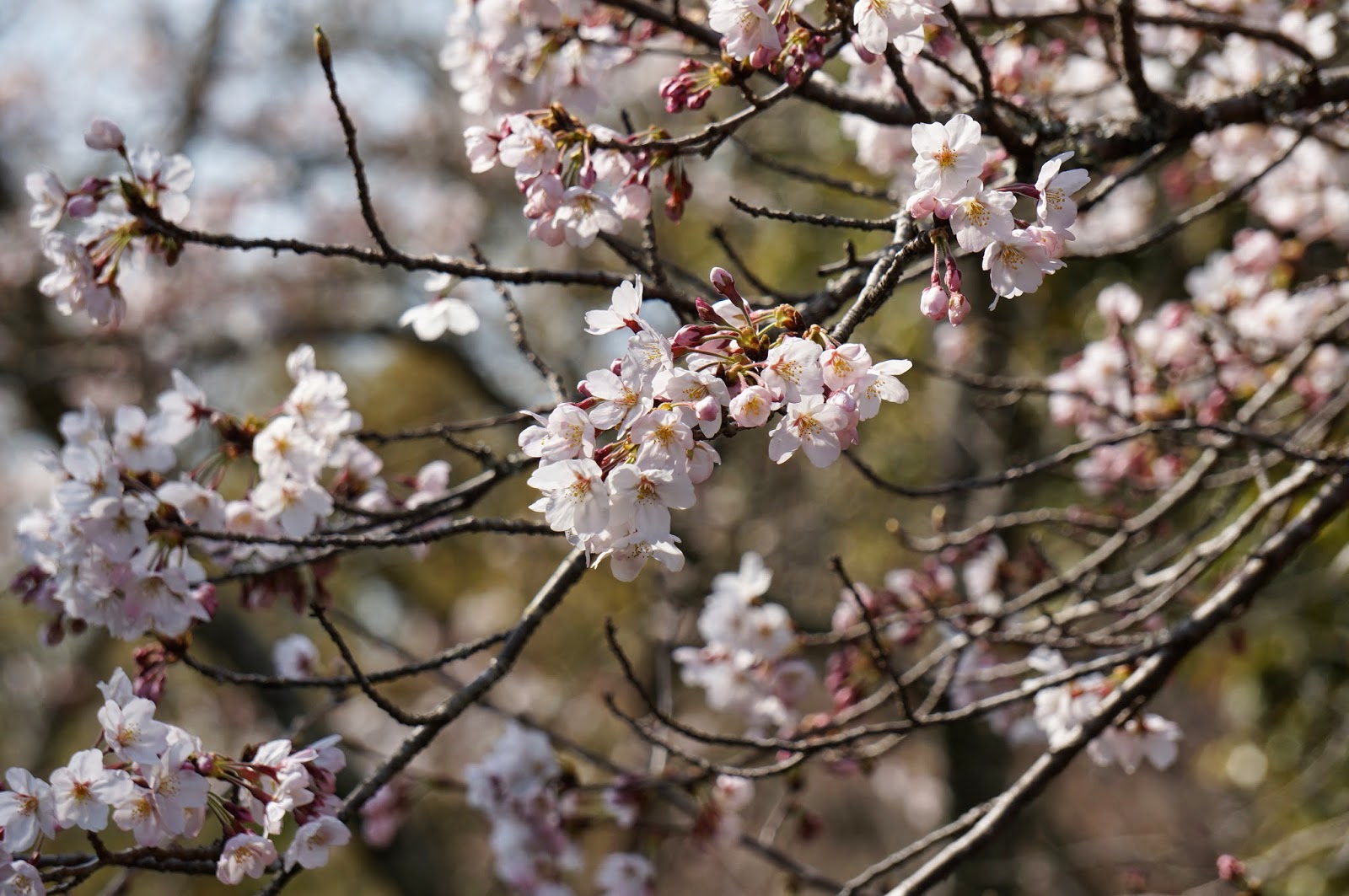
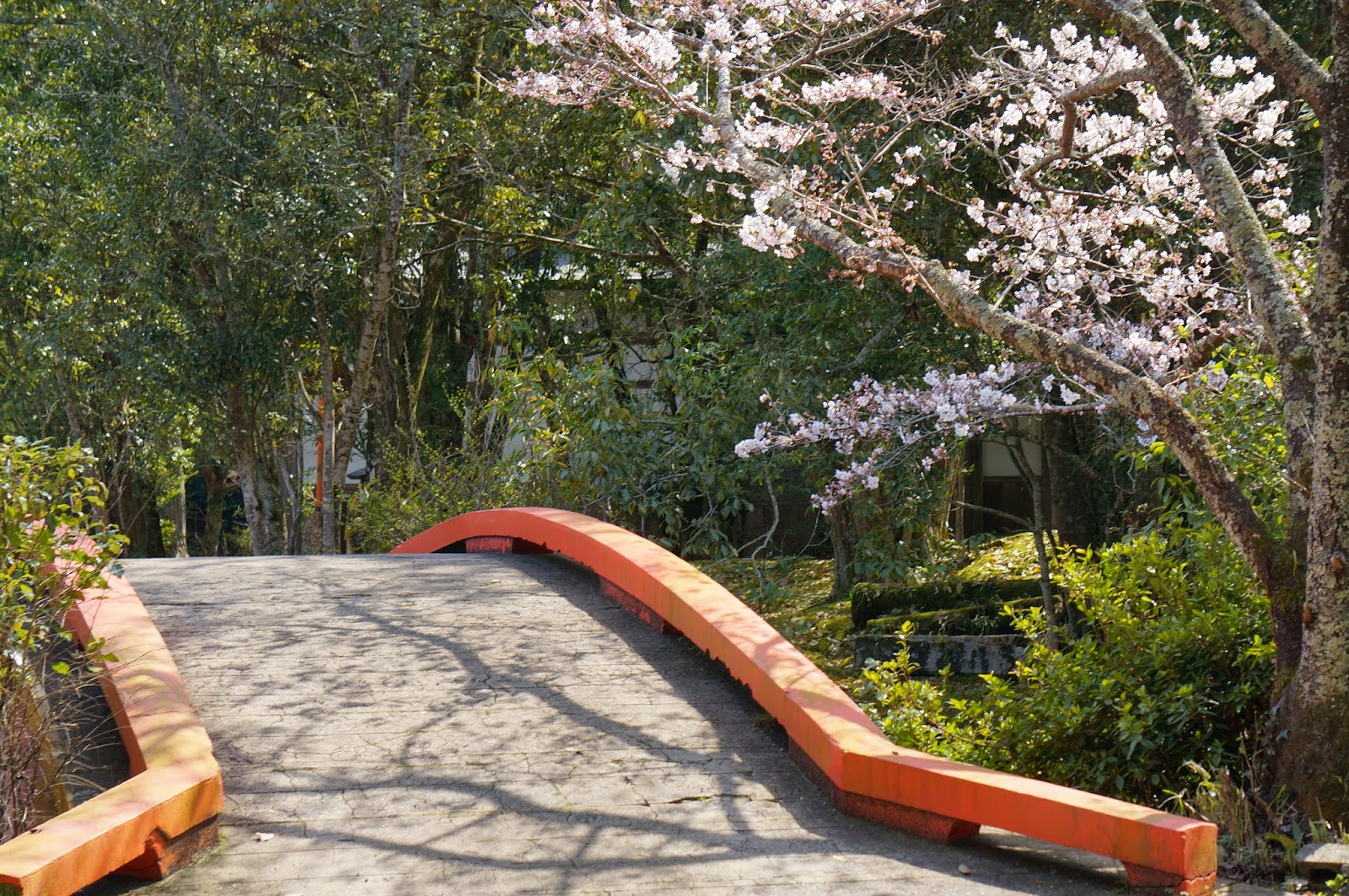
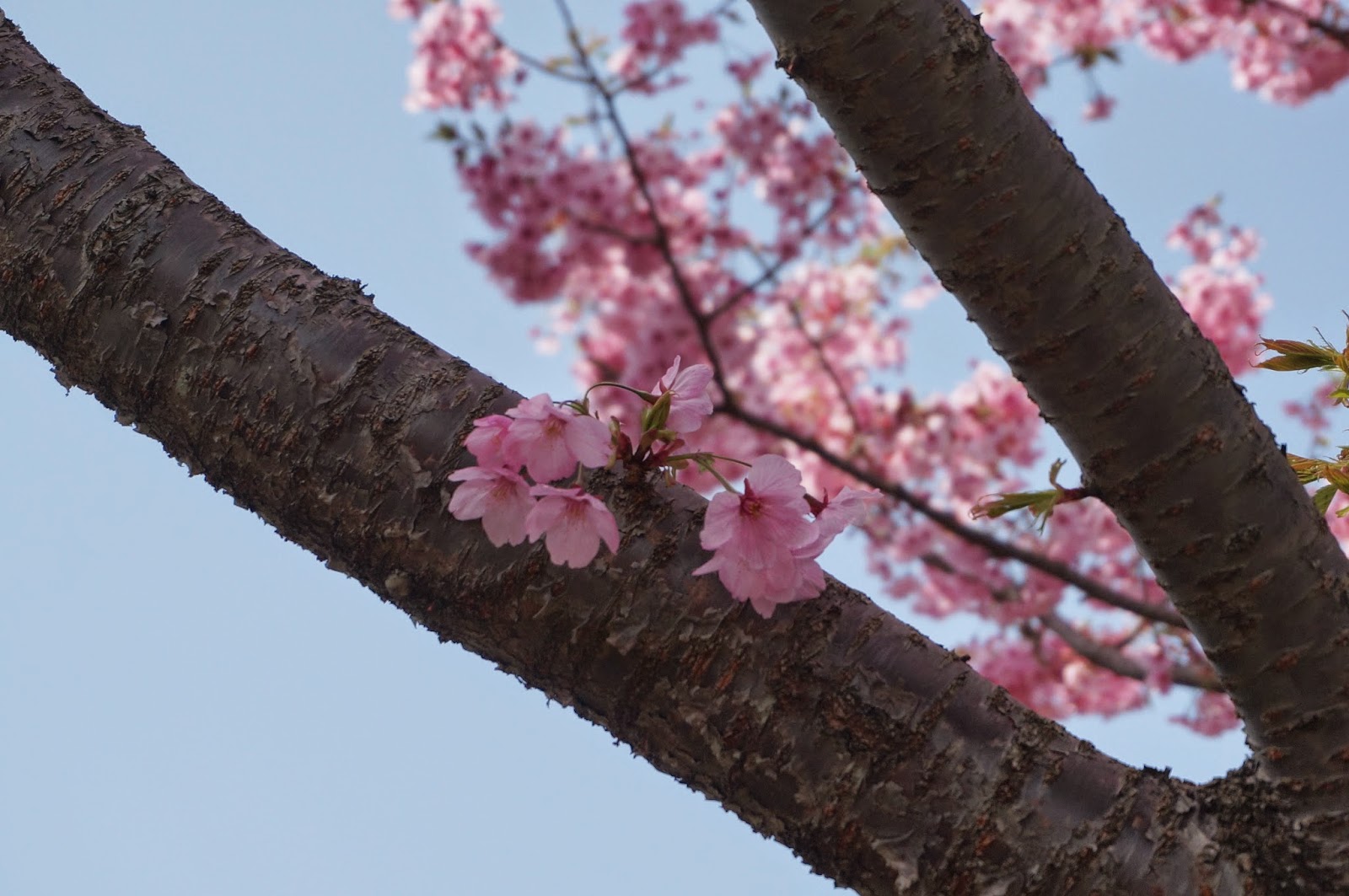
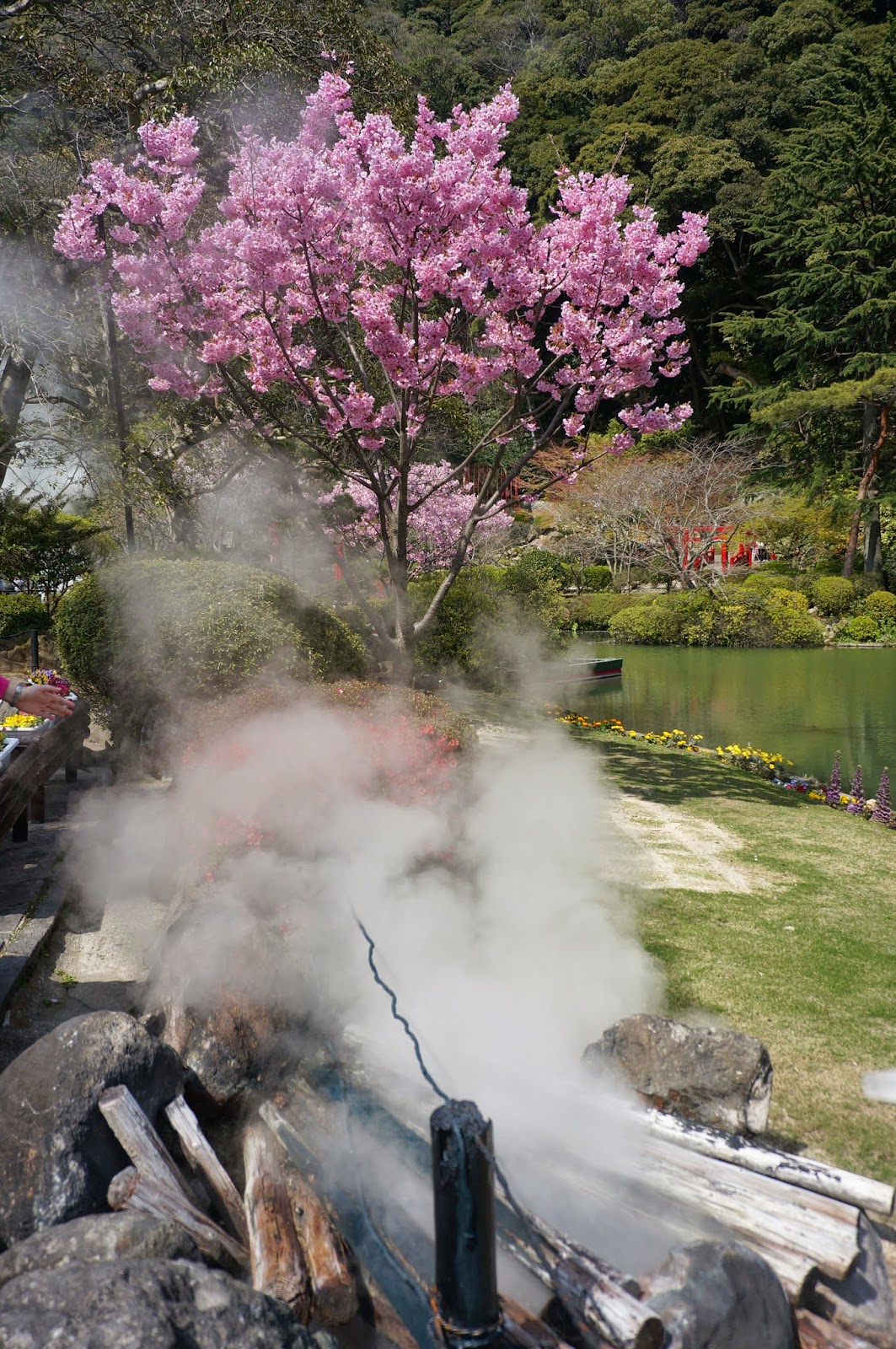
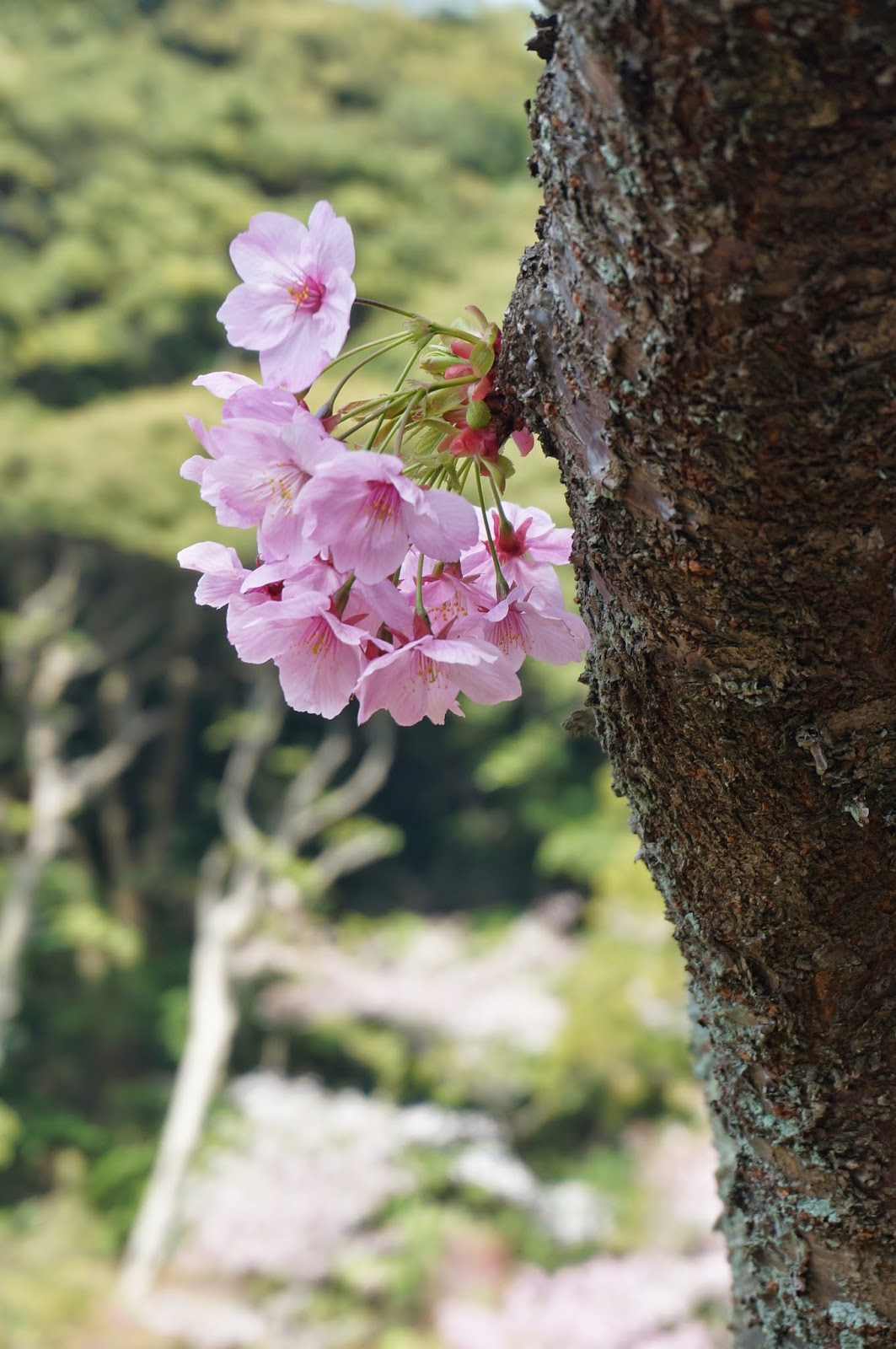
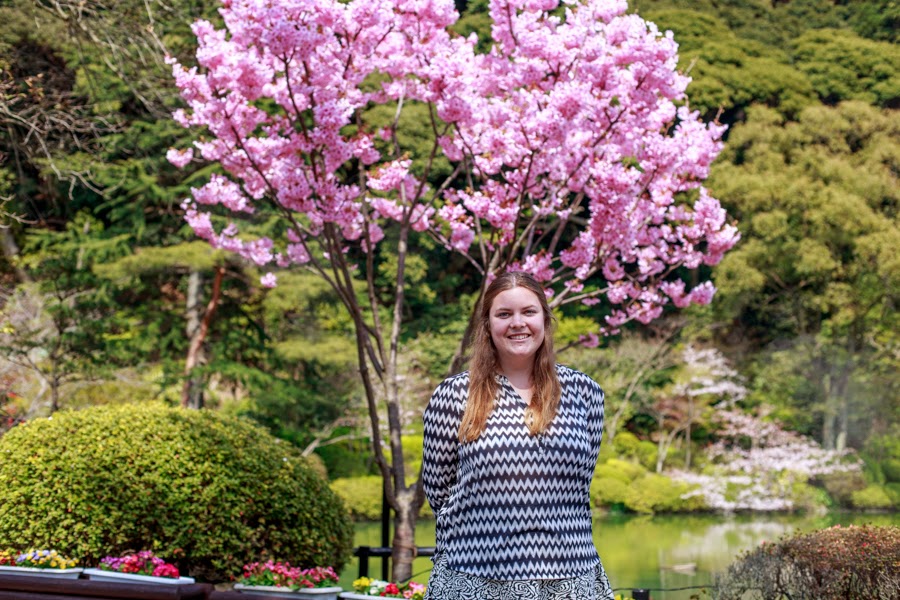
I was so lucky to see the first cherry blossoms bloom on our school trip to Usa shrine and Beppu, known for the natural hot springs. That deserves a separate post, but I want to show the pictures of the sakura here. They were a nice dark pink color in Beppu, while the one tree in Usa shrine was a light pink.

Usa Jingu

Beppu

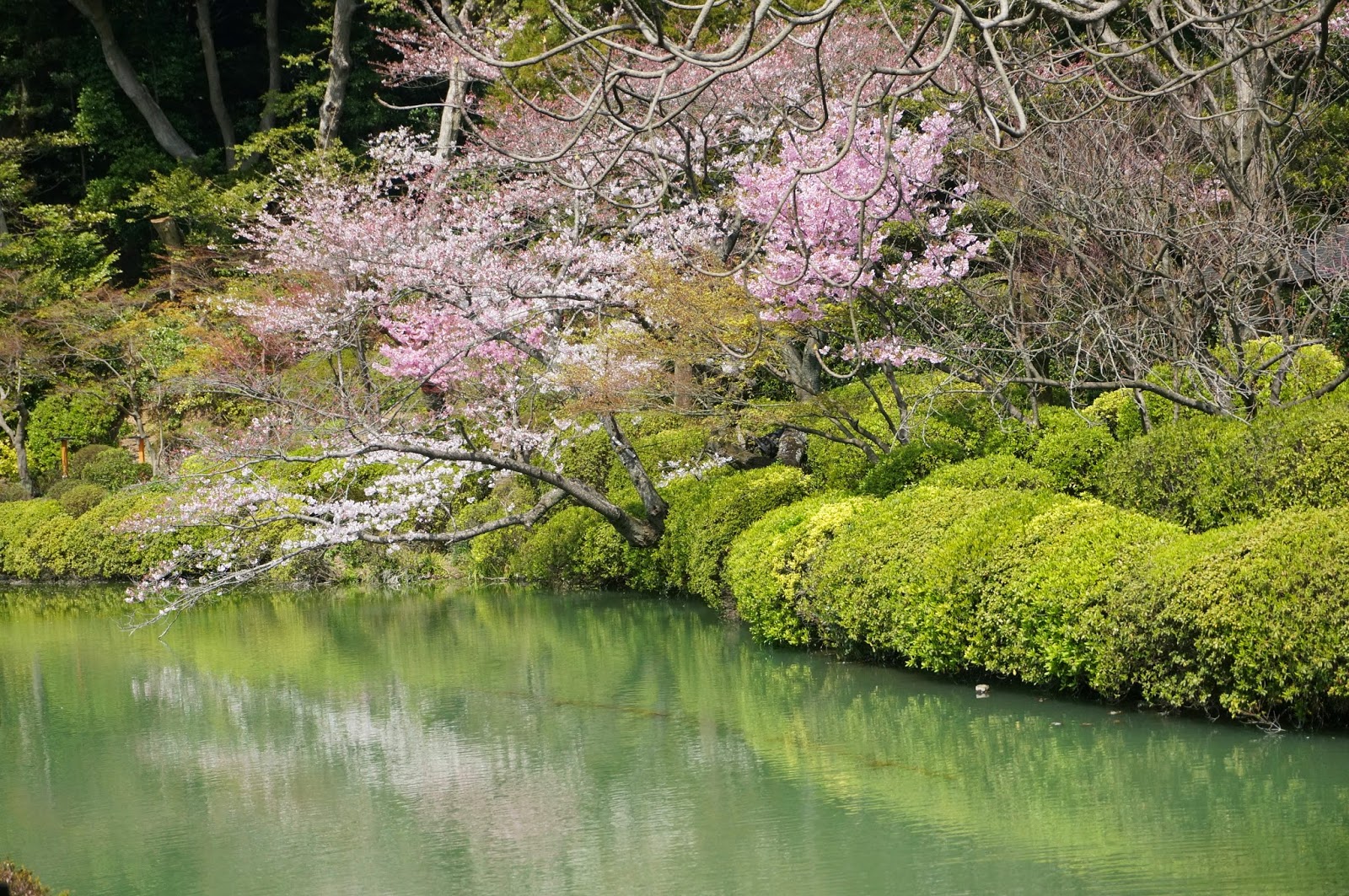
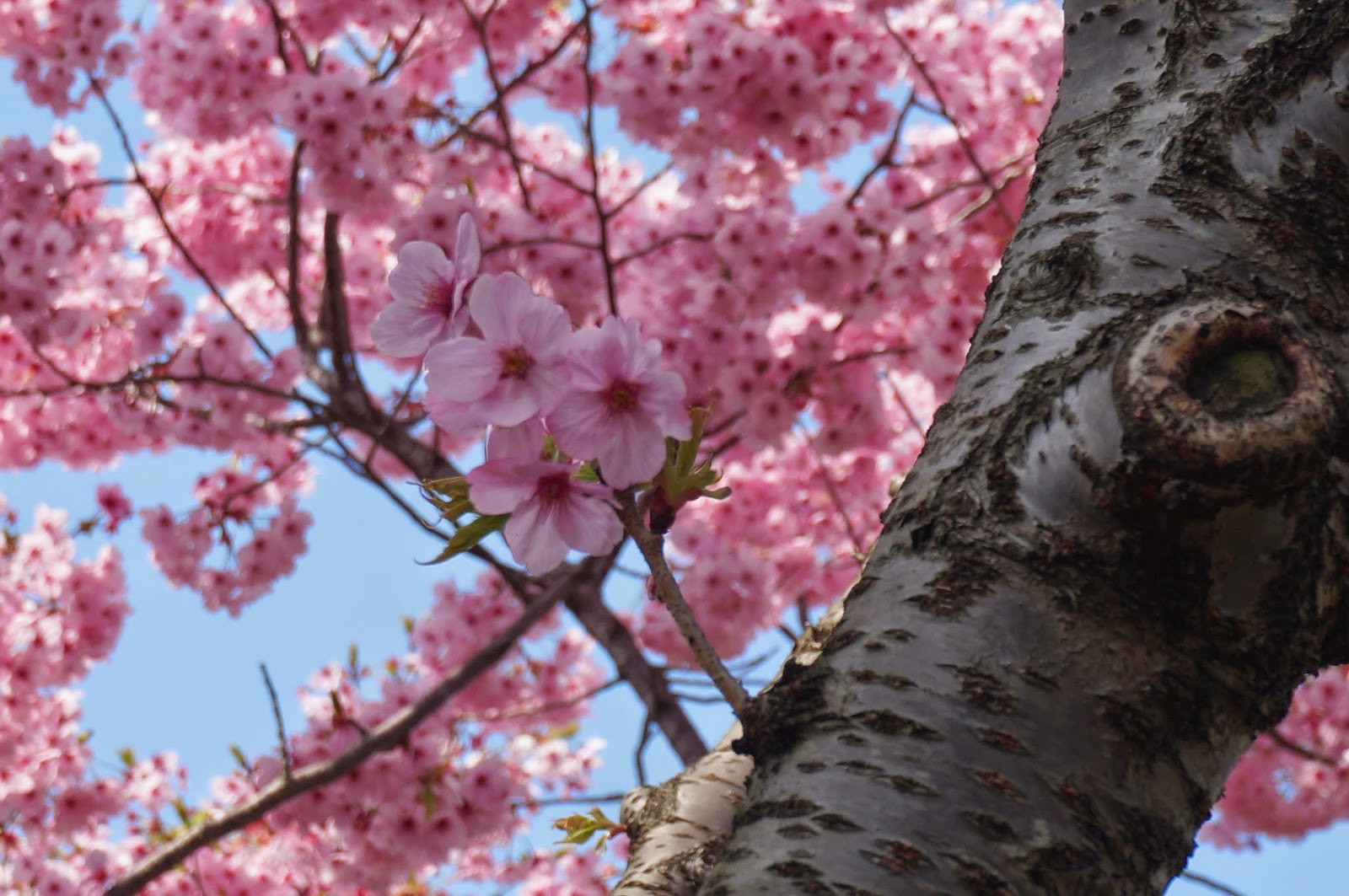
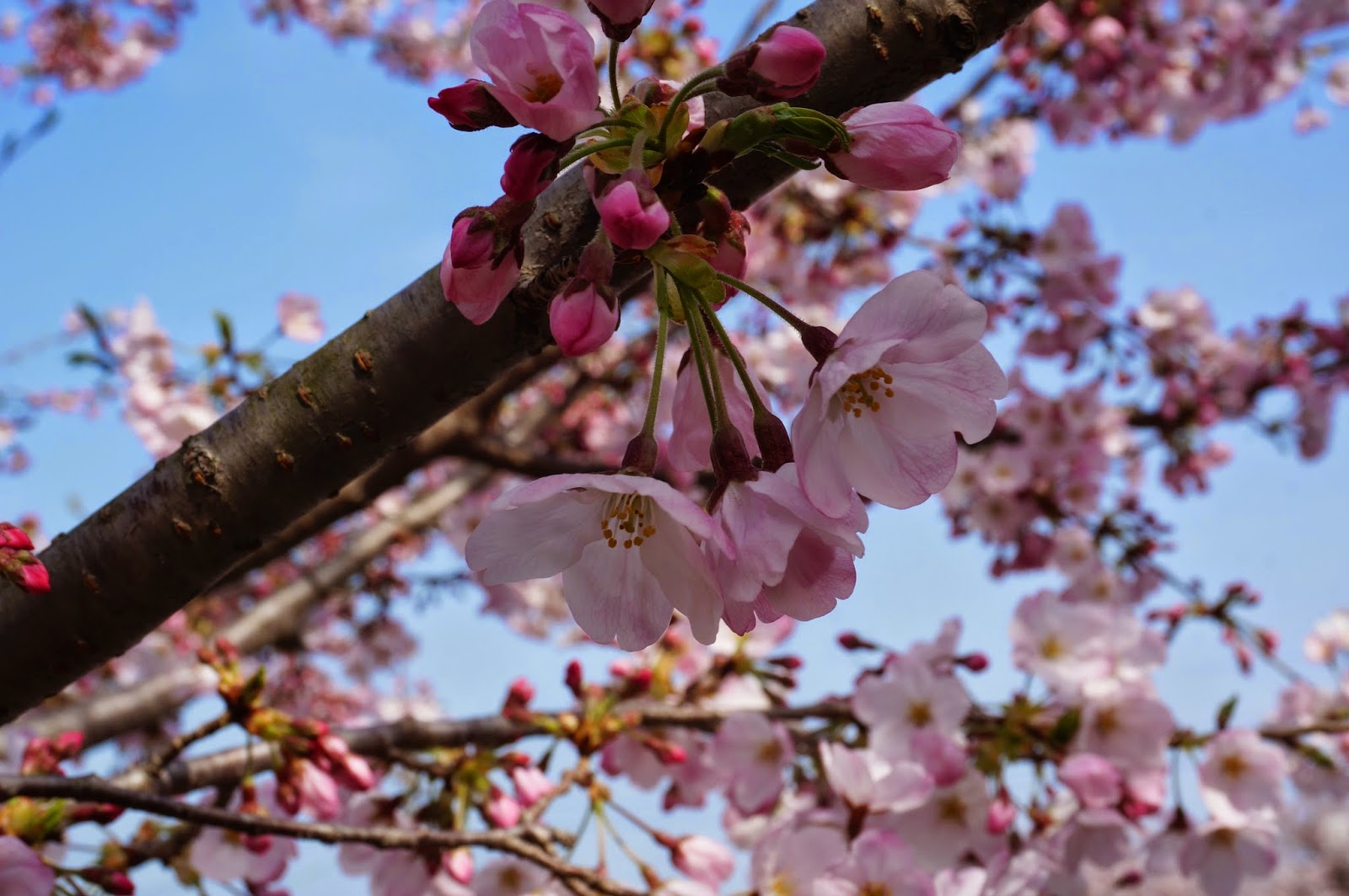
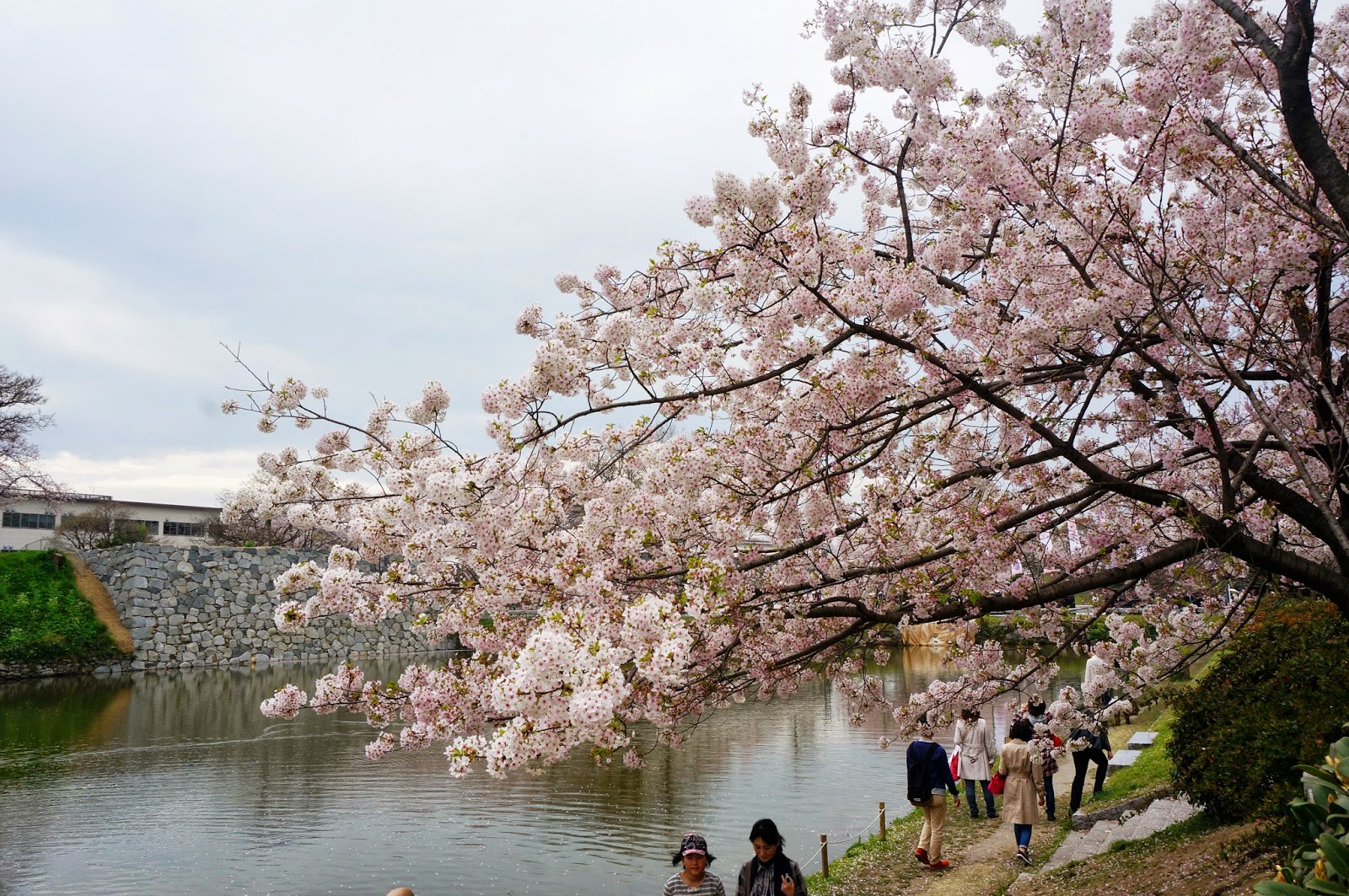
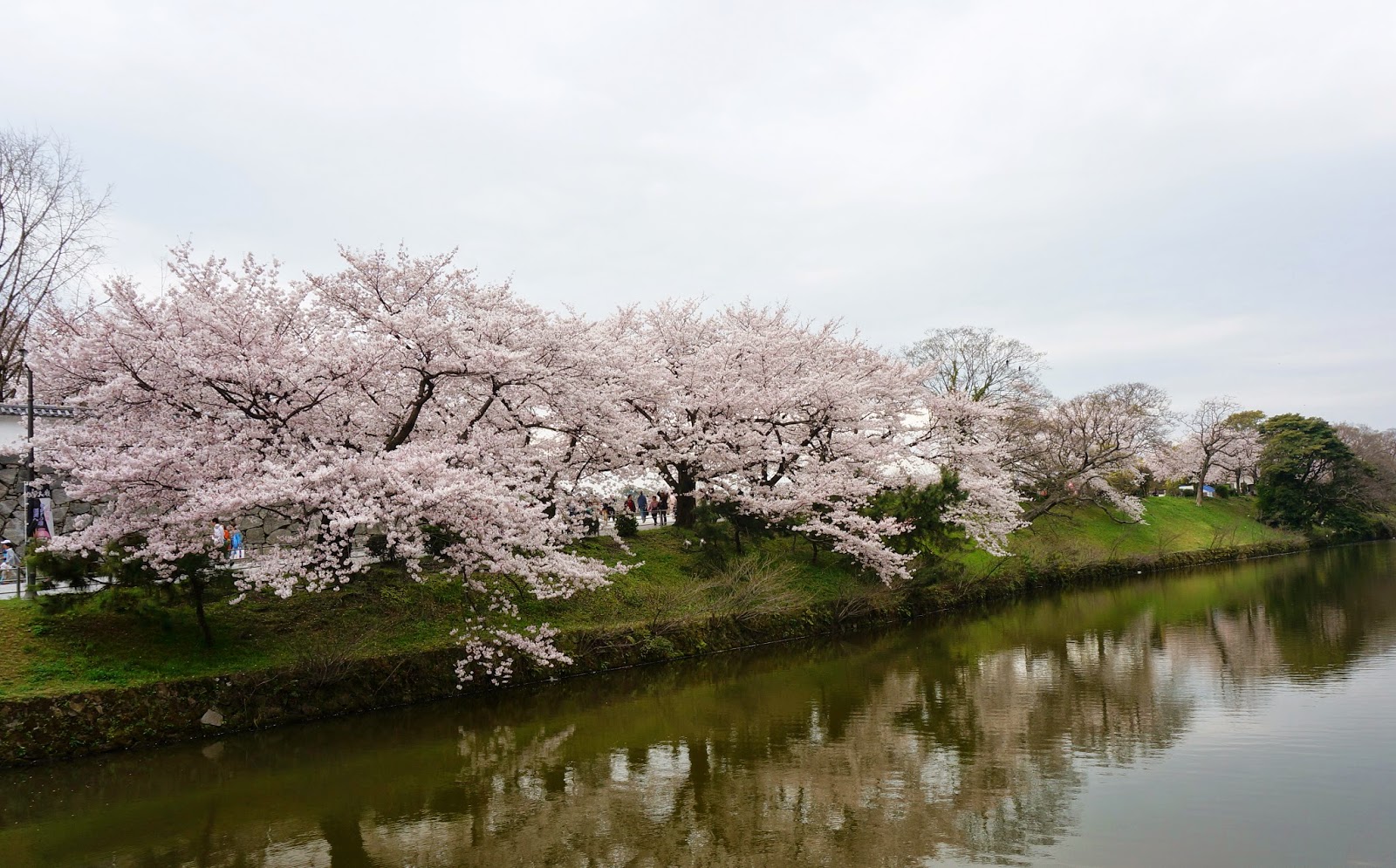
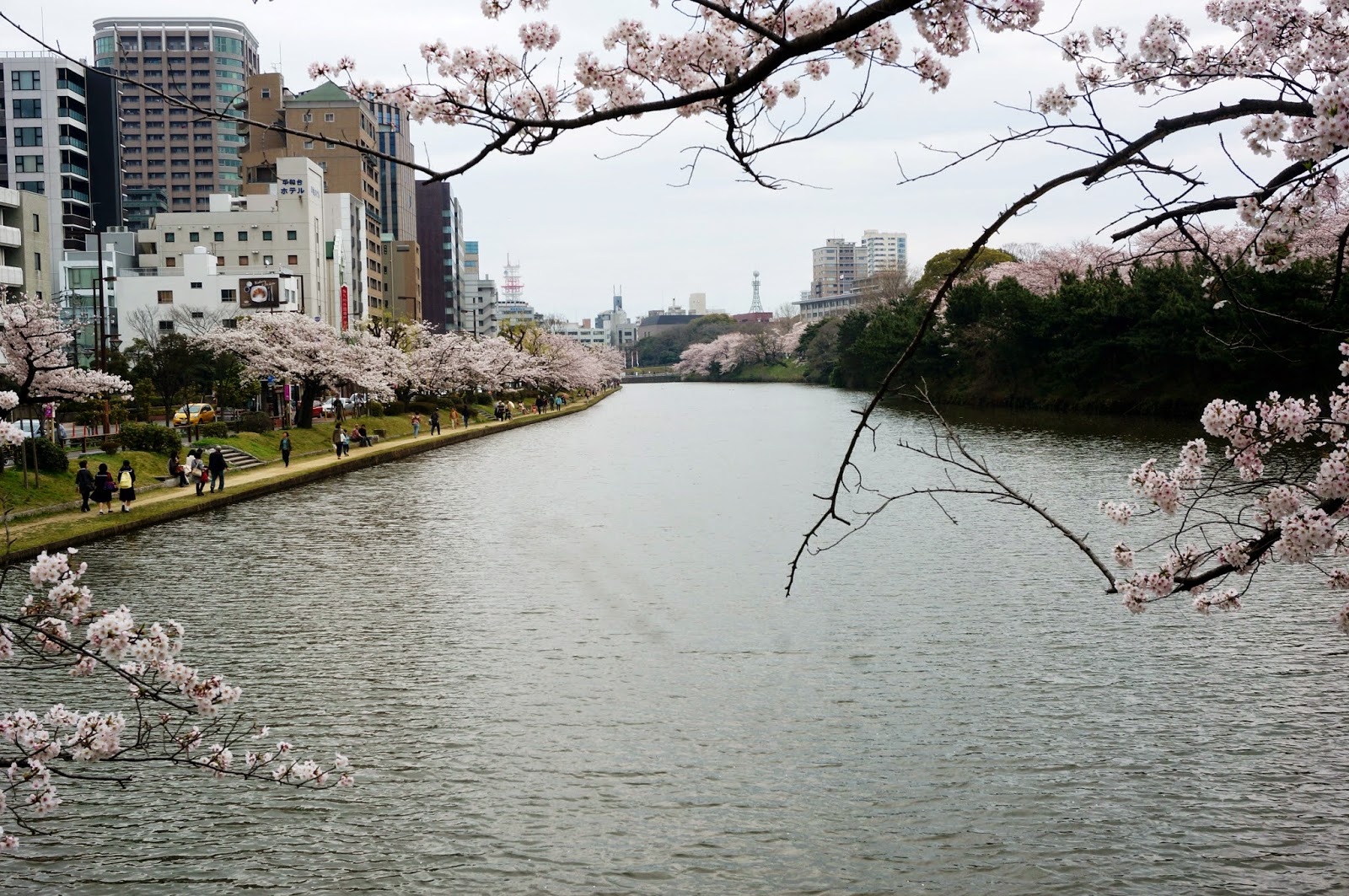
Ohori Park

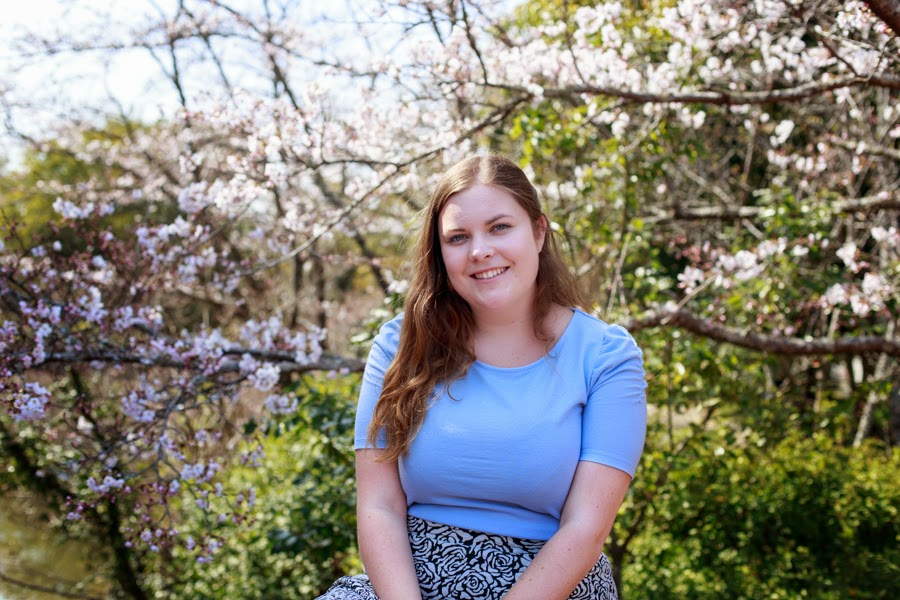
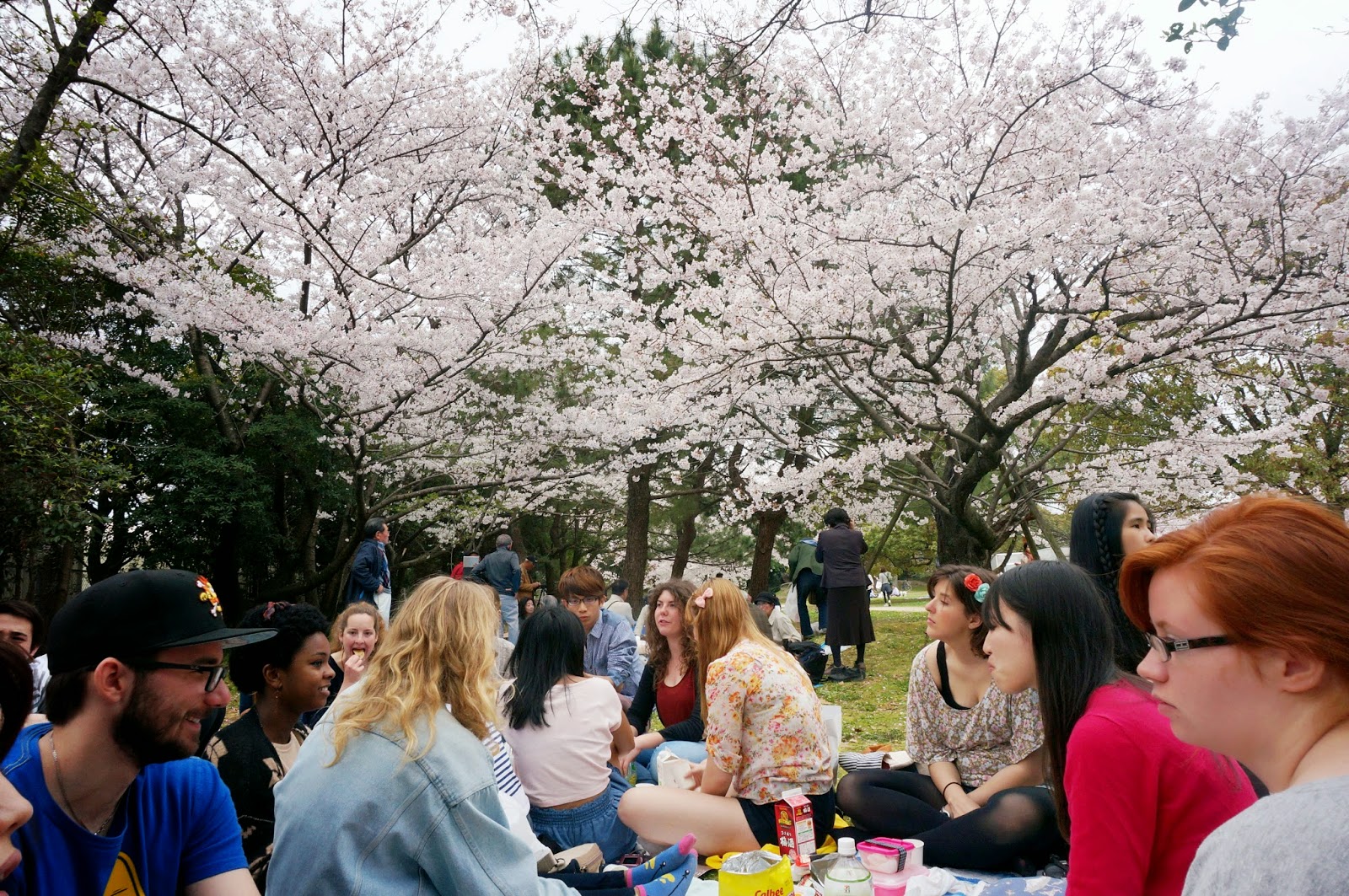
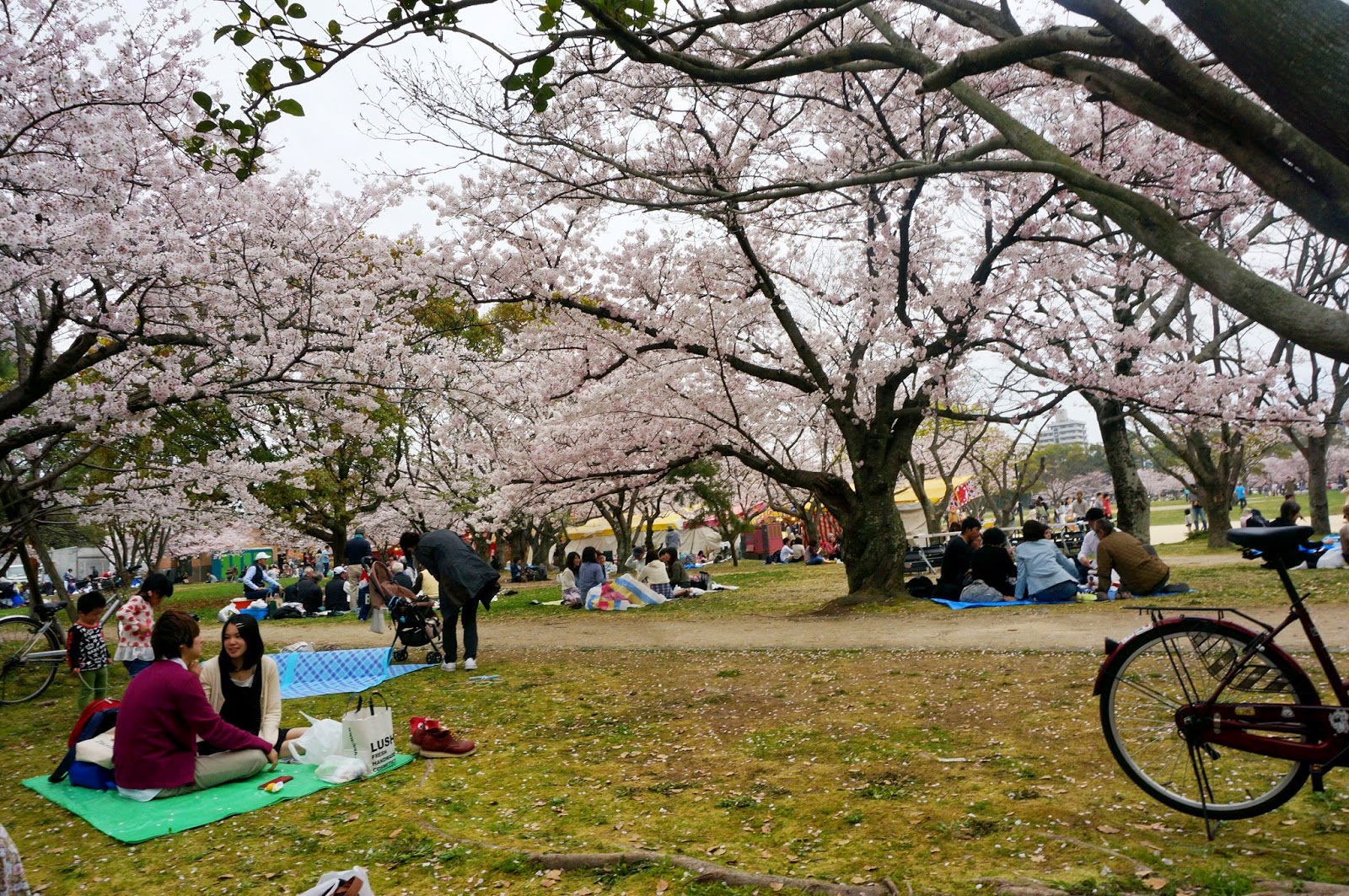
When we arrived back in Fukuoka from our weekend away the cherry blossoms were just in full bloom, talking about nice timing! So we organized a hanami in Ohori Park with the new JTW students and tutors. Hanami literally means ‘flower viewing’, but it basically means that you go to the park, do a picnic and drinking with your friends or family and just enjoy the view of the flowers while stuffing yourself with food and alcohol. There was a group of old Japanese men next to us and they did drink a lot! They even came up offering food and drinks and wanted to take a group photo with us. Oh, the adventures of foreigners in Japan and drunk Japanese men, ha! Sadly it began to rain in the late afternoon so we retreated back home.

people picnicking throughout the park and the wheel of my bike 😉


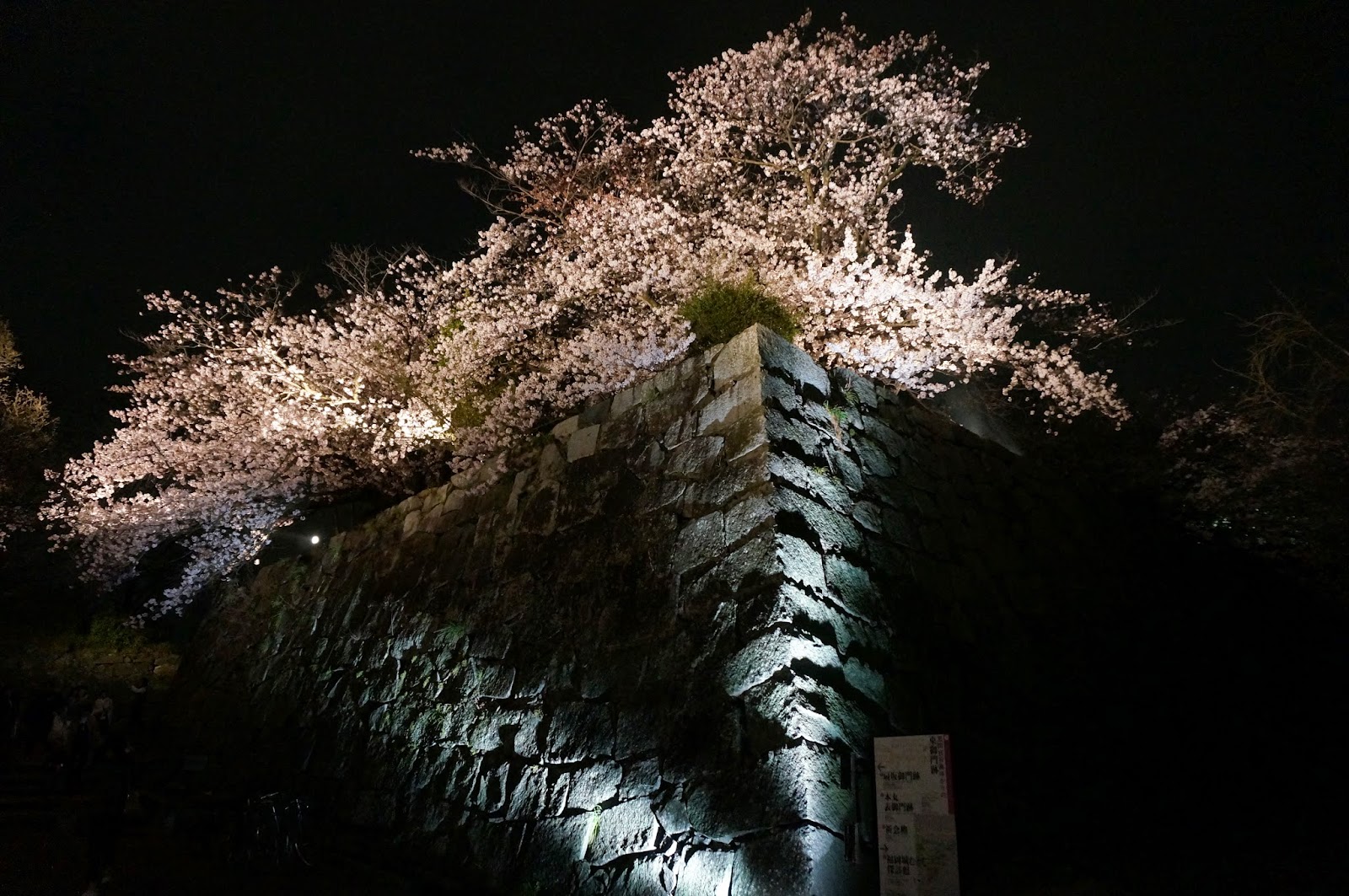
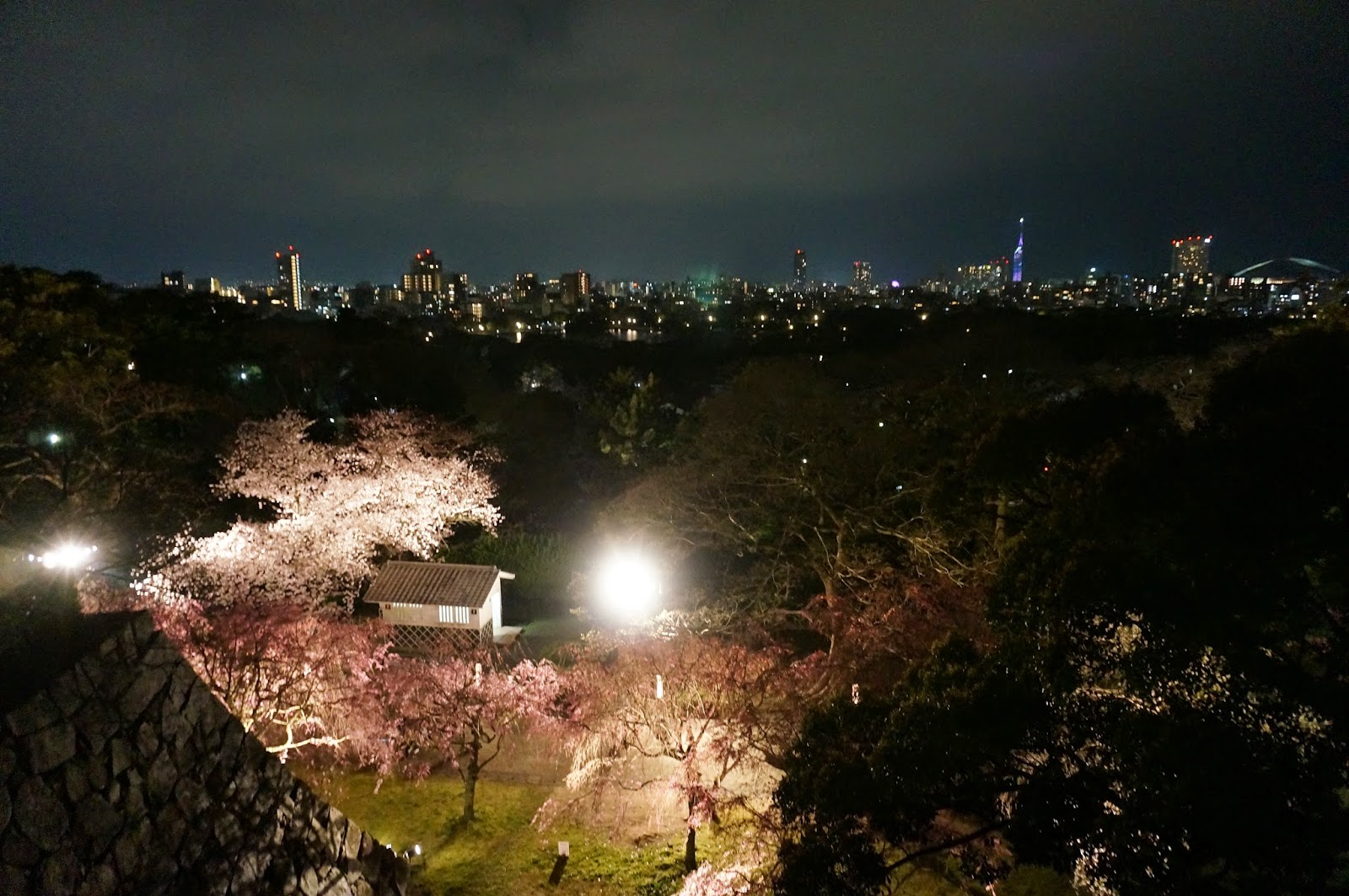
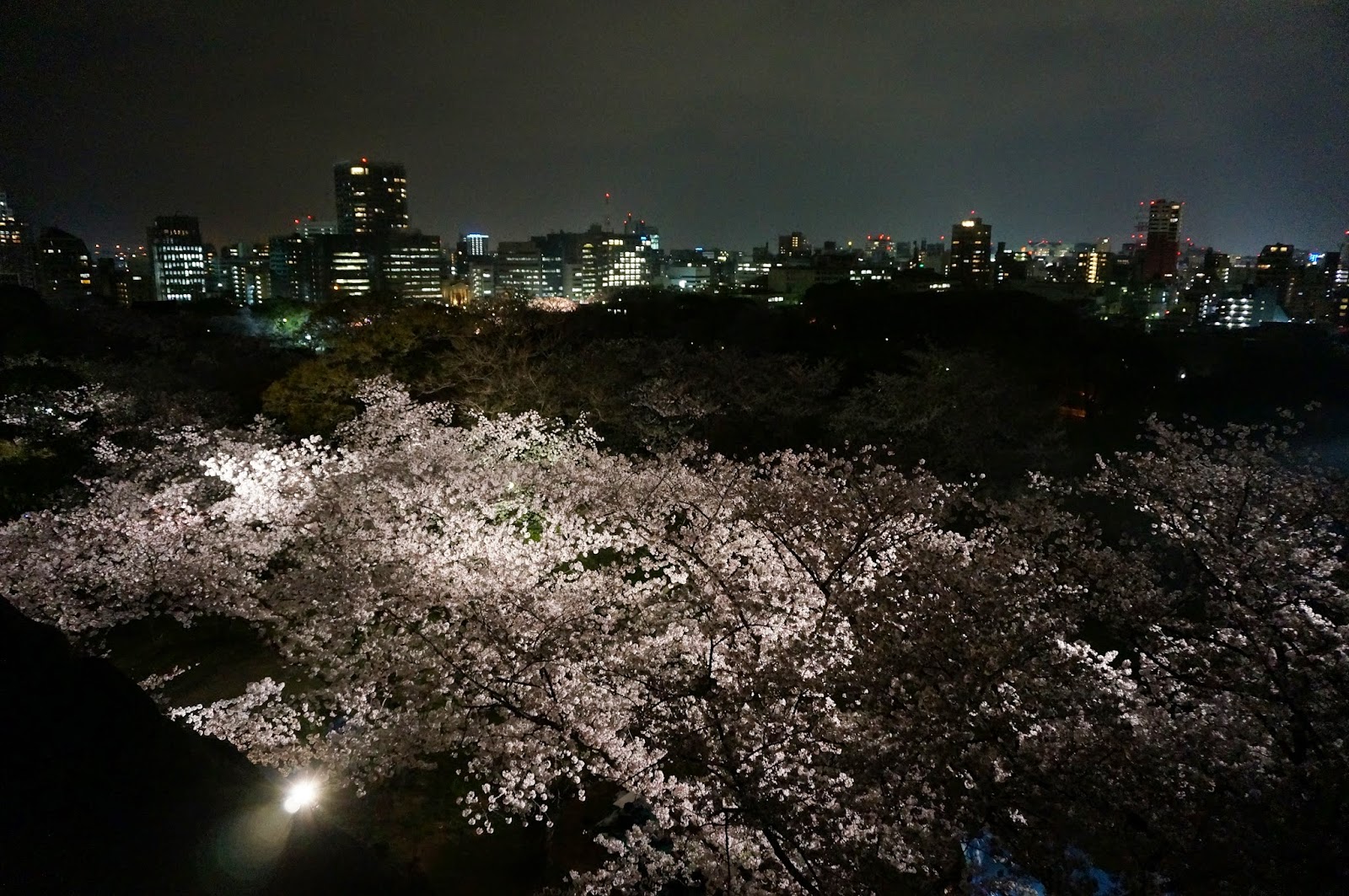
Maizuru Park / Fukuoka Castle


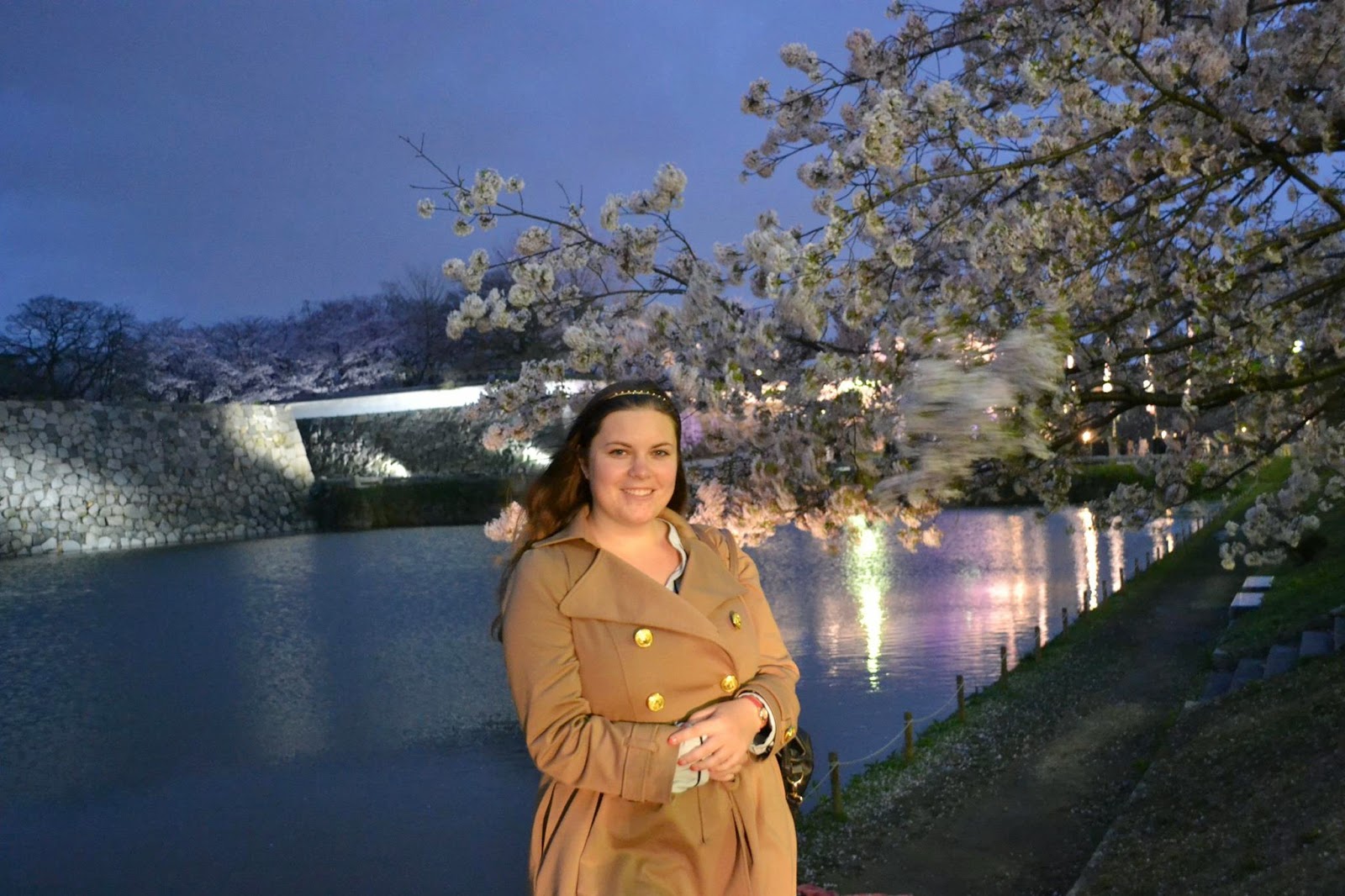
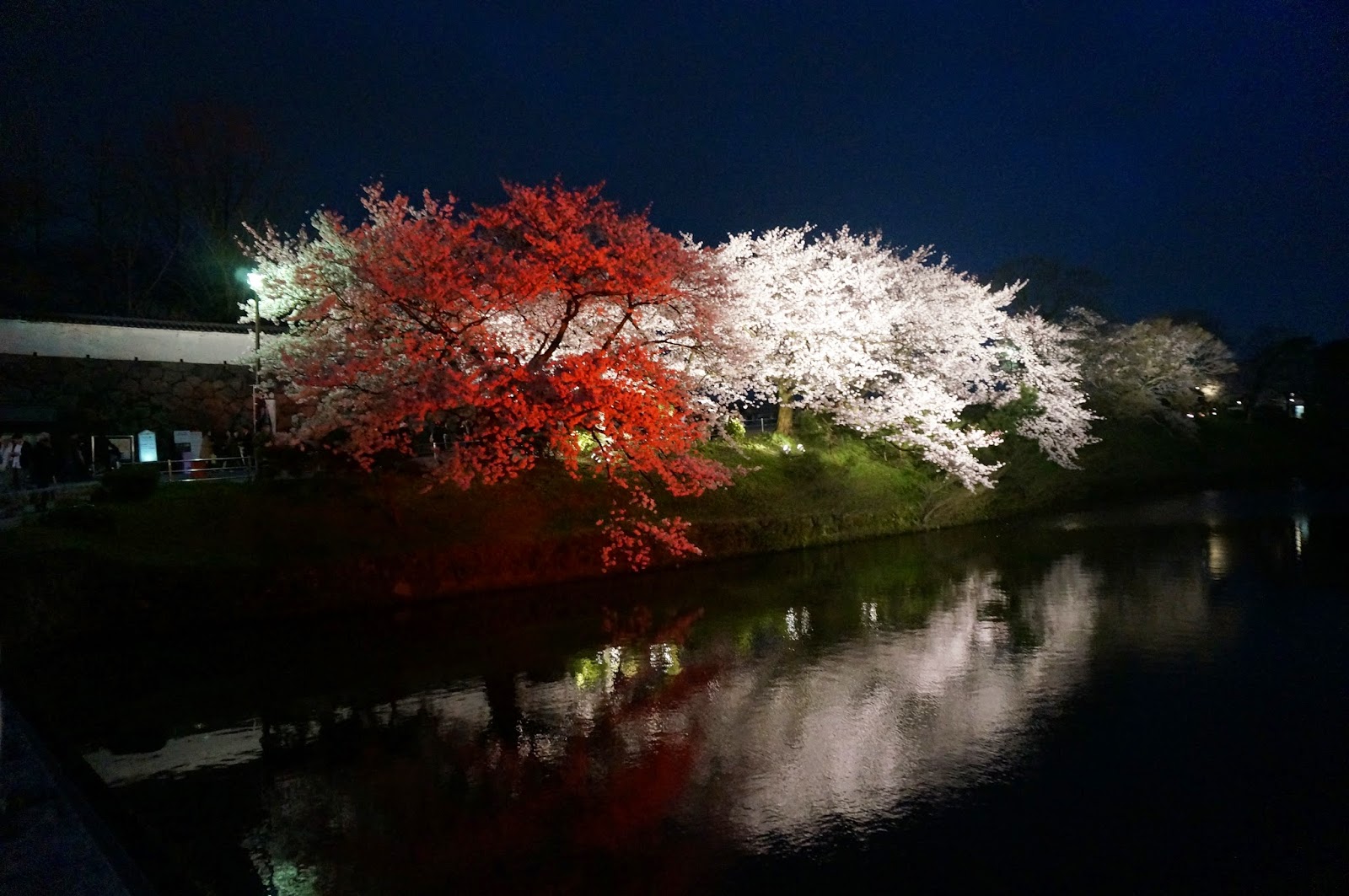
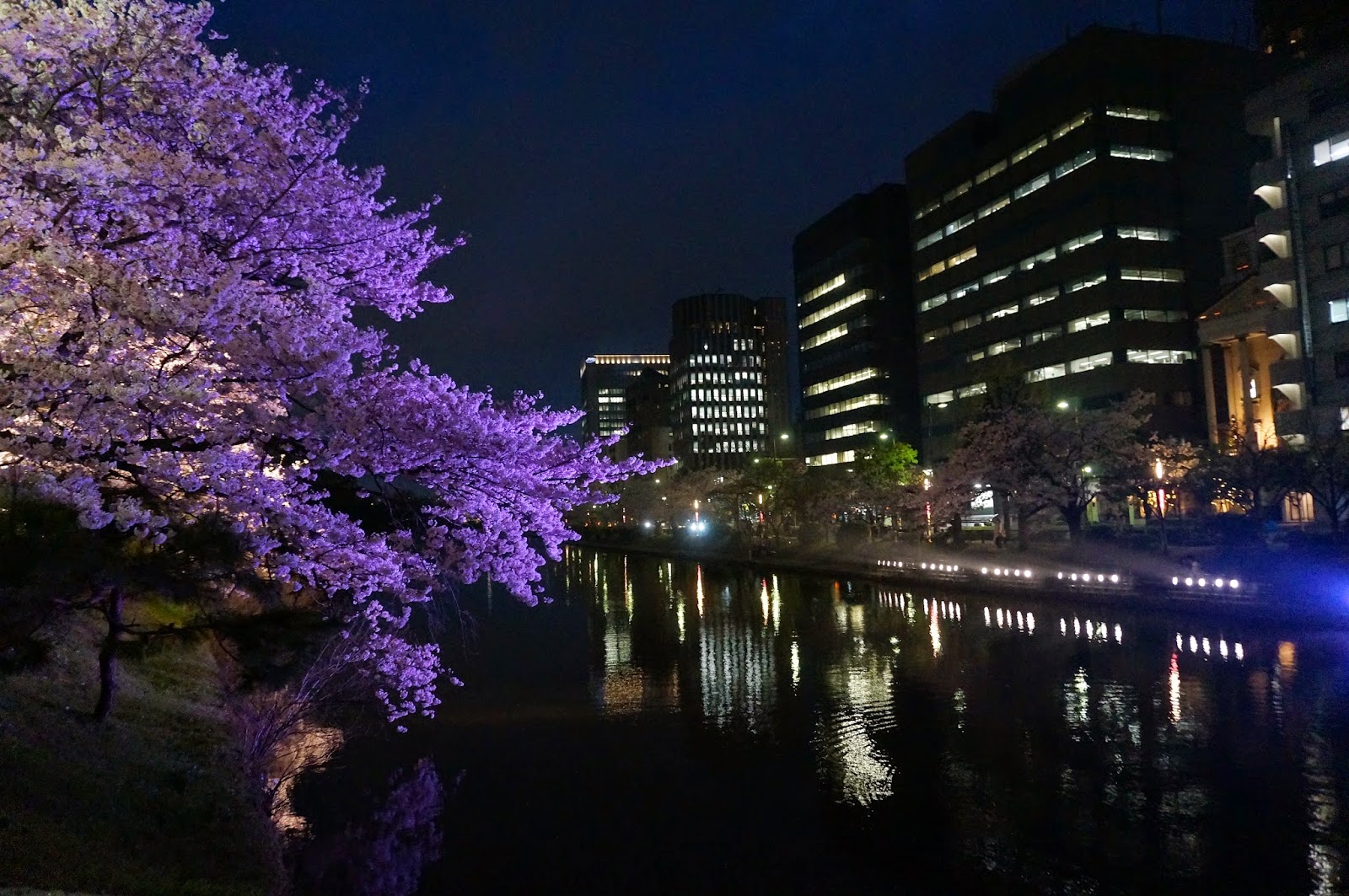
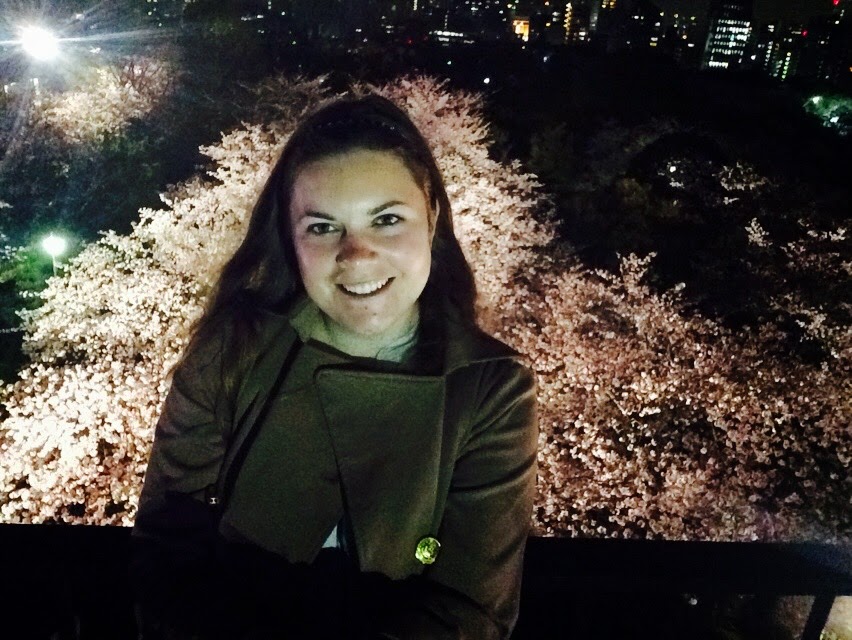
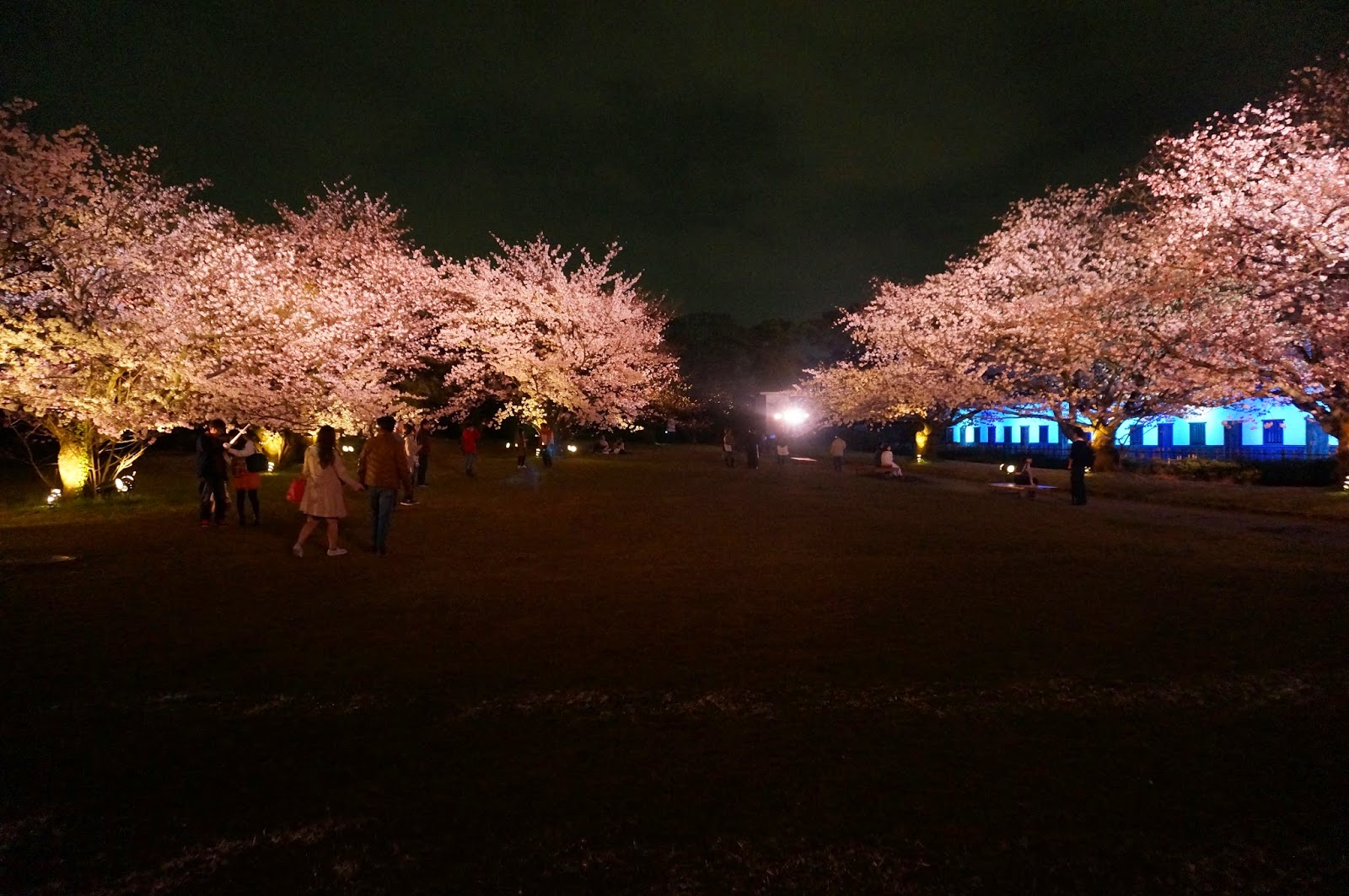
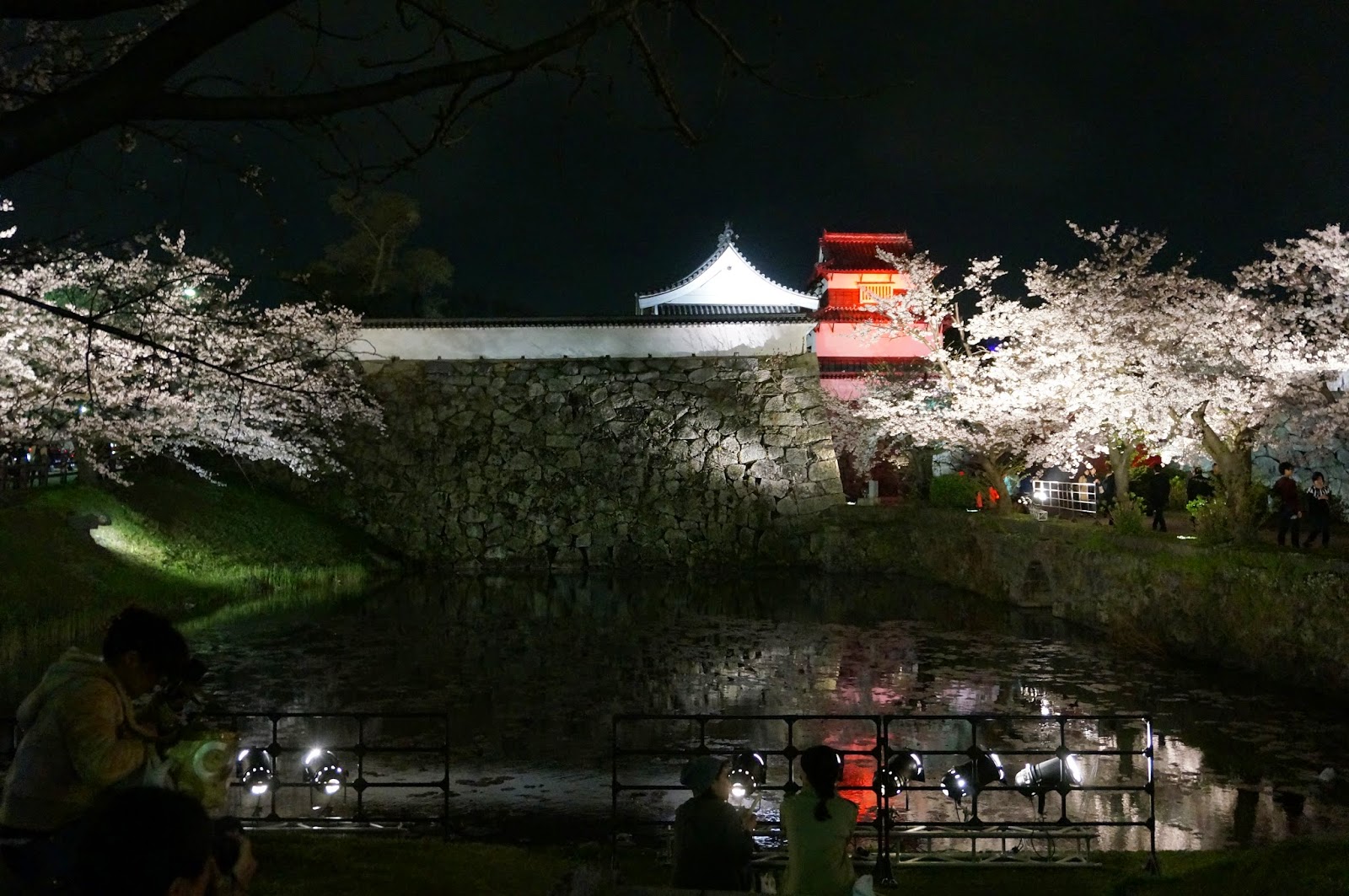
In the evening I went to Maizuru park, right next to Ohori park. Maizuru is where the remains of Fukuoka castle are and the cherry blossoms are lit up at night during blooming season. Actually, the first three photos under the Ohori Park title are Maizuru photos as well. The sakura look very enchanting when lit up. There are free spots to take a look, but some special spots cost money to enter. Me and my friend went to all three of these paid spots and the first one with a view over the park and the city was the most gorgeous. The other two spots were gorgeous as well, but I don’t think it is worth paying for it.

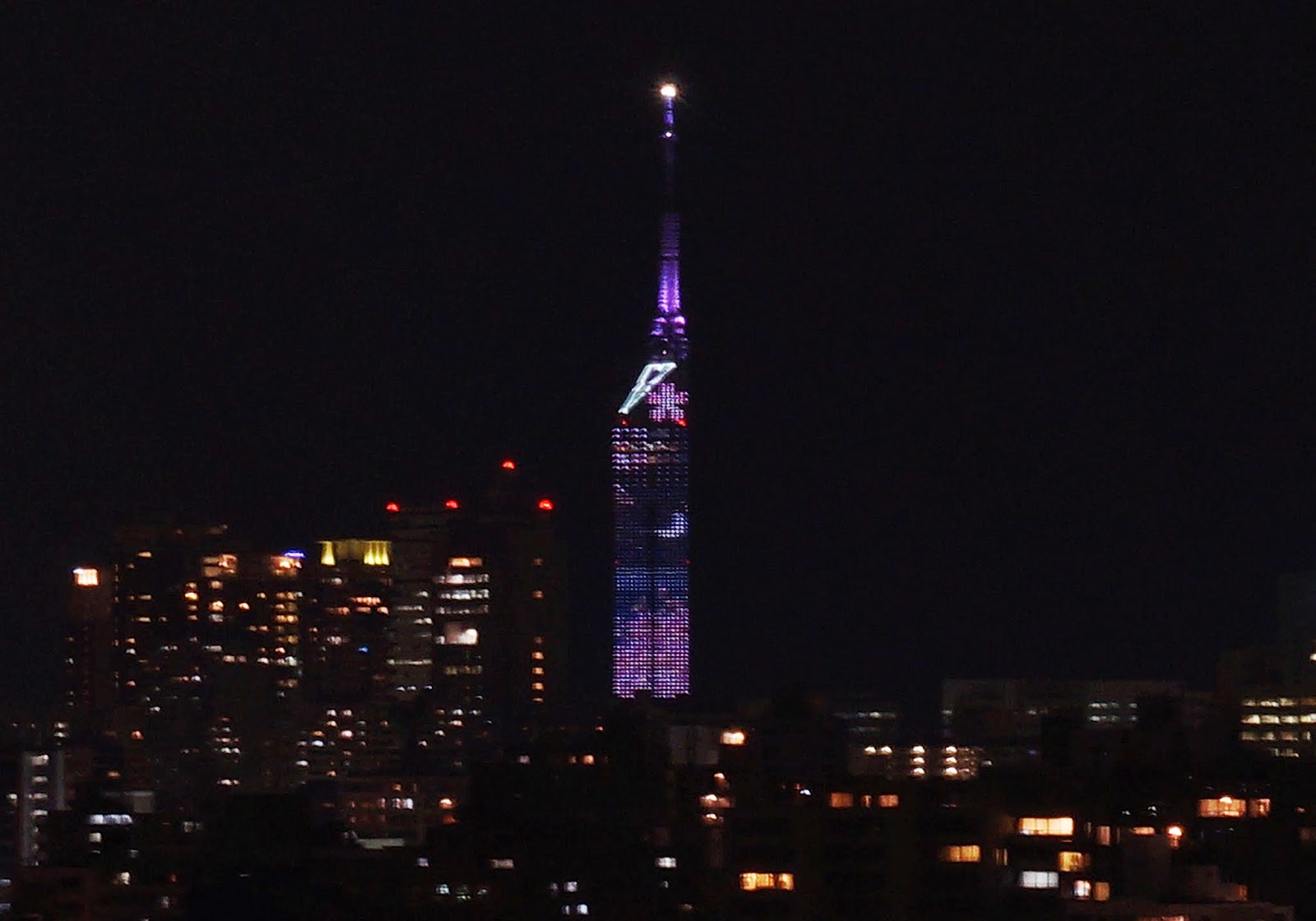
Fukuoka Tower in style with Cherry Blossom Display

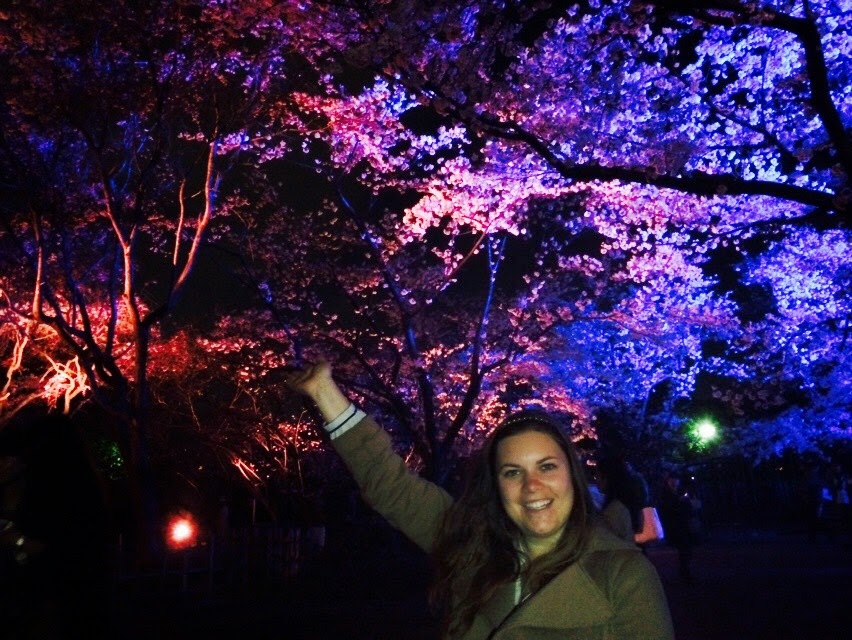
The demonstrate some of the crazy light up colors

I hope you enjoyed seeing the cherry blossoms! Kyushu is definitely a great place to view them and they bloom bit earlier than in Tokyo and Kyoto, so if you are too early to see the sakura there, you could always try in Kyushu (or even earlier in Okinawa). What is cherry blossom season like in your country? And which of the above places did you like most?


Gunkanjima – The Harsh Reality of an Island in Ruins

On November 21st I went to Gunkanjima with my laboratory. As I have mentioned before I worked on an Individual Study Project under the supervision of a Japanese professor and I would join his laboratory every once in a while on field trips. This was another one of them, but it was not just your ordinary place.

Gunkanjima?

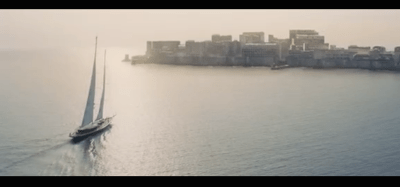
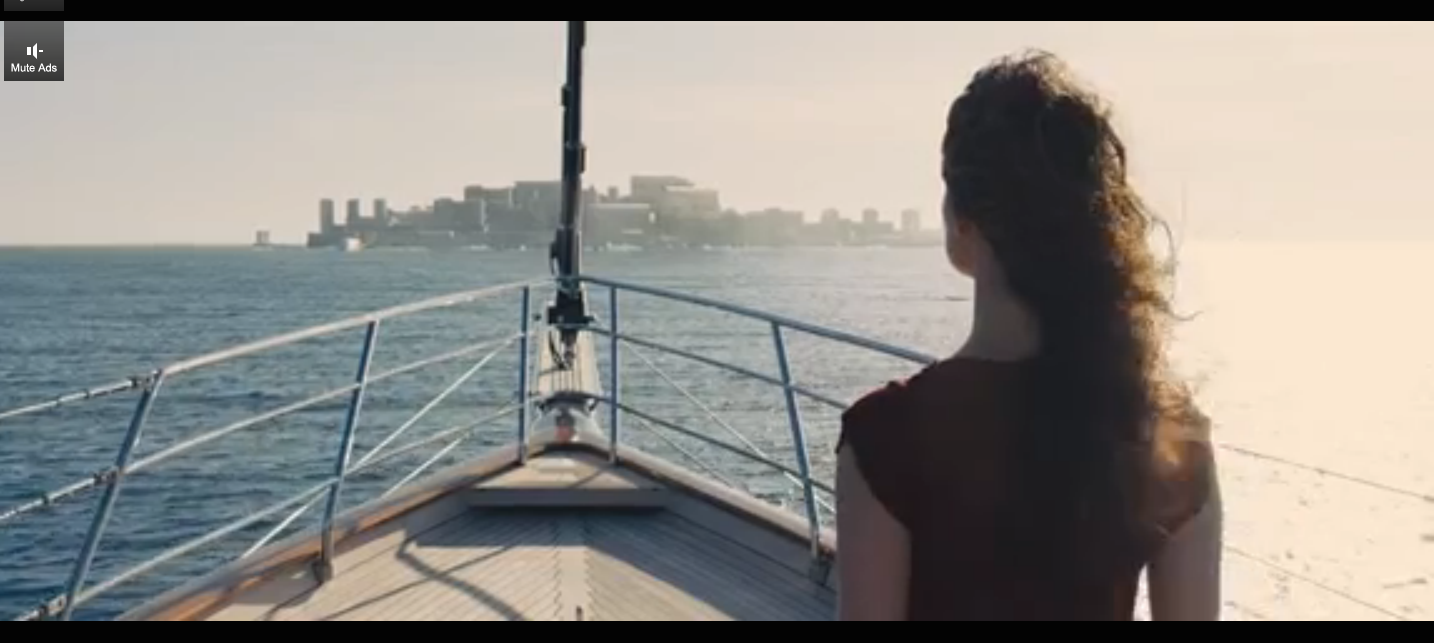
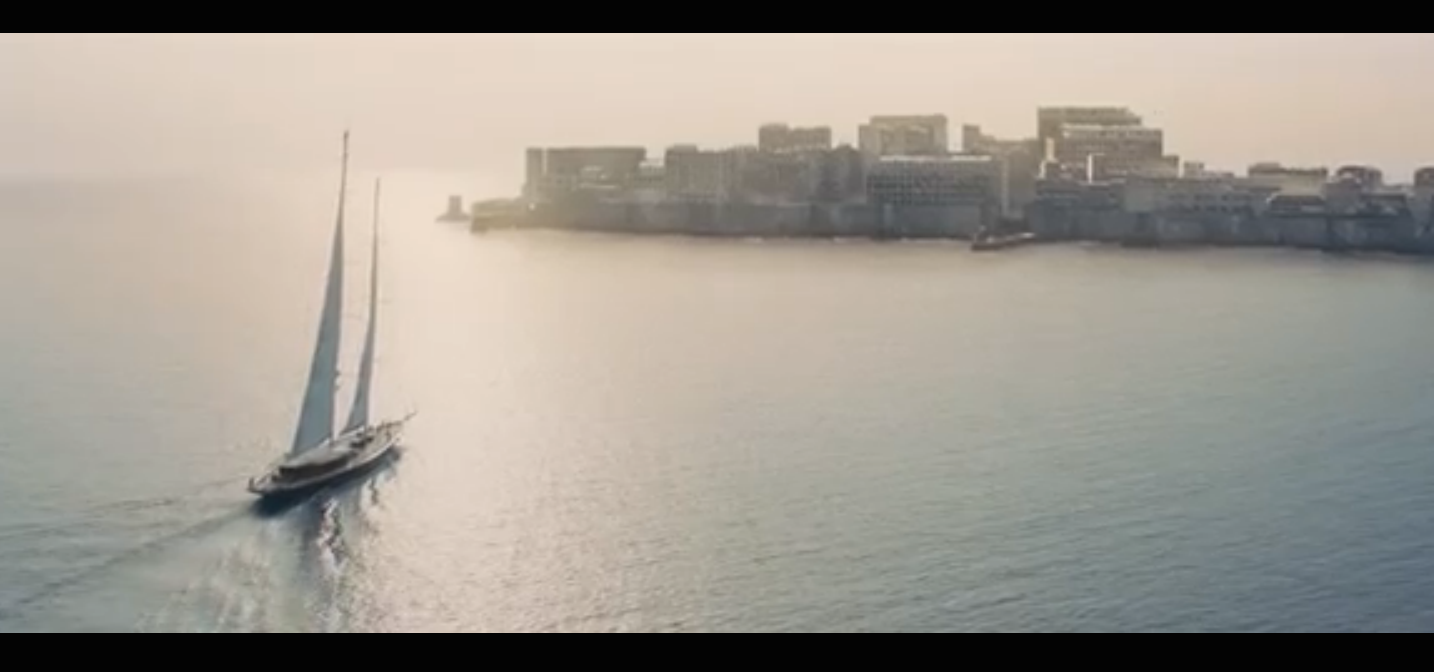
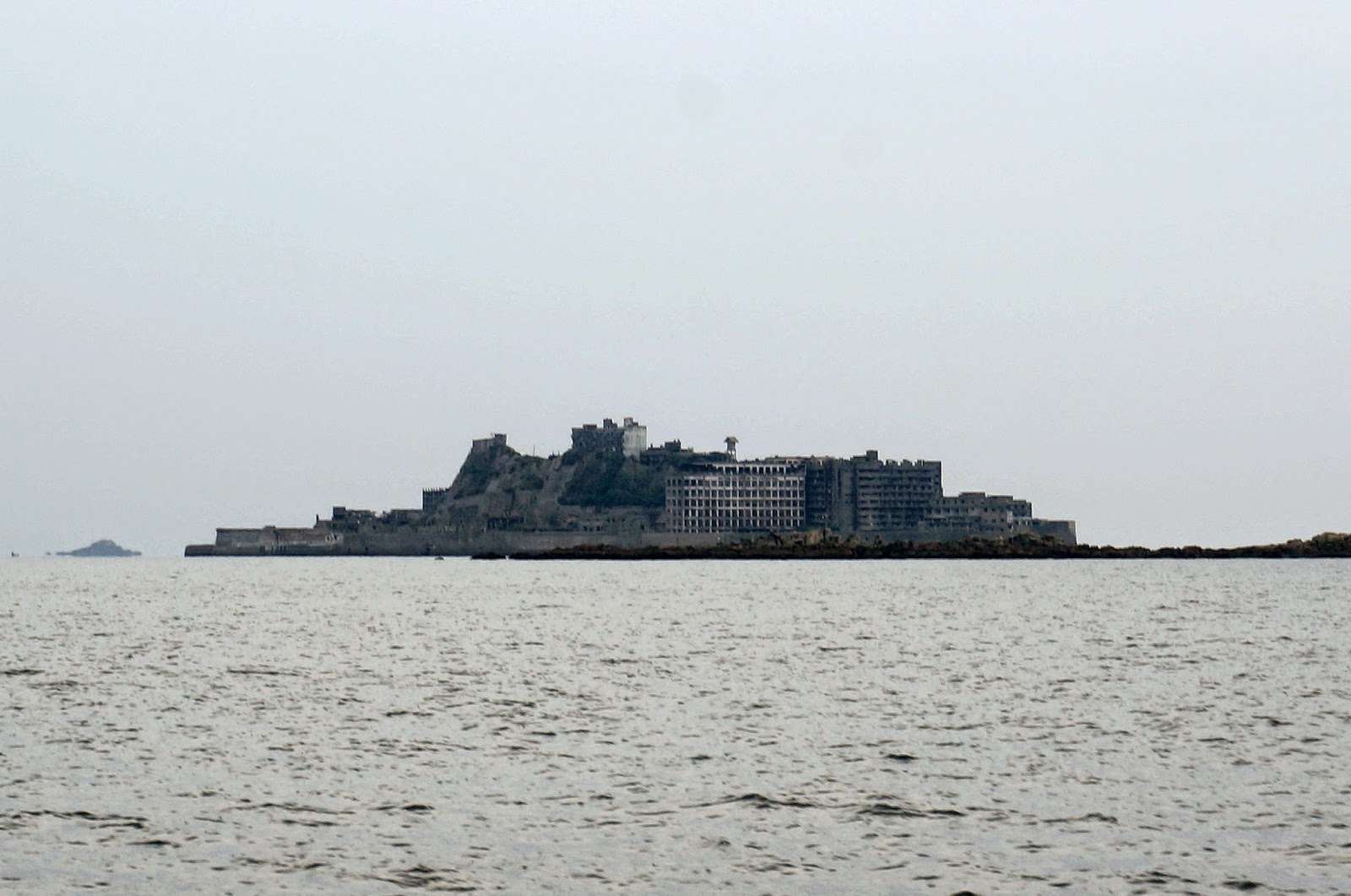
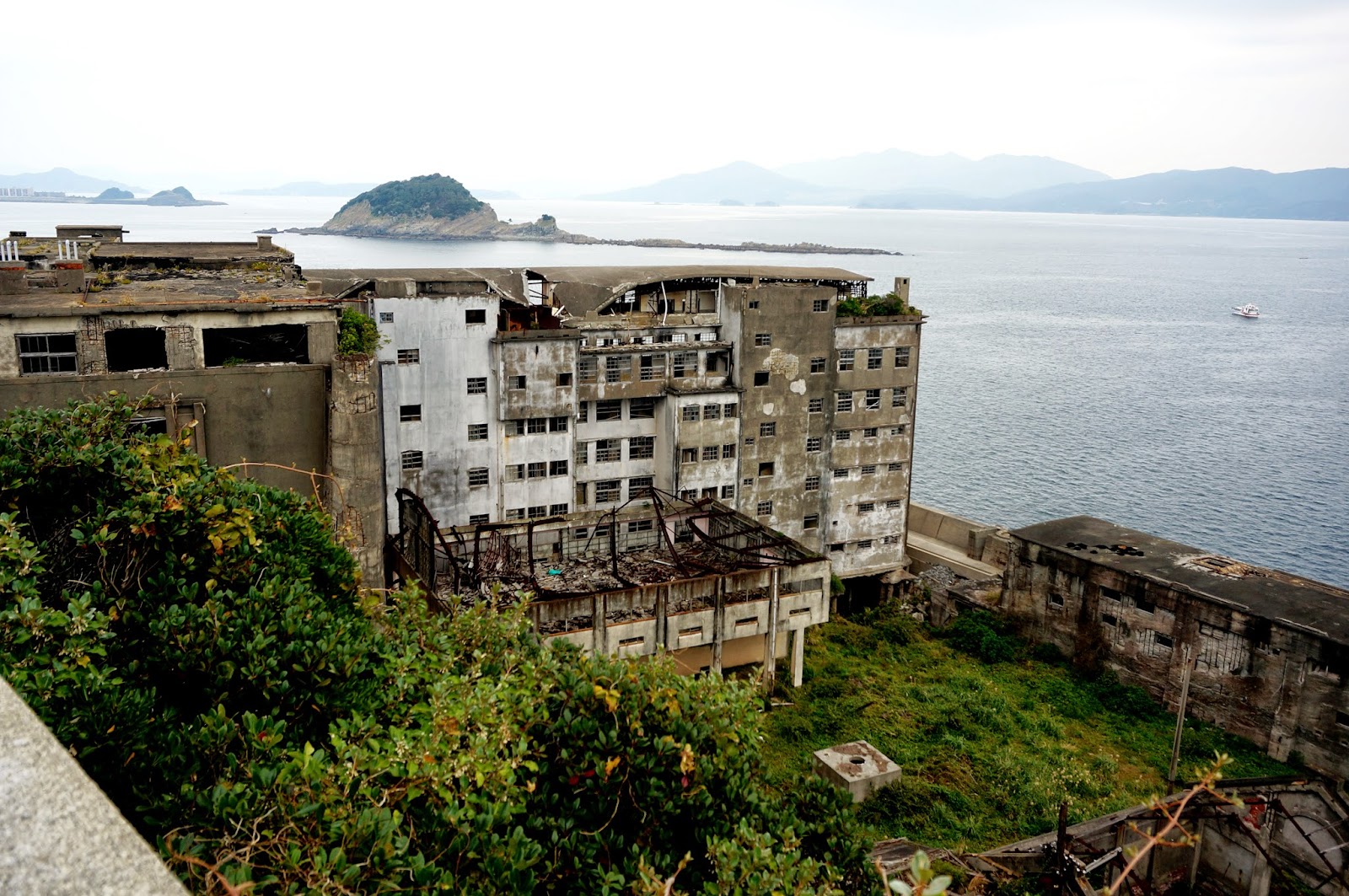
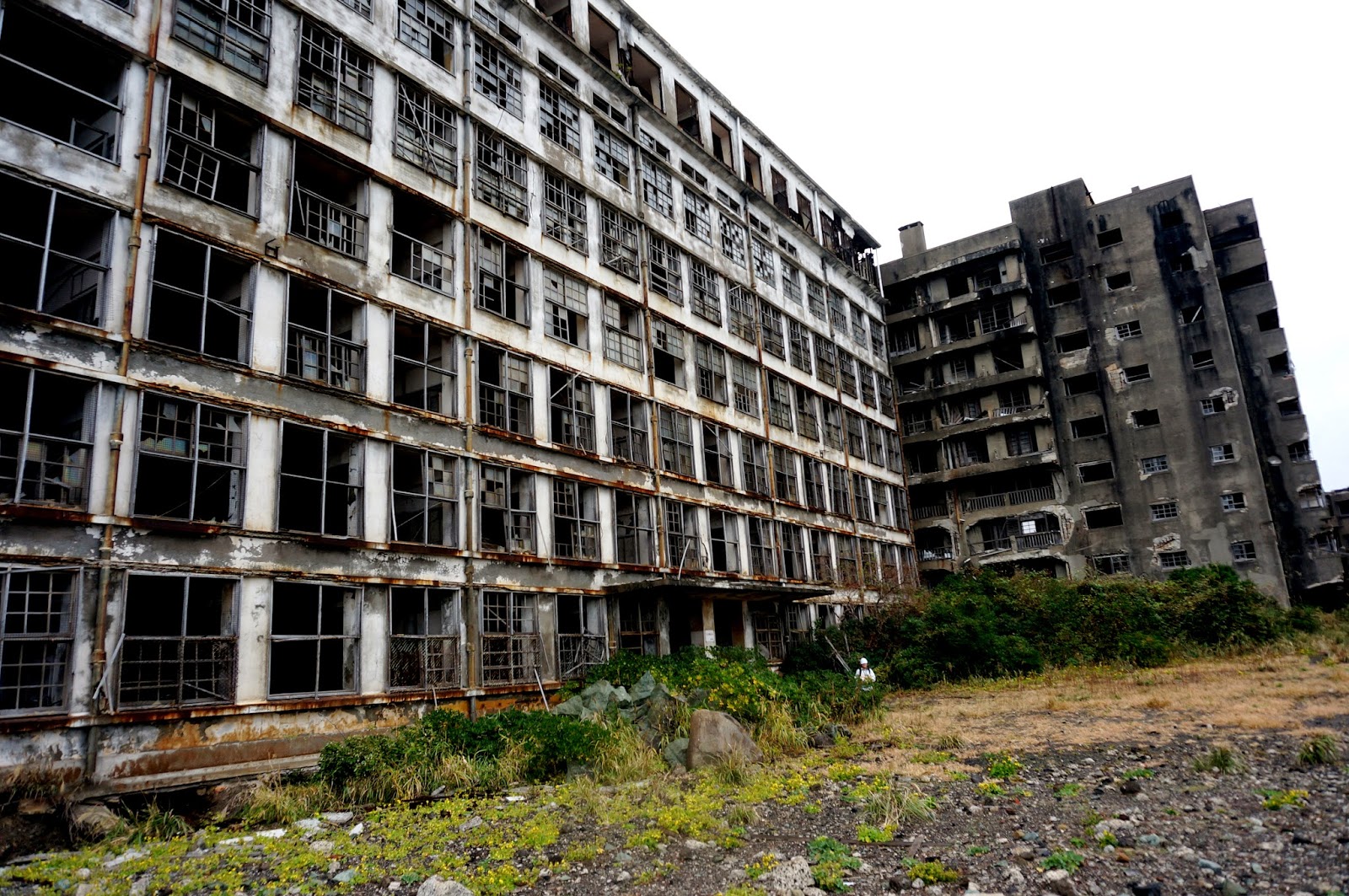
For those who are unfamiliar with Gunkanjima, it is an island near the city of Nagasaki. The name means ‘battleship island’ because the shape of the island resembles a warship, but the official name is Hashima. I think a lot of people have seen or heard of this place somewhere as it is well known for its eerie ruined buildings, abandoned by human life in a haste years ago, reminiscent of post-apocalyps scenes. This is one of the reasons why it was also used for a scene in the latest Bond movie Skyfall, although slightly altered.
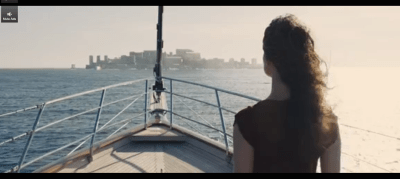
©Eon Productions

©Eon Productions

But why did the place get abandoned in the first place? Hashima used to be a very small island of little importance until in the 19th century it became a coaling mine for Mitsubishi Company. In that time coal was an important natural source and the demand was high. More coal needed to be mined and more miners were needed and they began to live on the island. So they would build and expand the island slowly but surely.

At its peak the island grew to about three times its original size and had around 5.200 inhabitants. Tall apartment buildings to house 5.200 people, schools, pools, a cinema, a hospital, some shops, a shrine and a coal mine working space were built on an area of just 6.3 hectare, making it the most densely populated area in recorded history. With its coal Hashima greatly contributed to Japans’ modernization during the Japanese Industrialization.

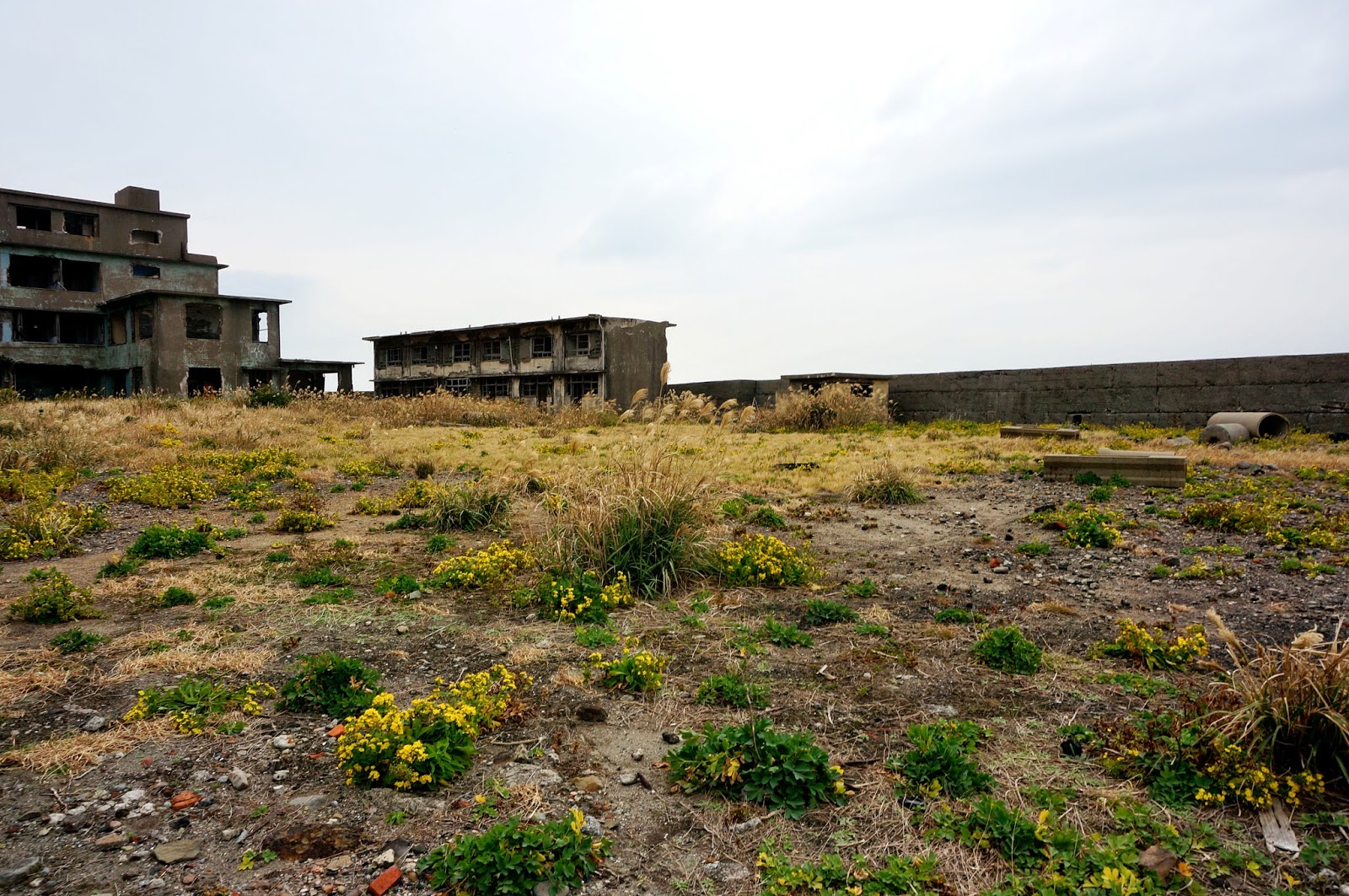
However, at the end of the 20th century coal fell out of favor and oil became the new source in favor. Mitsubishi thus closed the coal mine in 1974 and there was no reason to stay on the island anymore. Everyone moved back to mainland Japan en masse to find jobs there and the island got abandoned. Since then island lies exposed to the forces of nature, tortured by typhoons and high waves. The place fell to ruins because no maintenance was being done to the buildings. And it became the ghastly place it now is.

Unesco World Heritage

Now we weren’t going there just for fun. We had a few meetings prior to going there to learn about the history and importance of the place. It was serious business.

Tourists are allowed to enter as well, but there is only a small part of the island they can visit and they are not allowed to get off the concrete path made for them. Now you’d think that this place is interesting because it resembles a post-apocalyptic place, great for photographers and adventurers. And I guess that is true for most of the (foreign) tourists that come there.

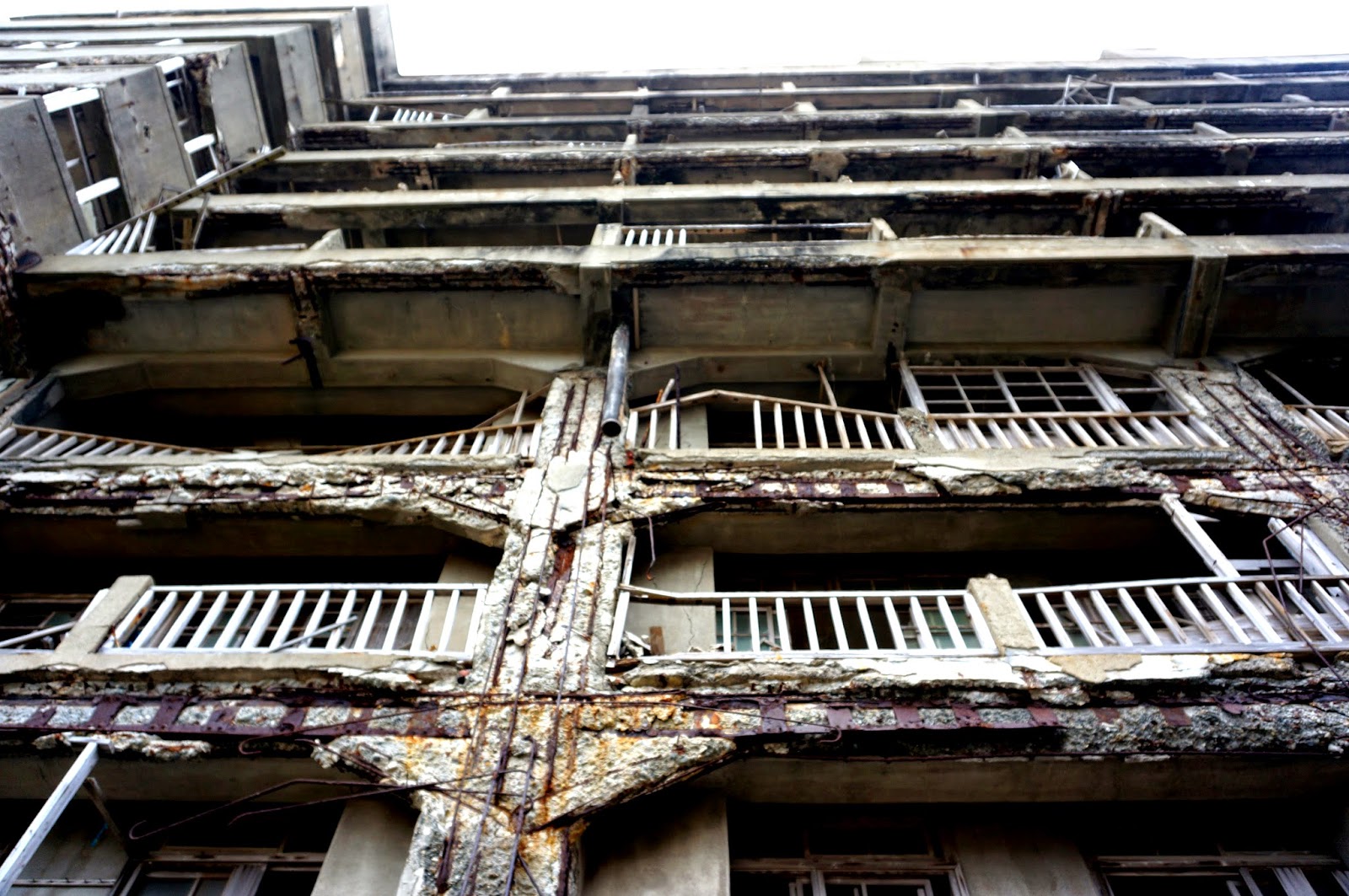
But after years of being deserted Gunkanjima suddenly became a point of interest again because they realized its significance and it is now a possible candidate to become UNESCO Cultural World Heritage as an Industrial Site and there is a reason for that; It is the first place in Japan to use reinforced concrete for multi-story buildings. It was way ahead of the techniques used on mainland Japan and shows the importance of the island for the Industrialization Period of Japan.

And that is way it is important to preserve the place and give it the attention it deserves. My professor is part of the committee that advises on this matter and is pushing to get Gunkanjima on the heritage list, and that’s why we were going there. He wanted our tips and opinions and I feel honored to be a part of that.

School in ruins

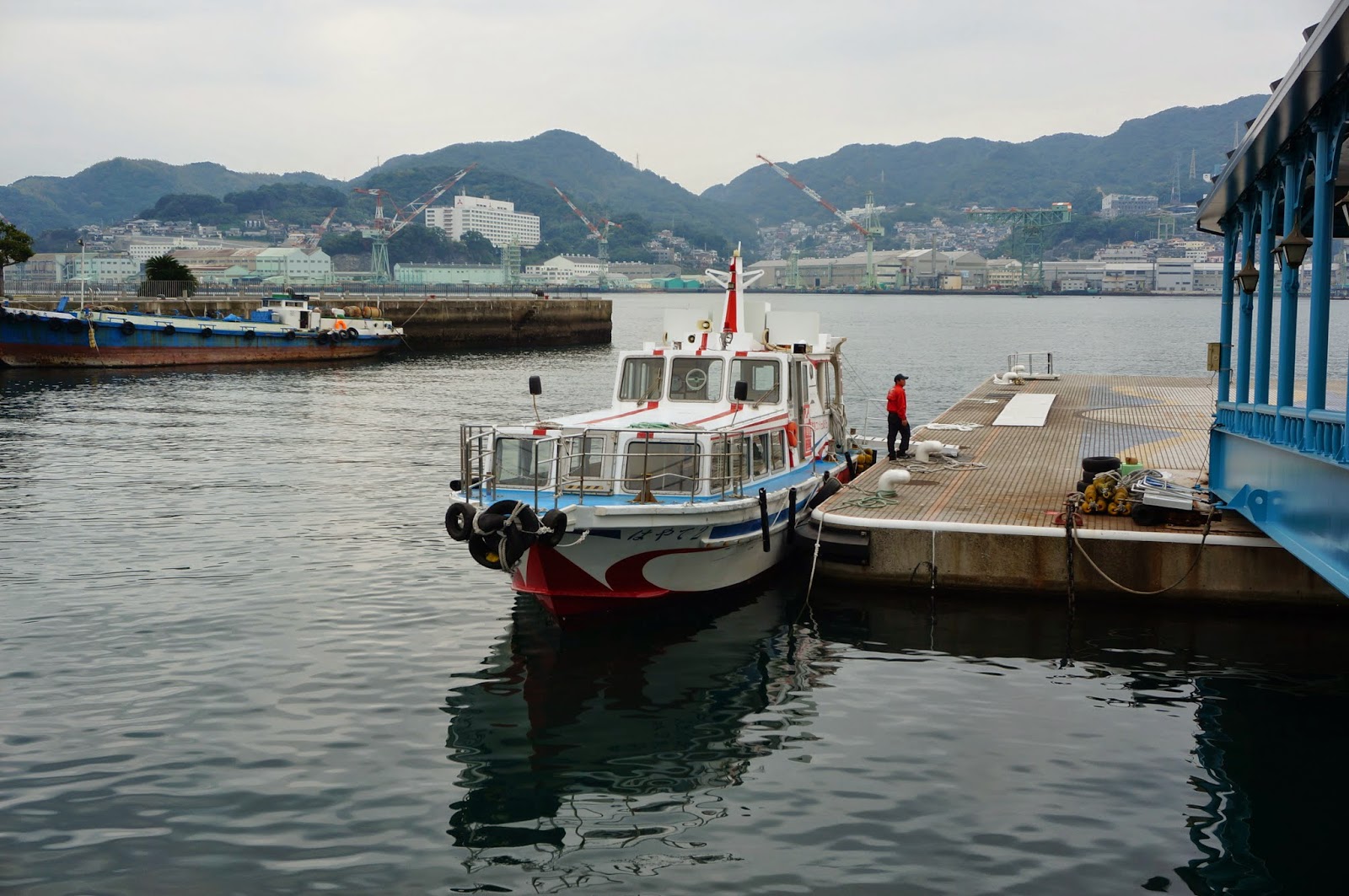
To see this all in real life and learn about it more up close we were given a tour through the island by someone who is an expert on the history of the island. First we had to take a small boat from Nagasaki to the island for about half an hour, guarded with gloves, thick soled shoes and a helmet, it is a dangerous place after all. We got on the island and first saw what used to be the elementary school.

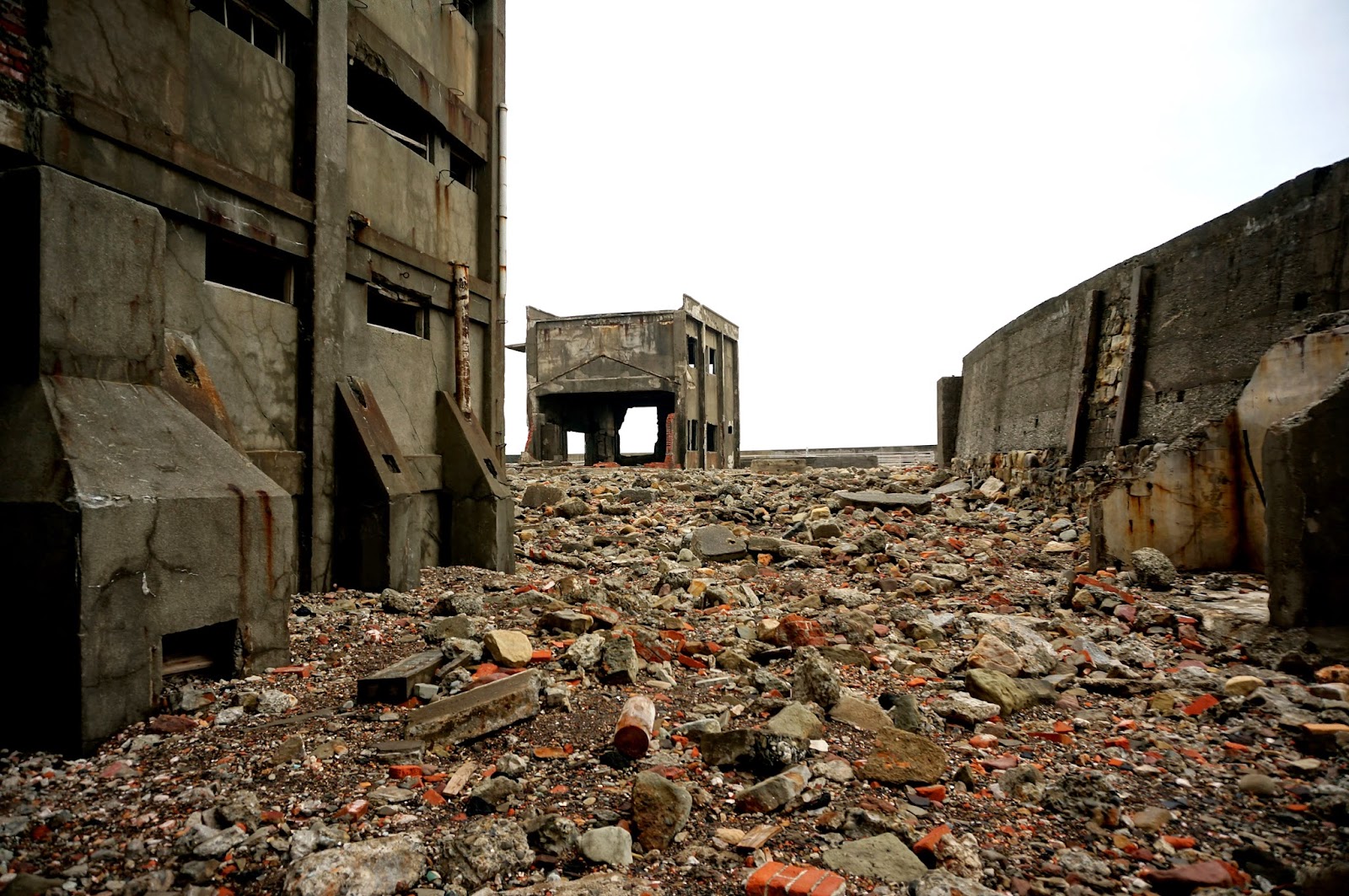
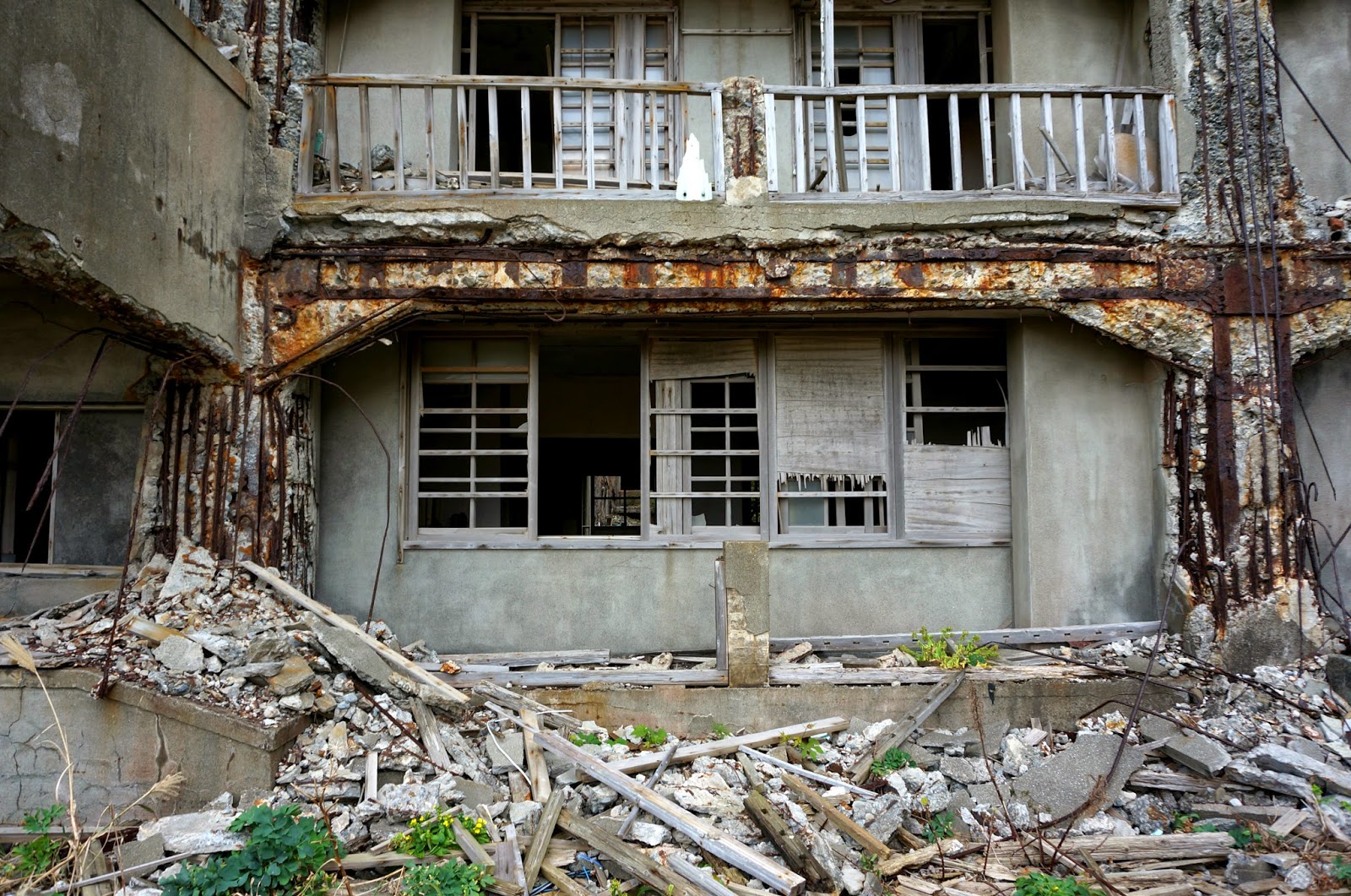
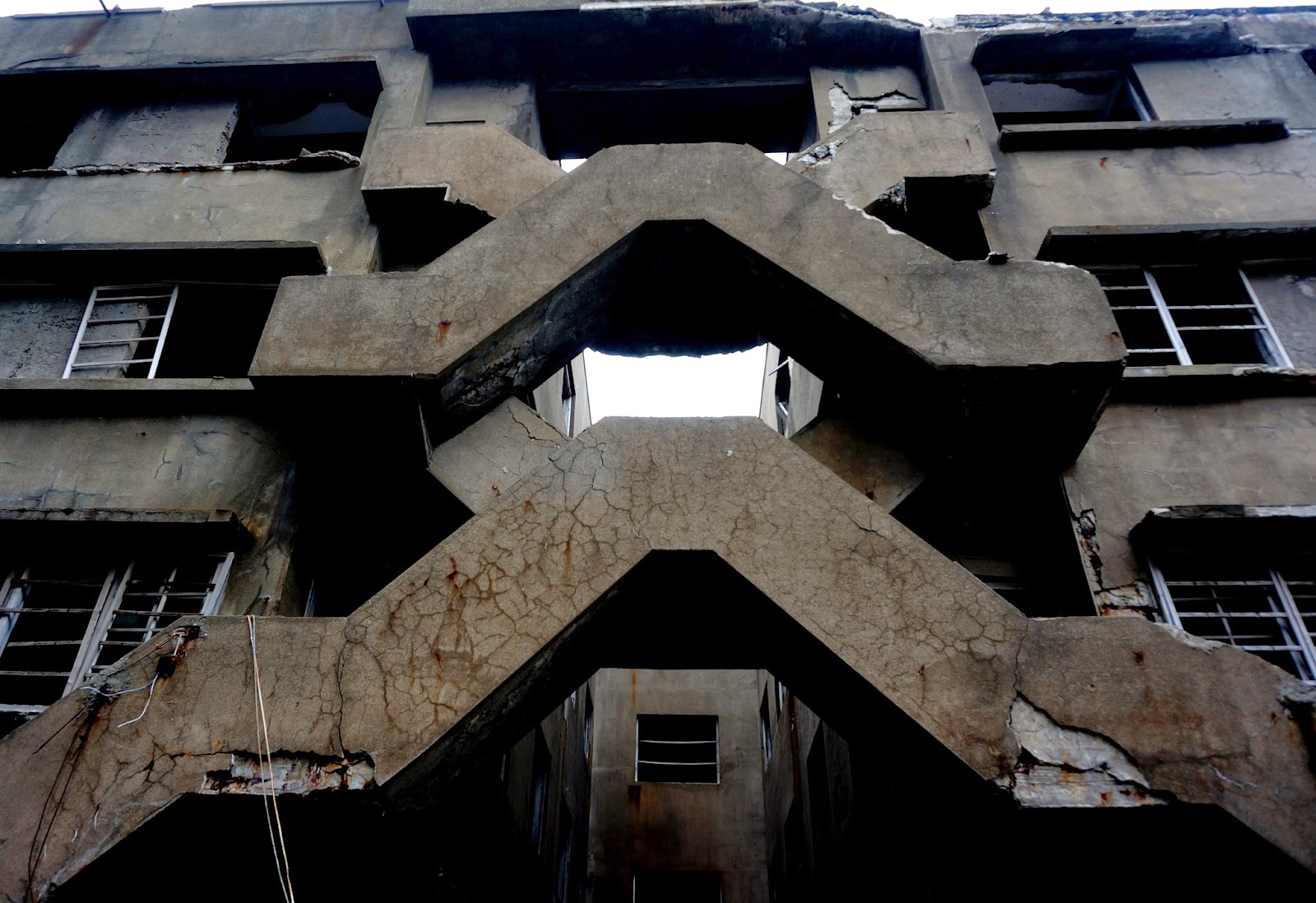
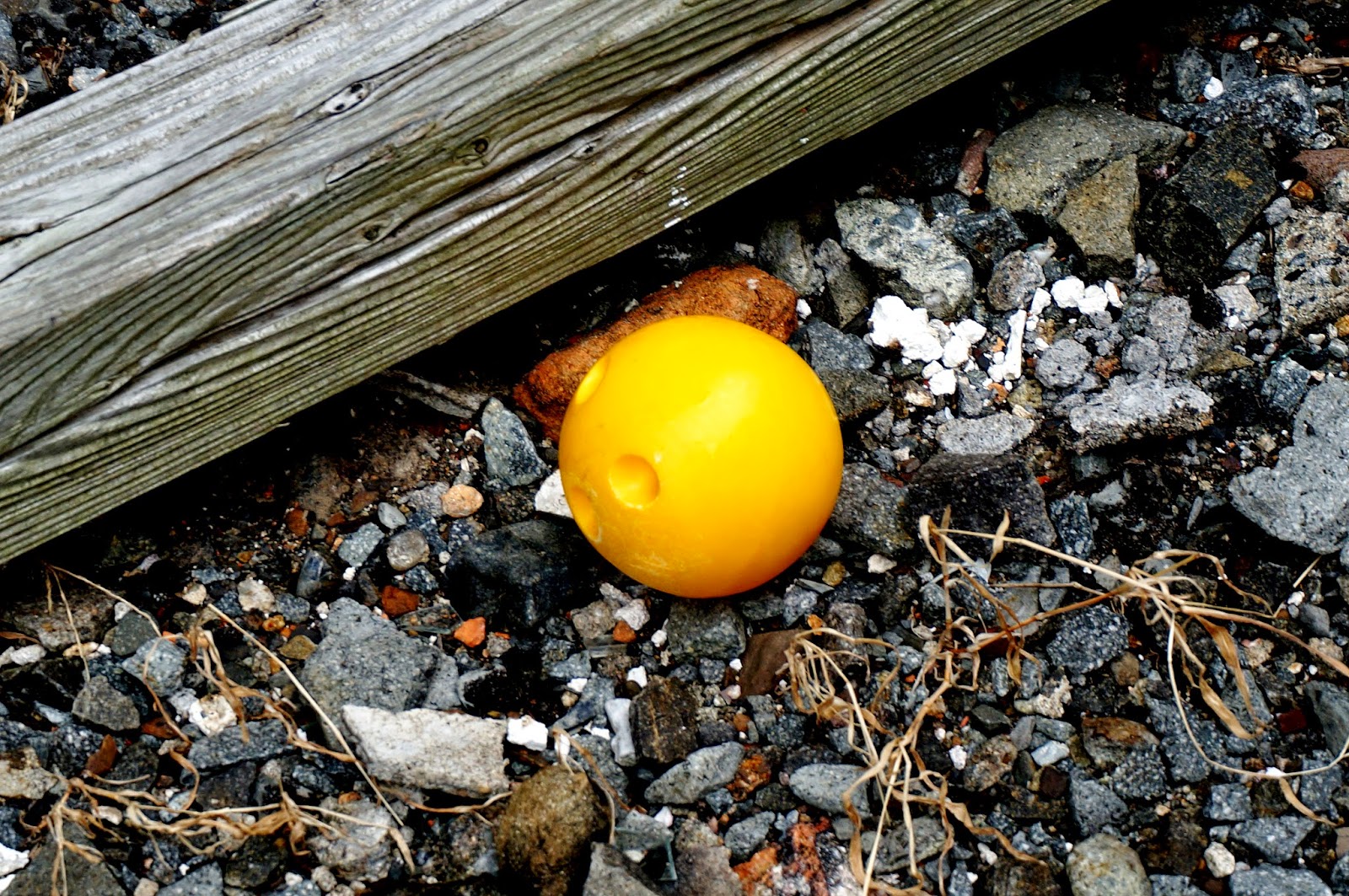
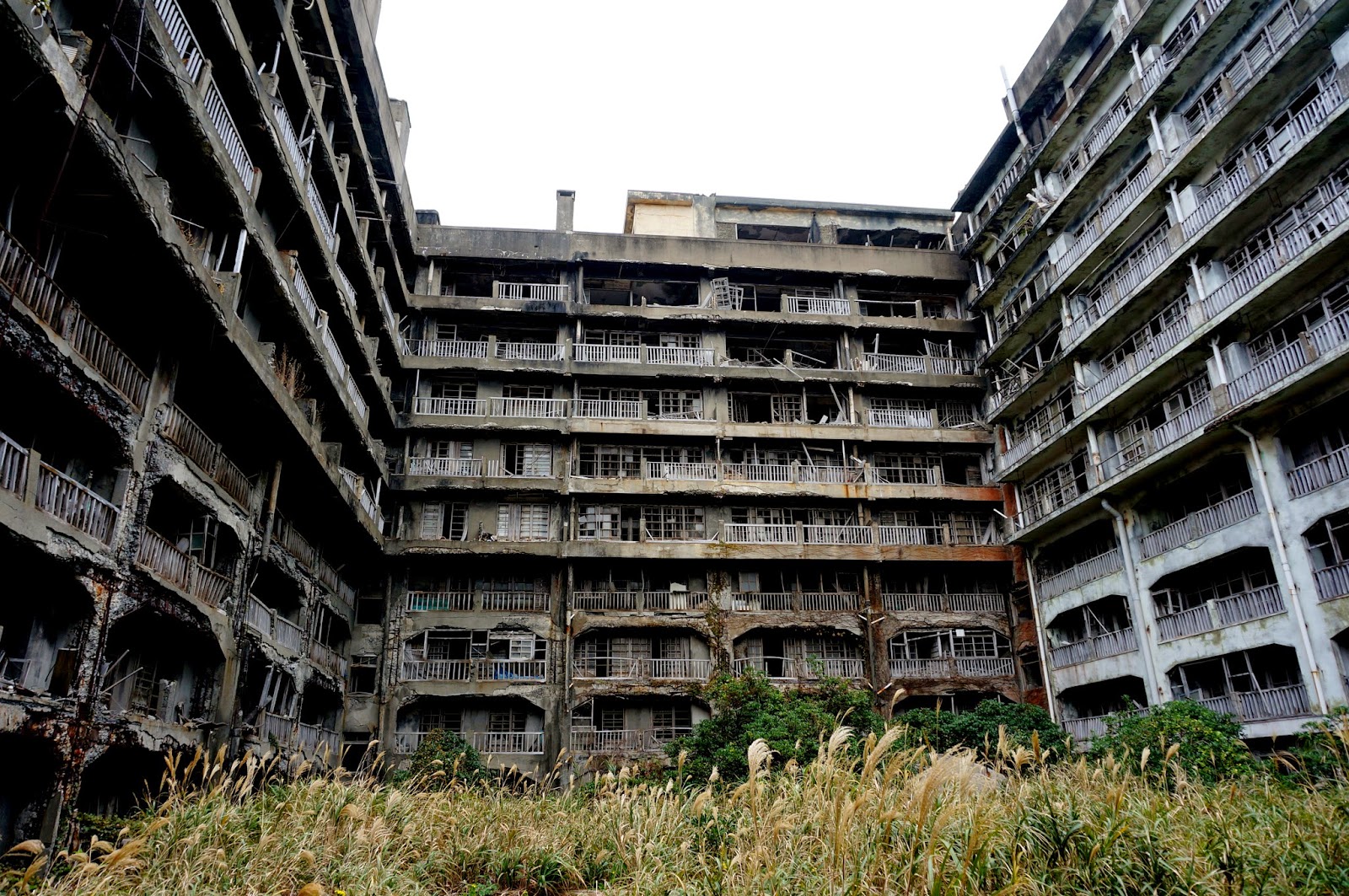
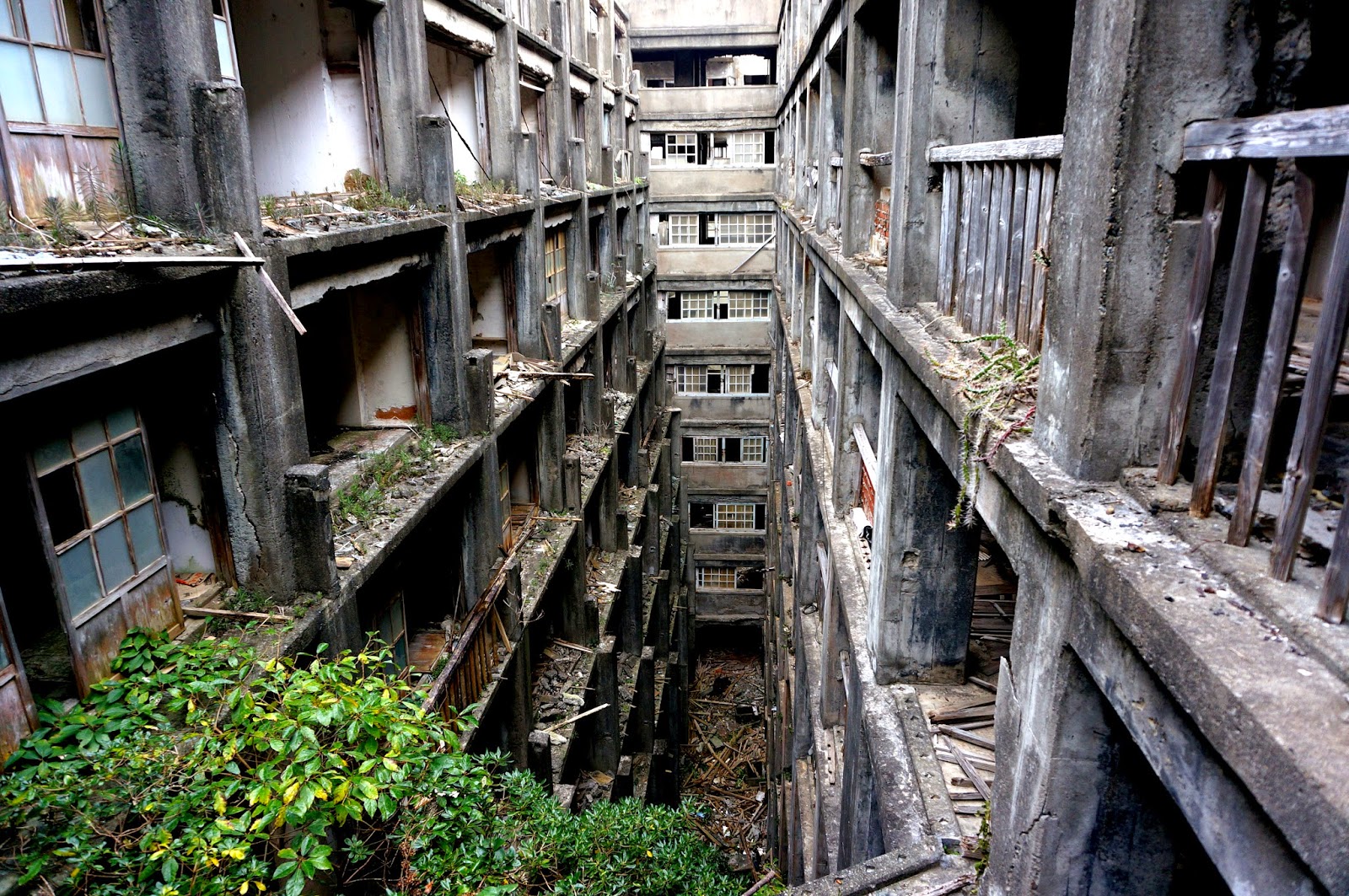
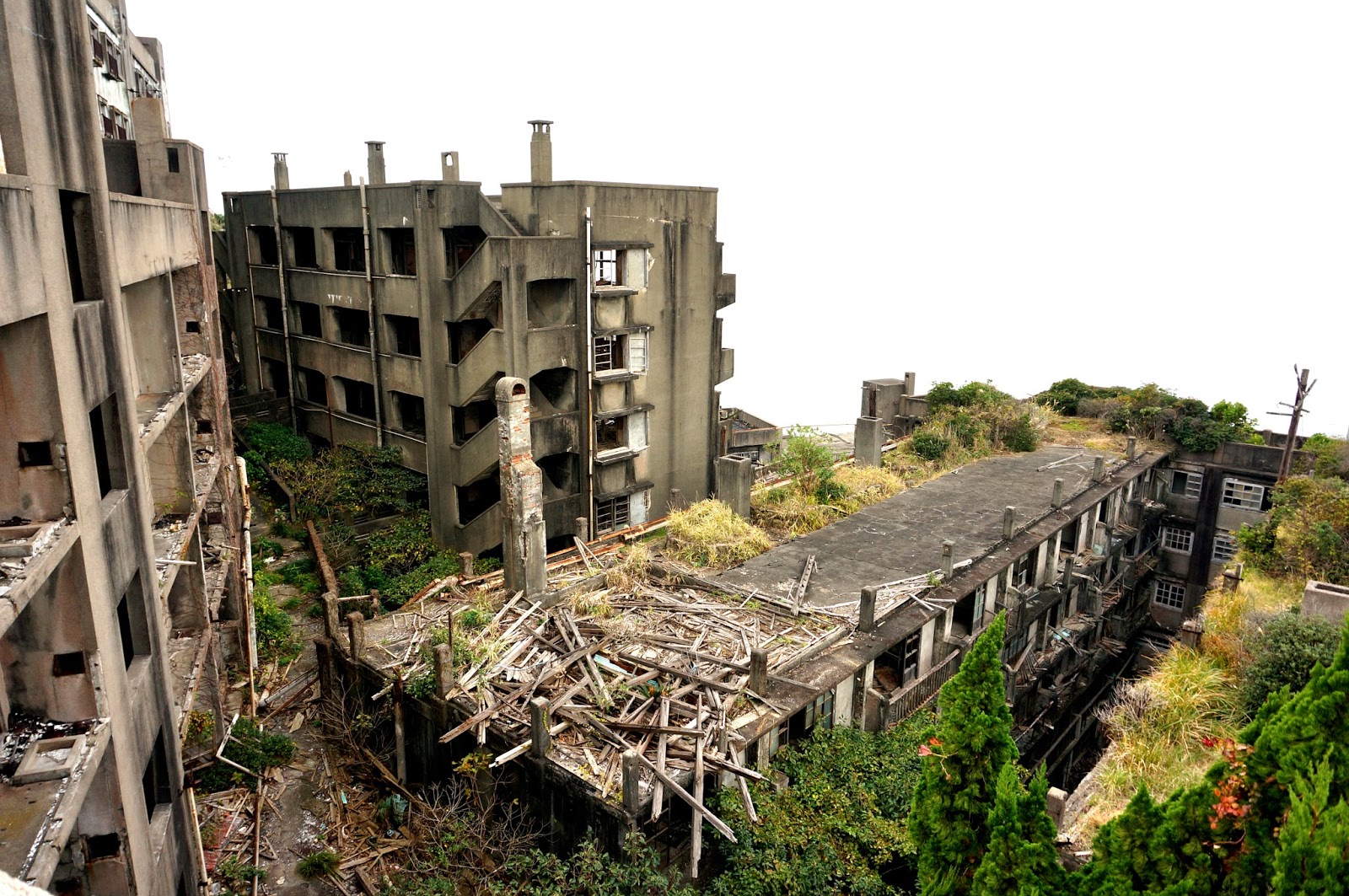
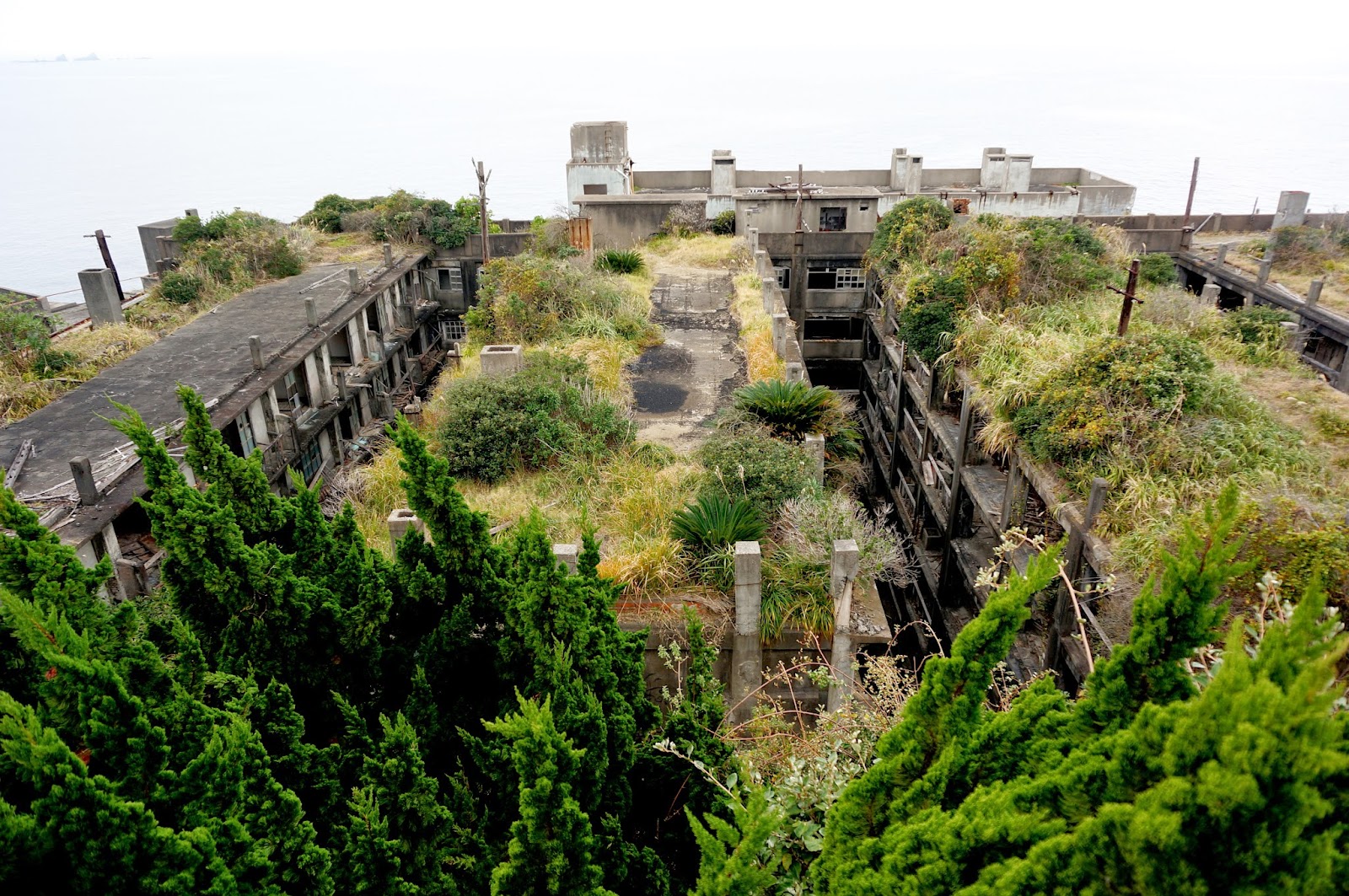
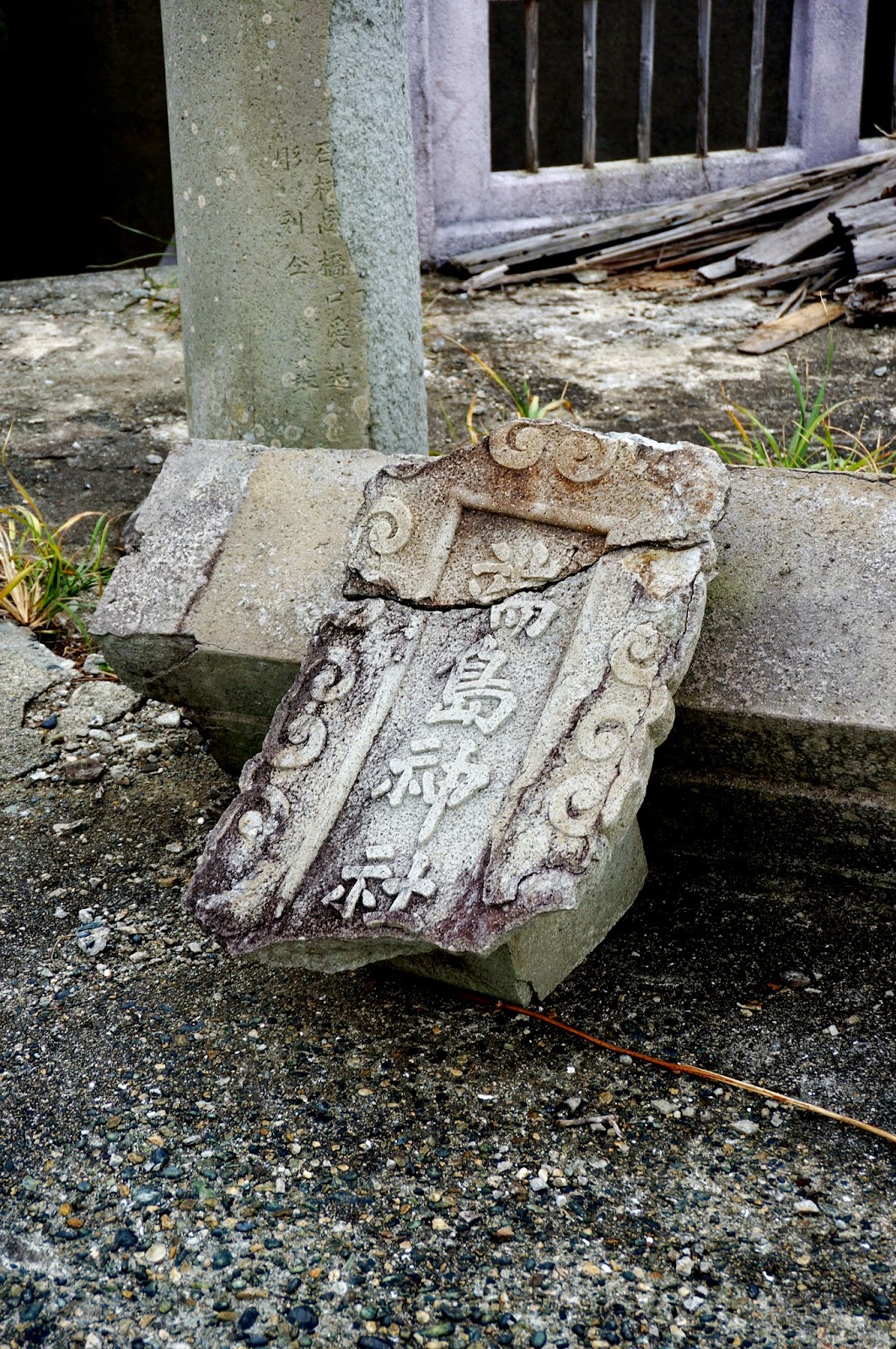
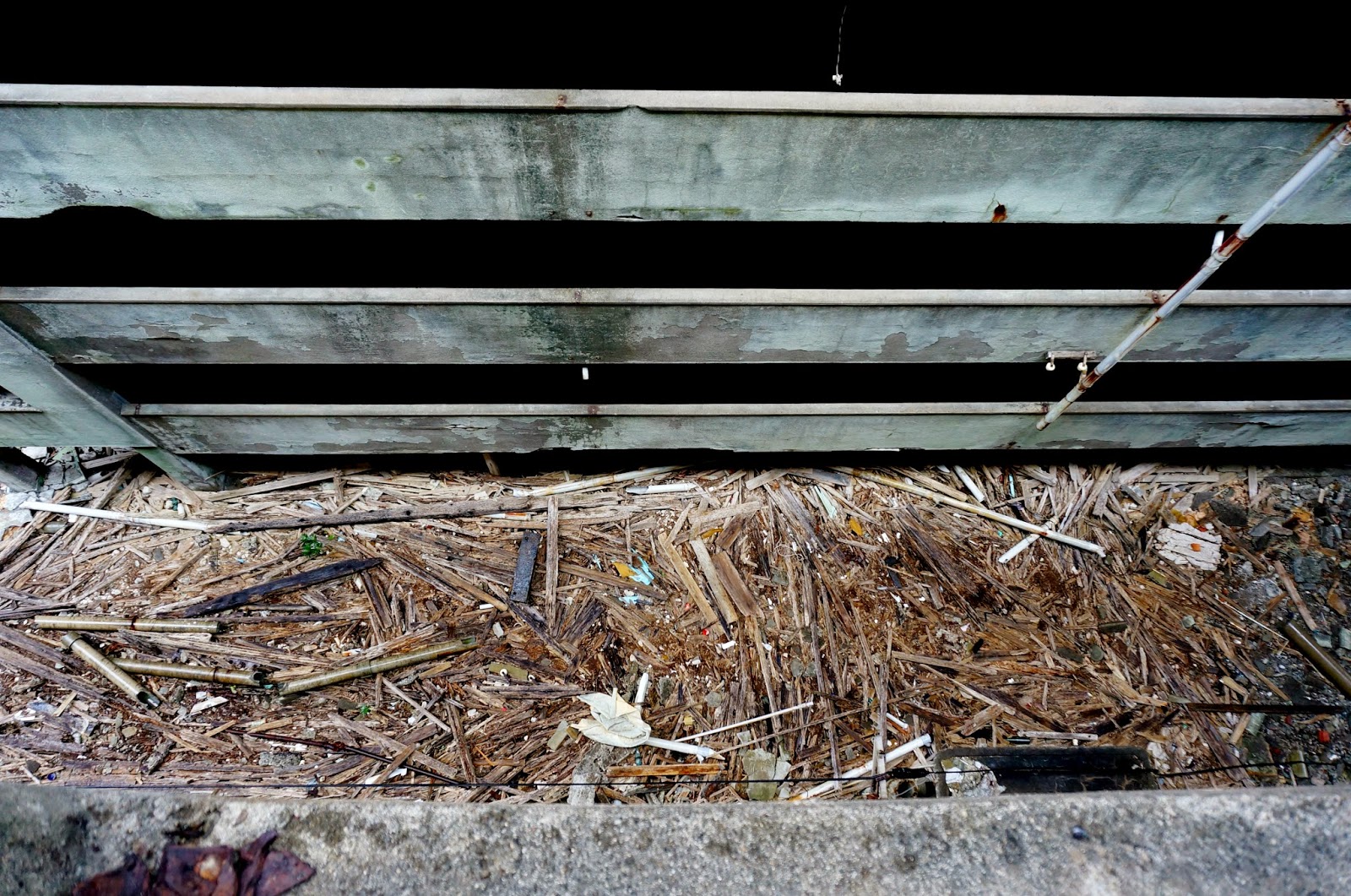
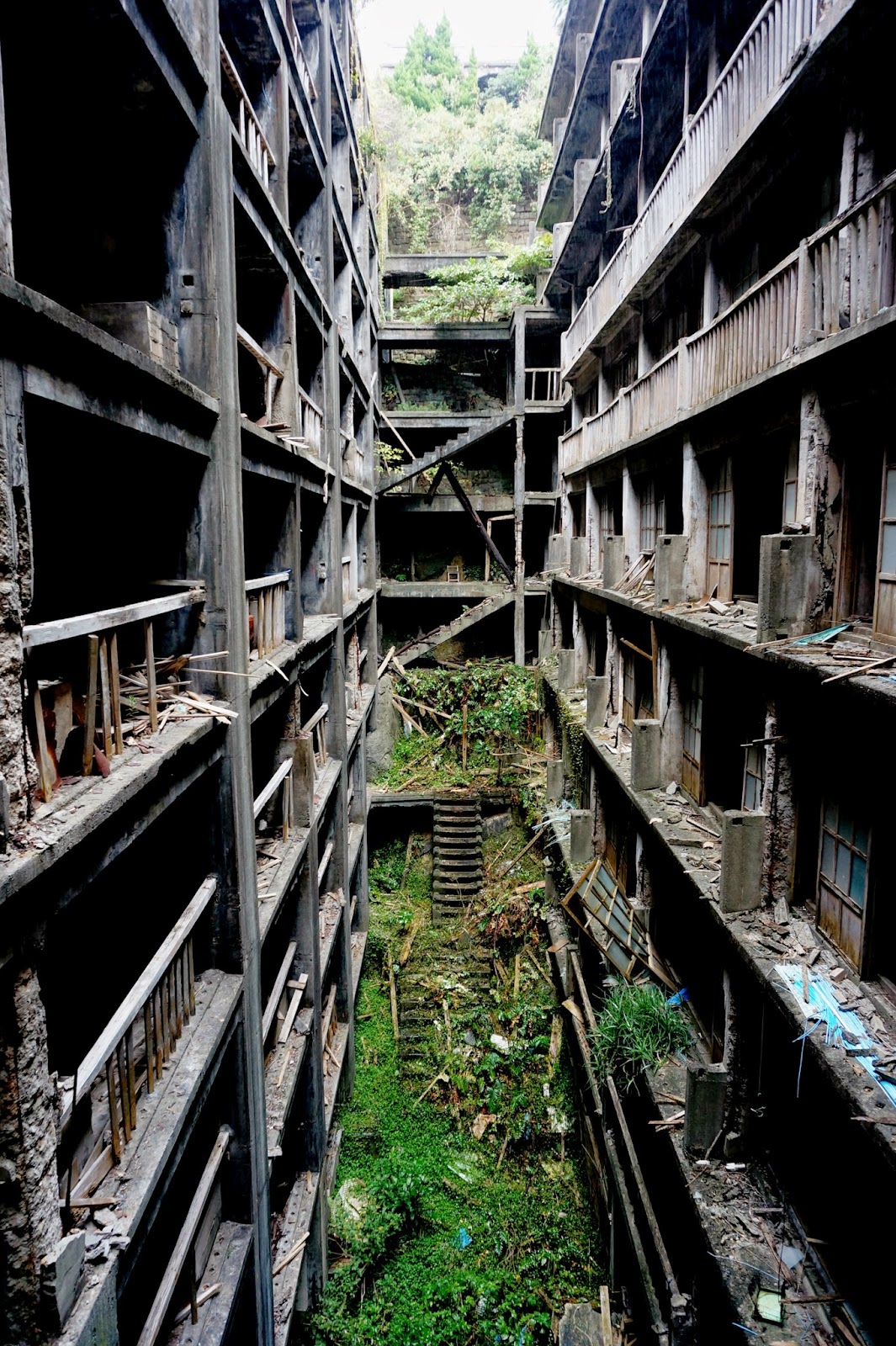
From the first second you step on the island you step into a totally different world that I just can not describe as anything else but eerie, breathtaking and surreal at the same time. The buildings have been teased by the forces of nature so much that the foundations of the buildings lay bare and were even partly missing. All windows are broken, doors are often gone, plants are beginning to take over the buildings. Everything is in ruins. Sometimes you find a lost shoe or childrens toy. Very strange.

The strangest thing however was when we went through the apartments later on and took a like inside the houses, some looked like people left in a hurry for something life threatening; cups still on the table, shoes still in the shoe closet, open bottles in the kitchen. It is really everything what you would expect from a ghost town. But that is not all I want to tell you. It is so much more than that.

Incredible architecture

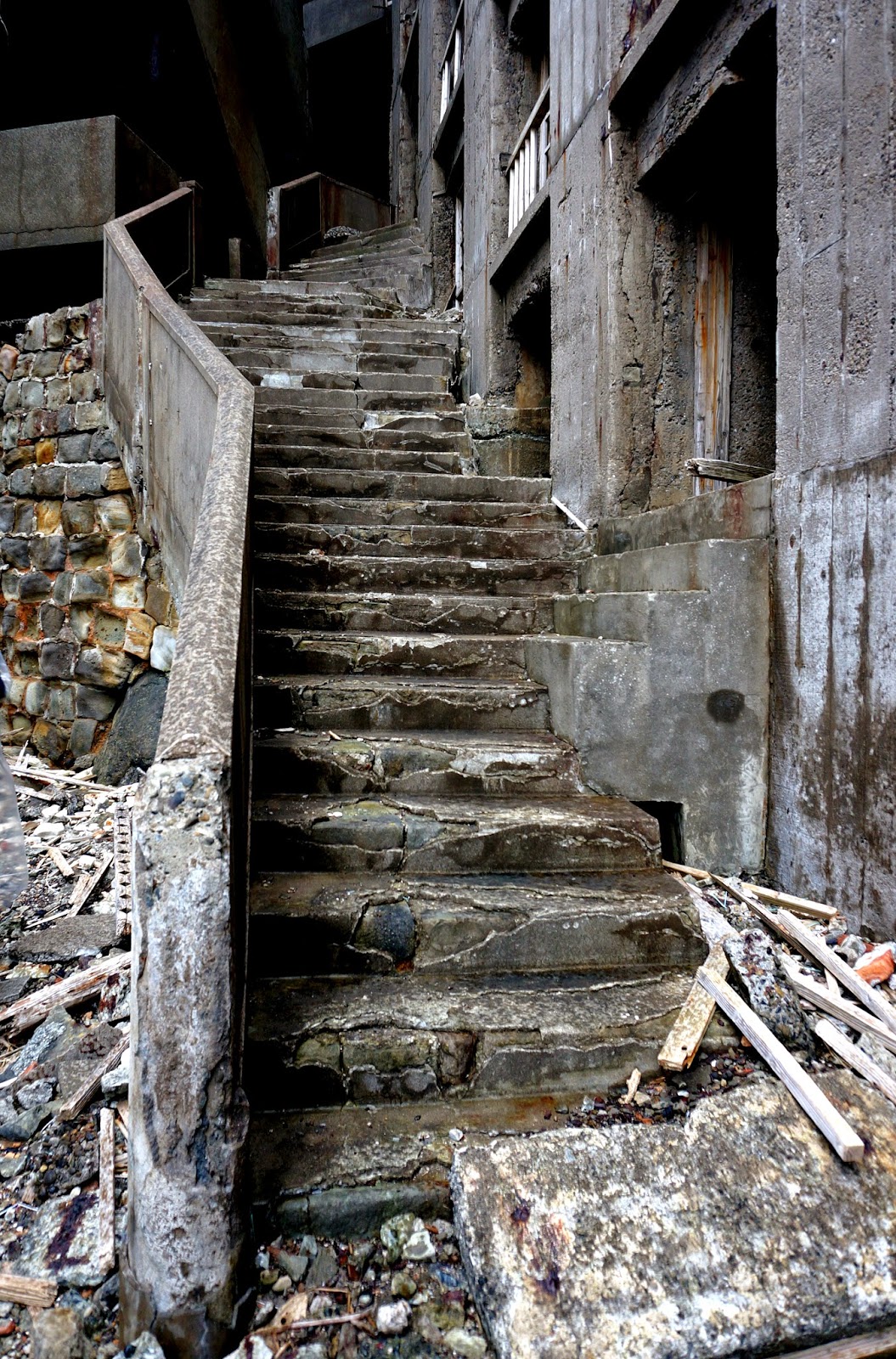
After taking a look at the school we made our way through the debris. Even though the buildings are very broken down, it is still easy to see some of the gorgeous architectural elements and it is amazing to think that the Japanese built concrete high rise apartments like this back in the day. We then made to the famous ‘Stairway to Hell’, a very steep stairway leading to the top of the small mountain on the island where the shrine used to be.

The way up to the shrine was the most beautiful to me; you could see the symmetrical shape of the buildings and ‘secret’ pathways that lead into the apartments, together with the plants that are now intertwined with buildings I felt like I was part of a Ghibli movie. The shrine itself had a great view on the island and the surrounding sea and islands. ‘One of the smaller nearby islands was used as a graveyard to put the ashes of cremated people’ is what our guide told us.

When we went back down after taking group pictures we actually went inside the apartments. The first building we went in was supposedly for the rich and more important people because the building in front of it was occasionally being tortured by big waves thus working as a protection shield for this building. Interesting isn’t it? That’s why all the hallways in the buildings had doors as well; to stop the waves from coming all the way into their houses. A popular activity of the housewives on stormy days was to watch the big waves from the rooftops.

The apartments were incredibly small by the way, only one room for a whole family. I wonder how people kept their sanity; no space in their home, no space outside either.

Mountains of Debris

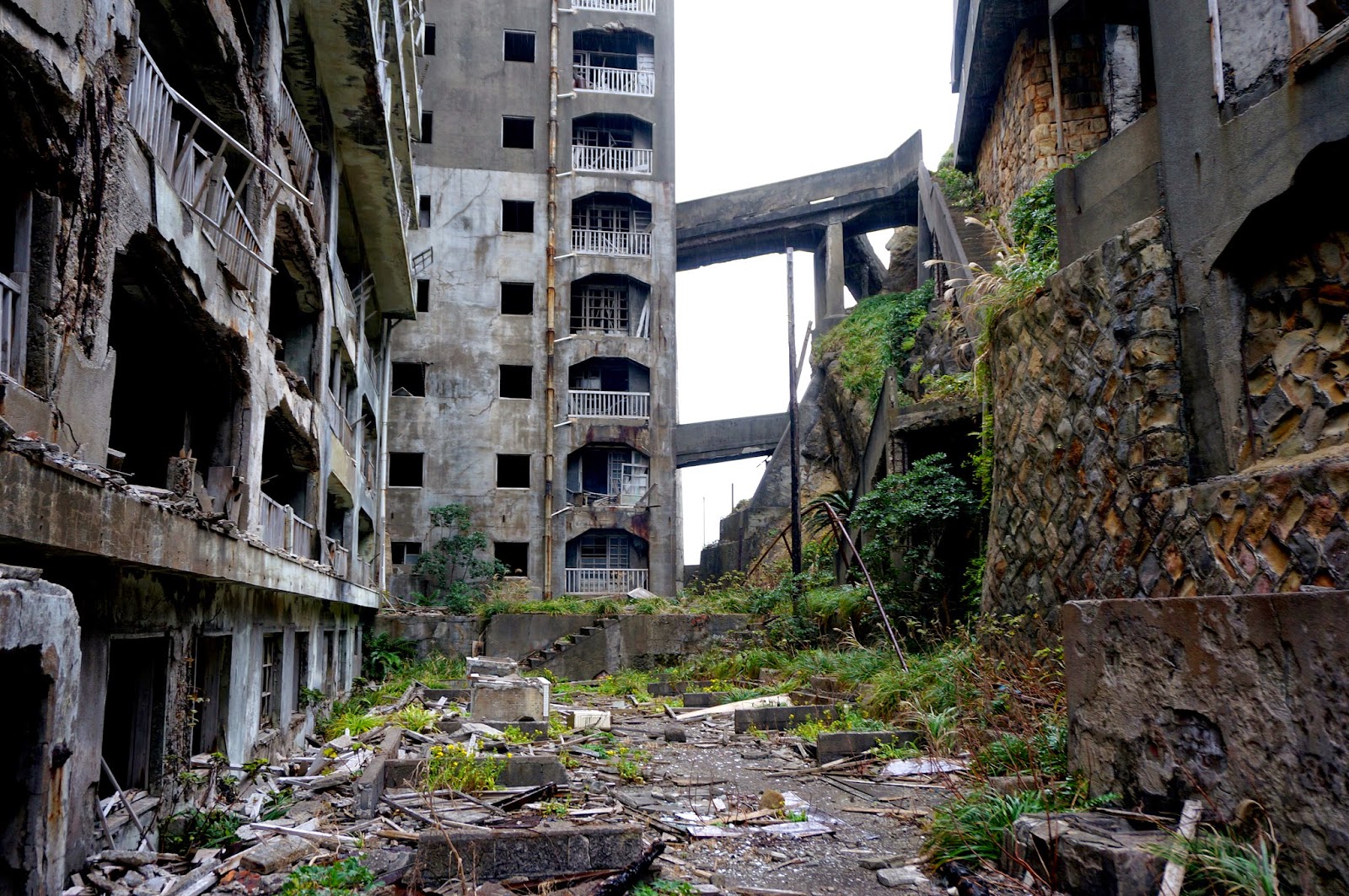
There was a concrete bridge connecting the two apartment buildings. We had to cross it one at a time to prevent it from breaking down under our feet. Going down the second apartment was a challenge as well with broken down stair cases and debris everywhere. But that was nothing in comparison to what came next. There was literally a wall of wooden debris that we had to climb over which was insane and when we go that done there was this whole area of stone debris which used to be the cinema. So we had to climb another mountain of debris, careful of every step you take. It is certainly an adventure and scary as well.

When we made it past bare foundations of buildings and more debris we made it to the oldest building of Gunkanjima and the first building in Japan built with reinforced concrete (if I am not mistaken), apartment no.30. Finally we walked the last part on the concrete road for the tourists and walked on what used to be the working place for the coal miners.

Enjoy responsibly 

Now, the message that I want to leave here is one of raising awareness and caution. Yes, Gunkanjima is an excellent place for taking gorgeous photos and it will bring out the adventurer in you. But please be aware of the significance this place holds in Japanese history. Please be aware why it deserves to be an UNESCO World Heritage Site. Don’t go there just for fun or for the sake of having been there, go their to learn something and to reflect on what you see.
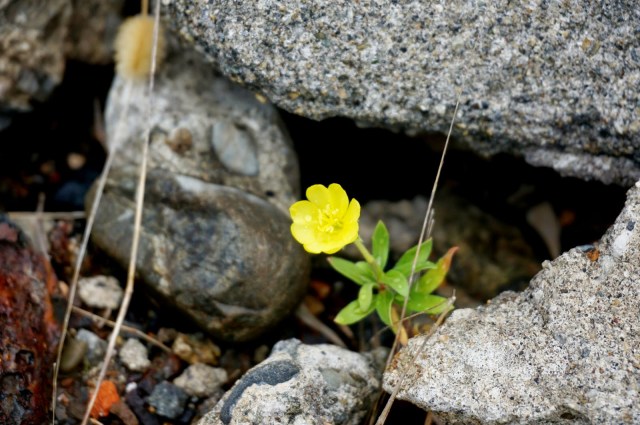
As a beginning researcher of the protection of cultural heritage I only hope this place will get the restorations it needs and that the people visiting there won’t make the already bad state of the buildings there even worse by mindlessly trampling all over the place in the hope to have a post-apocalyptic adventure. This place is a perfect example of what can happen when we don’t see the value of what is in front of us and forget about it. I hope that we won’t let other places fall down to a ruined state like that of gunkanjima, only to realize afterwards how important and valuable it is when it is too late.

Low Budget Japan – Tips and My Budget


Many still think that Japan is an expensive country to travel around. And they are partly right; in comparison to other Asian countries it is one of the most expensive countries. Accommodation is something that will set you back quite a bit and transportation can be costly. But those people also don’t know that you can eat lunch or dinner for 400 yen ($3,86) if you want to, explore the gorgeous cities and even some temples for free and that you don’t have to take an expensive shinkansen train to travel from city to city. My friend and I didn’t really travel budget friendly during our first trip in Japan, so don’t be scared when I show you my budget. It is just an indicator of what we spent and I will give you some tips to make your trip even cheaper.


Normally I am not very meticulous with my budget. Yes, I want to travel cheaply and I will stay in hostels and take the cheapest bus, but I usually don’t write down everything I spend. But for this trip I wanted to have a clear image of where my hard earned money went (I saved money for a good four years to finance this trip, but as a fourteen year old kid you don’t really have a royal salary). So this was the first and last time I wrote down almost everything I spent, not always in exact number but globally. I actually think it was a good habit because it gives me insight in how much I spent that day so that I can slow down when I’ve spent too much or treat myself the next day when there’s money left. And it is great information for my future trips to the same place, or as information for other people, like readers of this blog. Maybe I should start writing down my travel expenses again from now on… 🙂

So here is a breakdown of my costs day by day, leaving out personal shopping expenses (those added up quickly!). Also, I will put some costs in the color blue, which means that I won’t be counting them for the total daily sum and daily average. Those are the activities that were very special and specific things that we did but that most other people probably won’t do when they are in Japan. The pink words are urls (links) by the way, you can click on them to get more information about that subject.  To give you a fair look on our normal daily costs of traveling in Japan I will count our expenses for accommodation, food, sightseeing and transportation.
The first day is only half a day because we arrived in Japan in the afternoon. 


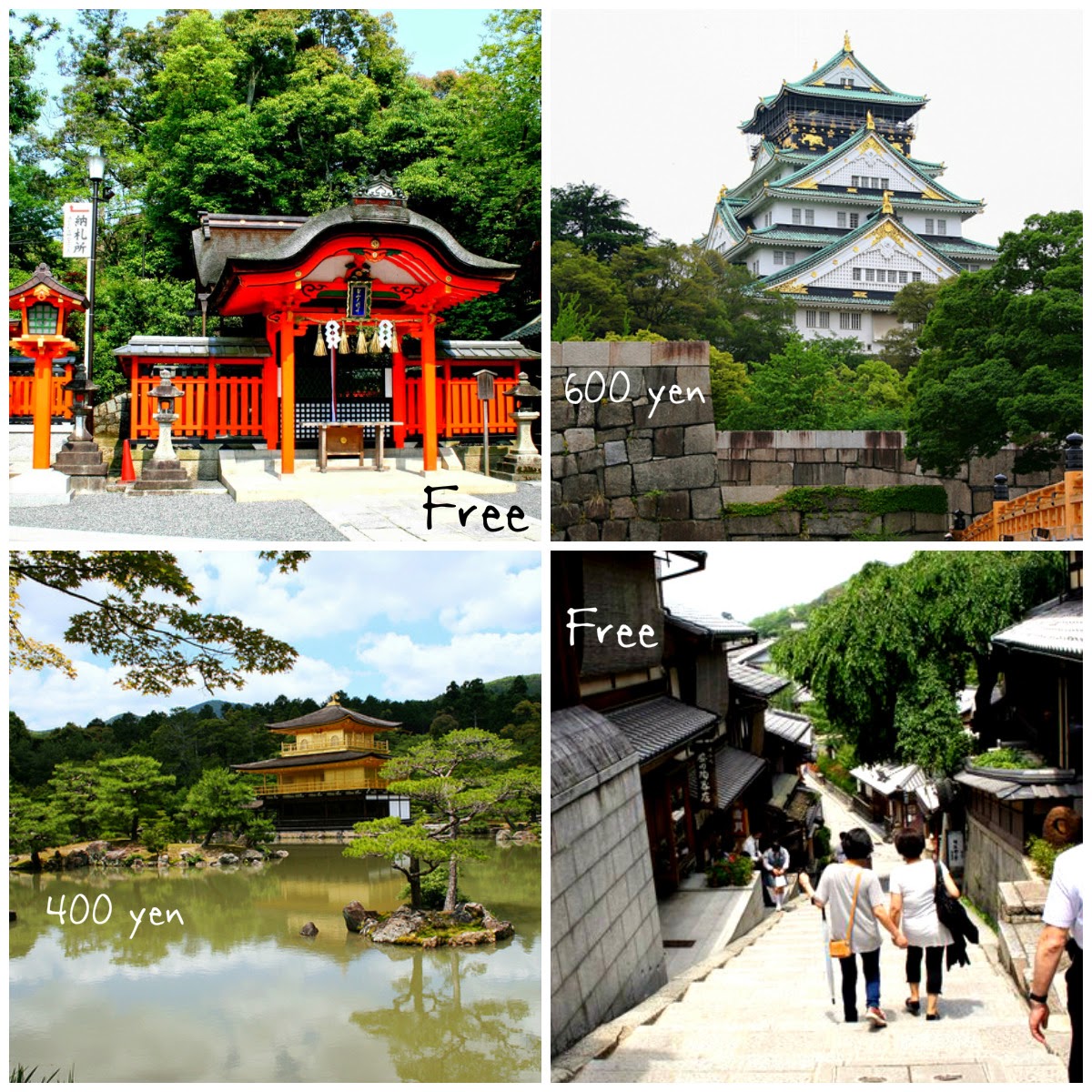
Fushimi Inari Taisha and Gion and the cute streets in front of Kiyomizu are free to visit. Osaka Castle and the Golden Pavilion are also cheap sights to see.


Our Budget


  • Three metro rides ¥ 390
  • Airport Express Train ¥ 890
  • 7-11 dinner ¥ 360
  • Boat ride ¥ 1700
  • Hotel ¥ 4725 ————- + ¥ 8065
  • Four metro/train rides ¥ 980
  • breakfast ¥ 450
  • Kaiyukan Aquarium ¥ 2000
  • Family restaurant curry dinner ¥ 500
  • HEP Five Ferris Wheel ¥ 500
  • Browsing the HEP Five shops – free
  • Hotel ¥ 4725 —————— + 9100
  • Four metro/train rides ¥ 790
  • Breakfast ¥ 450
  • Lunch ¥ 120
  • Okonomiyaki dinner ¥ 1850
  • Osaka Castle ¥ 600
  • Museum of history ¥ 600
  • Hotel ¥ 4725 —————- + ¥ 9135
  • Train/metro rides ¥ 1000
  • Breakfast ¥ 282
  • Lunch ¥ 600
  • Dinner theme cafe ¥ 1000
  • Takarazuka theatre ¥ 8000
  • Exploring Takarazuka streets – free
  • Hotel ¥ 4725 ————– + ¥ 7610
Cute streets of Takarazuka – free

Kyoto Day 5

  • Osaka-Kyoto train ¥ 590
  • Kyoto-Fushimi return ticket ¥ 510
  • Breakfast ¥ 350
  • Fushimi Inari Taisha – free
  • Matsuya Dinner ¥ 400
  • Hotel ¥ 4000  —————– + ¥ 5850
  • Breakfast & Lunch ¥ 890
  • Nijo castle ¥ 350
  • Baskin Robbins (dinner) ¥ 446
  • Train ¥ 1080
  • Metro ¥ 520
  • Mika Nakashima Concert ¥ 6800
  • Hotel ¥ 4000 —————— + ¥ 6700
  • Geisha makeover ¥ 9975
  • Breakfast ¥ 300
  • Transportation ¥ 2000
  • McDonalds dinner ¥ 600
  • Hotel ¥ 4000 —————— + ¥ 6900
  • Breakfast ¥  400
  • Silver pavilion ¥ 500
  • Kiyomizu ¥ 300
  • Lunch and drinks ¥ 730
  • 7-11 Dinner ¥ 300
  • Kpop Concert ¥ 9500
  • Rented Bicycle¥  1000
  • Hotel ¥ 4000 —————– + ¥ 7230
  • Breakfast ¥ 290
  • Lunch ¥ 300
  • Dinner Lotteria ¥ 600
  • Golden Pavilion ¥ 400
  • Ryoanji ¥ 500 
  • Ninna-ji (Goten) ¥ 500
  • Rented bicycle ¥ 1000
  • Ryokan stay ¥ 12000 —————- + 15590
Day 10
  • Bullet train ¥ 9800
  • Breakfast ¥ 450
  • Harajuku crepe ¥ 470
  • Walking around Harajuku and Shibuya – free
  • Family restaurant dinner ¥ 860
  • Metro ¥ 800
  • Hotel ¥ 4416 ————— + ¥ 16796
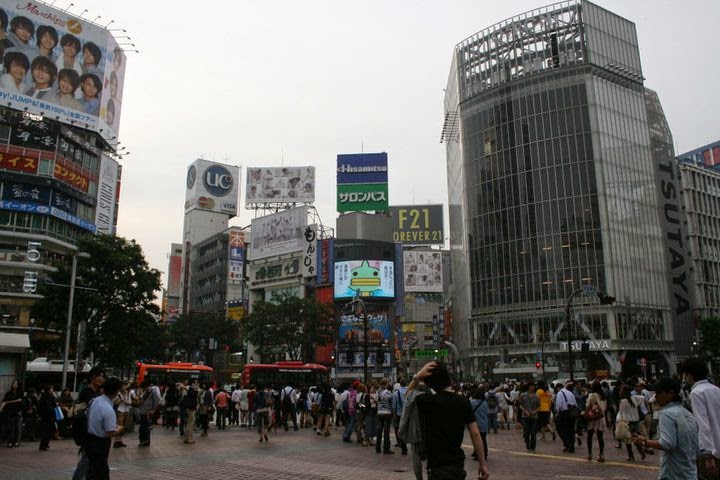
Busiest intersection in the World – Shibuya – free


Day 11

  • Breakfast ¥ 300
  • Metro ¥ 1240 
  • Hello Kitty Land ¥ 4000
  • Lunch ¥ 110
  • Dinner Yoshinoya ¥ 330
  • Hotel ¥ 4416 ————– + 10396
Day 12
  • Breakfast ¥ 400
  • Transportation ¥ 1000
  • Exploring Yokohama – free
  • Hotel Party Entrance ¥ 1000
  • Dinner MOS burger ¥ 750
  • Hotel ¥ 4416 —————– + ¥ 7566
Day 13
  • Breakfast ¥ 340
  • Lunch mister donut ¥ 320
  • Dinner Princess Cafe ¥ 2500
  • Walking Through Akihabara and Ginza – free 
  • Metro/train ¥ 800
  • Hotel ¥ 4416 —————— + ¥ 8375
Day 14
  • Breakfast ¥ 360
  • Lunch ¥ 445
  • Hawaiian Tonkatsu Dinner ¥ 900
  • Transportation ¥ 1000
  • A day in Shibuya and Korea Town – free
  • Hotel ¥ 4416 —————- + ¥ 7121
Day 15
  • Breakfast ¥ 440
  • Disney entrance ticket ¥ 5300
  • Churro ¥ 300
  • Dinner ¥ 1100
  • Transportation ¥ 780
  • Hotel ¥ 4416 —————– + ¥ 12336

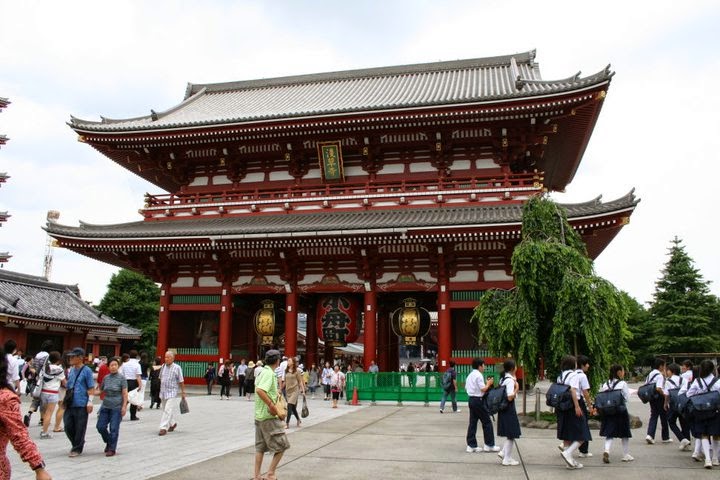
Asakusa – free


Day 16

  • Breakfast ¥ 380
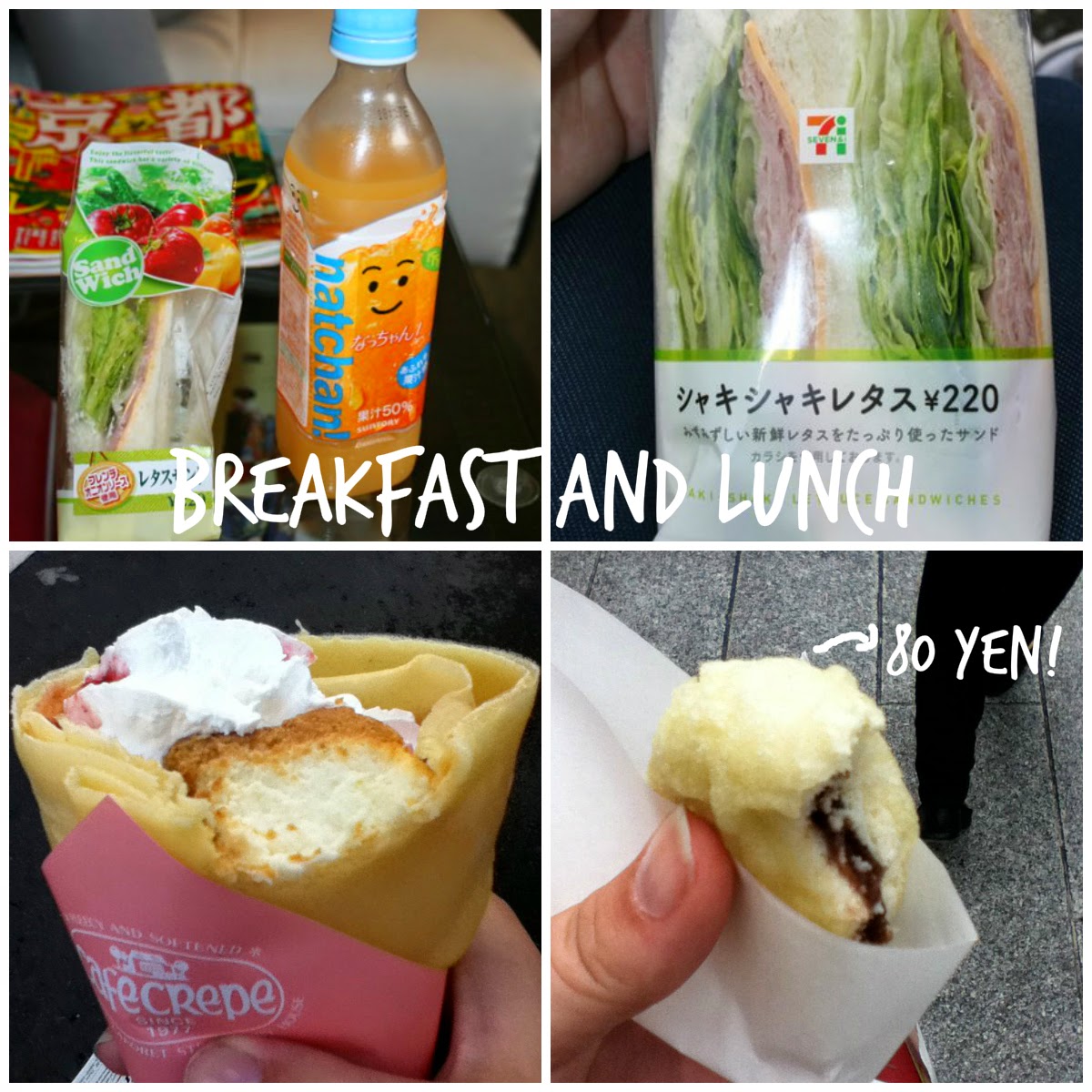
  • Streetstall Manju ¥ 80
  • Visiting Asakusa – free
  • Harajuku crepe ¥ 460
  • Dinner MOS burger ¥ 750
  • Transportation ¥ 1100 ———– + ¥ 2270
Which is a total of ¥ 141040 for 16 days.
That means an average of ¥ 8815 per day, or $84,71.

That is quite a lot of money, double or even triple the budget of the average backpacker in Asia.
Do take in consideration that no expenses were spared for this trip as I had saved for this for many years I wanted to make a dream trip out if it by doing everything I wanted to do, no matter how expensive. Trips to amusement parks are expensive. We stayed in private ensuite rooms (but some of the cheapest available) and even treated ourself to an expensive stay at a traditional ryokan. Together with bullet train, a lot of metro rides and renting bicycles the expenses packed on quickly. That also means that this budget has some potential of getting better!


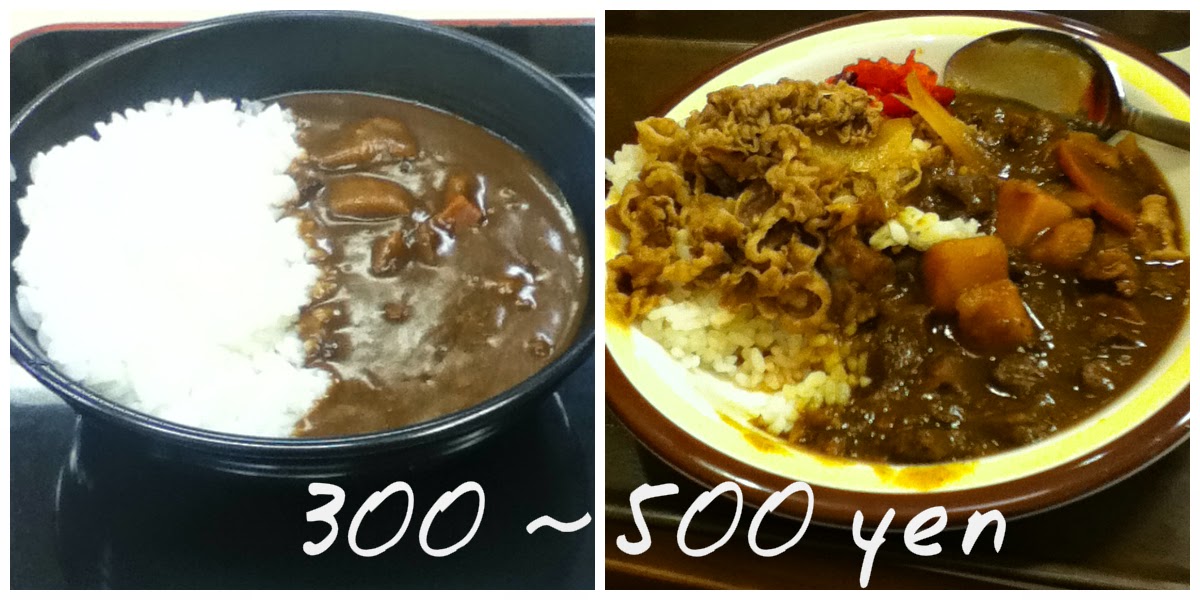
ranging from 200 yen to 500 yen


Tips


Tips for lowering the budget:
  • Stay in hostels. You should be able to find something decent for around ¥2500. In Tokyo it will be a bit more. Another way to save on accommodation is by reserving a room on airbnb. This website lists rentals, like rooms or whole houses, put up by private people. These are aimed at the travel community and are rated by people who stayed there in their reviews. It is possible to find some gems for cheap on airbnb. You could also try couch surfing, which is free and a great experience. I did this in South Korea and made some awesome friends and had unique experiences this way, and all for free !
  • Buy breakfast at a convenience store. We did this everyday and this is why our costs for breakfast are quite low. Two nice sandwiches are about ¥220 and a drink ¥120. Even cheaper would be to go to a real supermarket and bulk buy your breakfast for a few days.
  • Lunch for us ranged from ice-cream to street food to convenience store food or even nothing. These things are all quite cheap and were good enough for us because we are not big eaters. Lunching at a restaurant will be more expensive.
  • Dinner can be costly at some restaurants. Family restaurants are your best bet for a proper but quite cheap meal around ¥800. A meal at a fast food restaurant like McDonalds or MOS Burger is ¥600-700. But for the real cheapskates there is Matsuya, Yoshinoya and Sukiya where you can eat simple rice with beef or curry meals for as low as ¥300. That means dinner for only $2.90! Avoid expensive theme restaurants, foreign cuisine or other fancy restaurants.
  • Transportation is very costly. Try to walk as much as you can within a city so you don’t have to buy expensive metro- and train tickets or have to rent a bicycle. This will save you a lot of money. Moving from city to city will be the cheapest with buses or slow trains. The famous bullet train will set you back a few thousand yen, so avoid it if you can. If you want or have to take the bullet train, try to buy a special discount ticket, like the Puratto Kodama Economy Plan. You can find some more information here.
  • When in Japan you want to see some tempels and museums of course. These are not super expensive, but not free either (like in London). Tickets will range from ¥300 to ¥600. You can make it a cheap trip if you balance this well with free things like exploring different cities, neighborhoods or even some temple grounds like Fushimi Inari Taisha and Myoshin-ji. Amusement parks, concerts, a geisha makeover, tea ceremonies and other fun but unusual things are very expensive and are best avoided if you are on a small budget.
  • Shopping is rather expensive in Japan. You can find some great things and I really enjoyed shopping in Japan but after the trip I was broke because of it. If you have a weak spot for cute things, pretty clothes, cool gadgets or traditional Japanese stuff, you’d better avoid the shops unless you have got a big budget 😉 And if you really want to shop after all, try a 100 yen shop.
dinner


Low Budget Calculation


Based on the above tips your low budget day can look like this:
  • Walking and two metro rides +- ¥ 400
  • Breakfast +- ¥ 320
  • Lunch +- ¥ 200
  • Dinner +- ¥ 400
  • Hostel +- ¥ 2500
  • Temple visit +- ¥ 400
  • Souvenir/Other ¥ 500  ————– + ¥ 4720

That is only $34,50 a day! It is slightly more than the average day in South East Asia, but still very doable I think. It just takes a bit more effort in Japan to stay on budget, but it is worth all the effort because Japan is one of those countries you will never forget! And if you only just want to eat and visit temples, you can even scrap the Souvenir/Other part and go on a budget of $31 a day! And by couch surfing and not taking the metro, you can get an even lower budget. It’s all about creativity and sacrifice 😉 If you need some tips on (free) things to do in Japan, read my 101 Japan list. I will make a post about free activities in Japan in the future, see keep an eye out for that!


Now go and plan your trip to Japan !

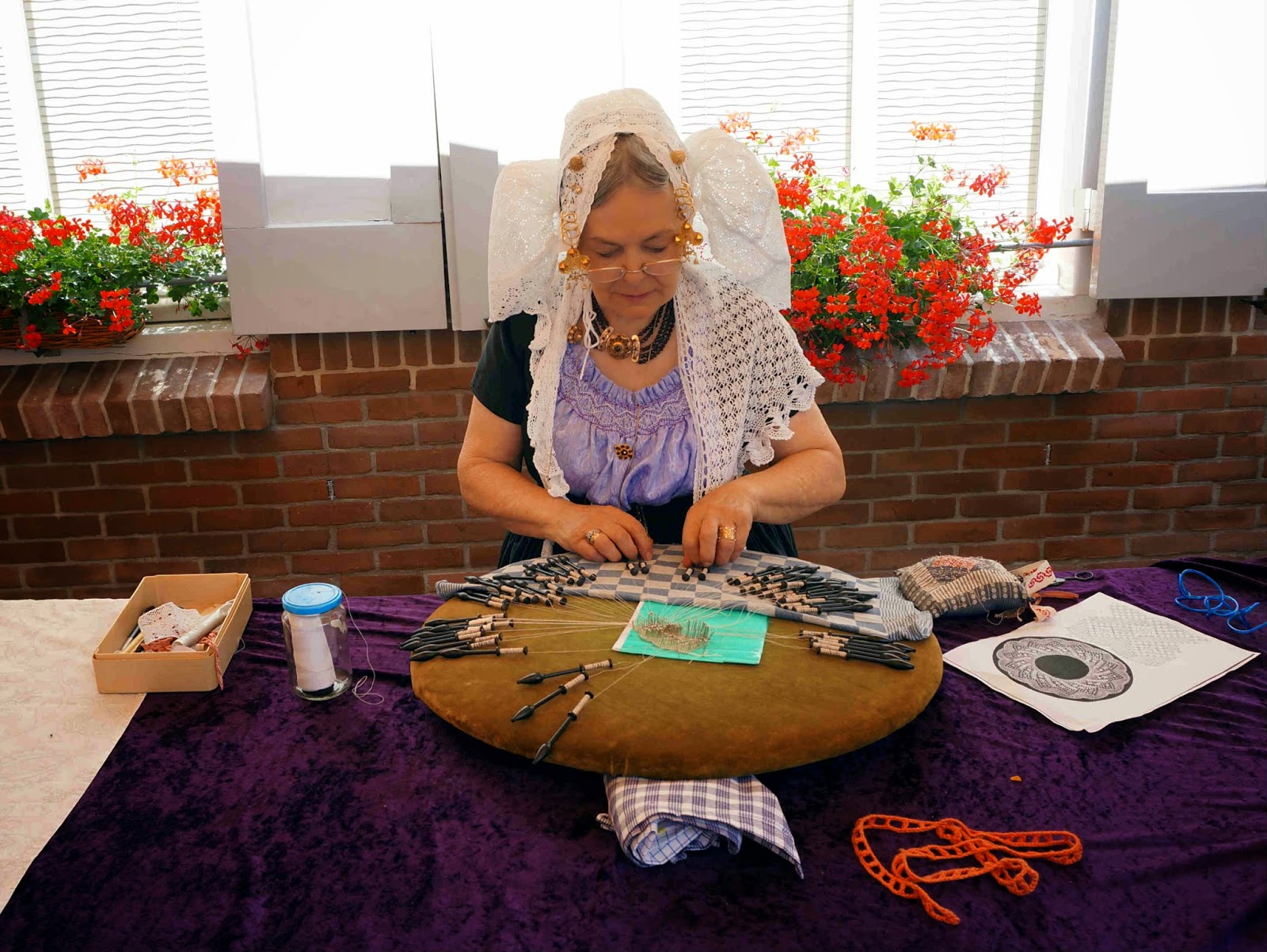
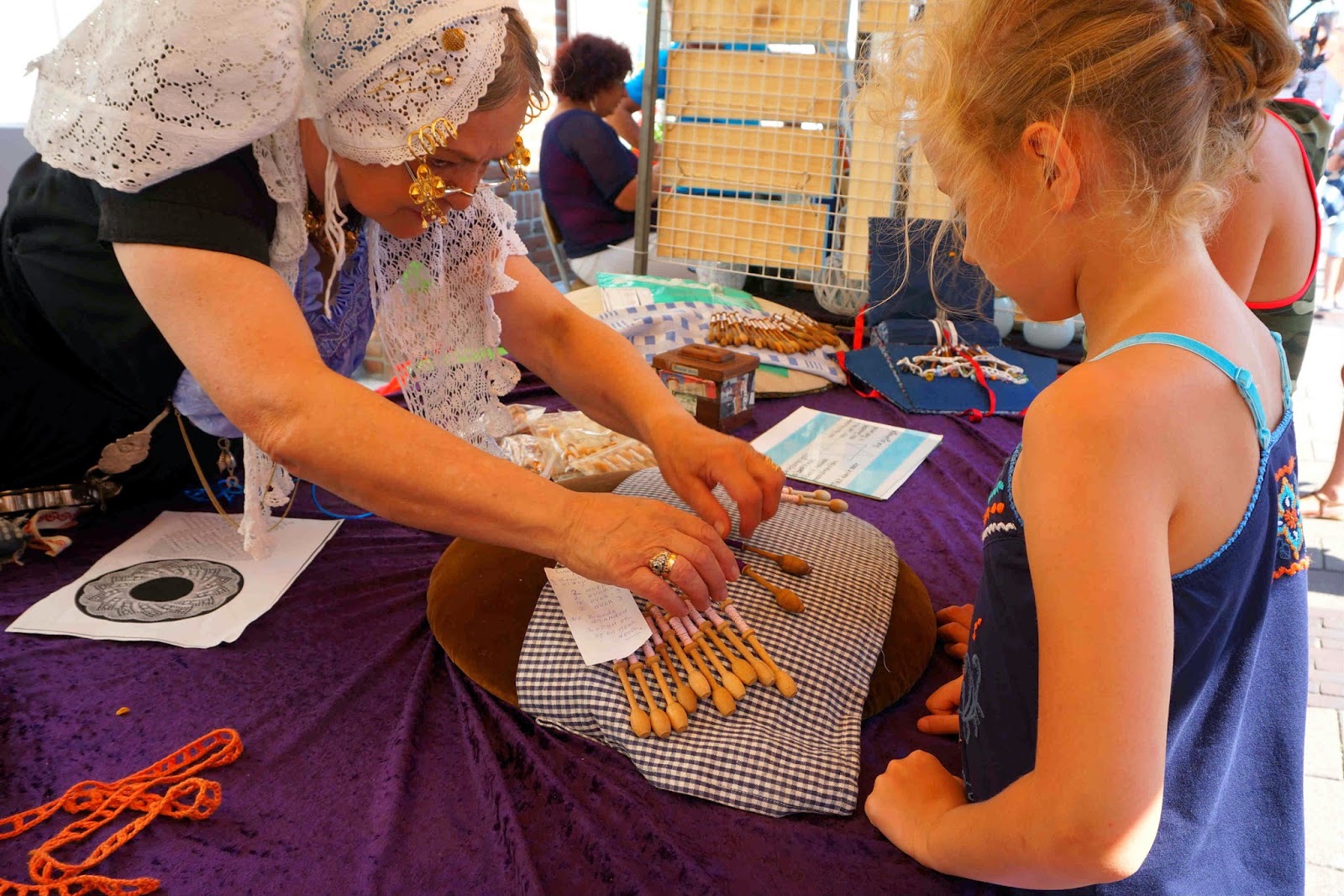
Dutch Folkloristic Market at Zoutelande, the Netherlands. Part One.

I wanted to take a little break from writing about my Japan trip with this post about the folkloristic market of Zoutelande. Don’t worry, I still have a few Japan post left and will continue writing about it of course! Anyway, I think that in any country a lot of old traditions fade away or disappear completely as modern times progresses. It’s something I think is really sad, but at the same time it is difficult to prevent. One way to at least not let old crafts die out is by organizing something like a folkloristic market. At the same time it educates both foreign and local people about the local crafts and traditions. So when there was a folkloristic market (mostly for touristic purposes) in my hometown I decided to take a look around because I didn’t have to go to work that day anyway.

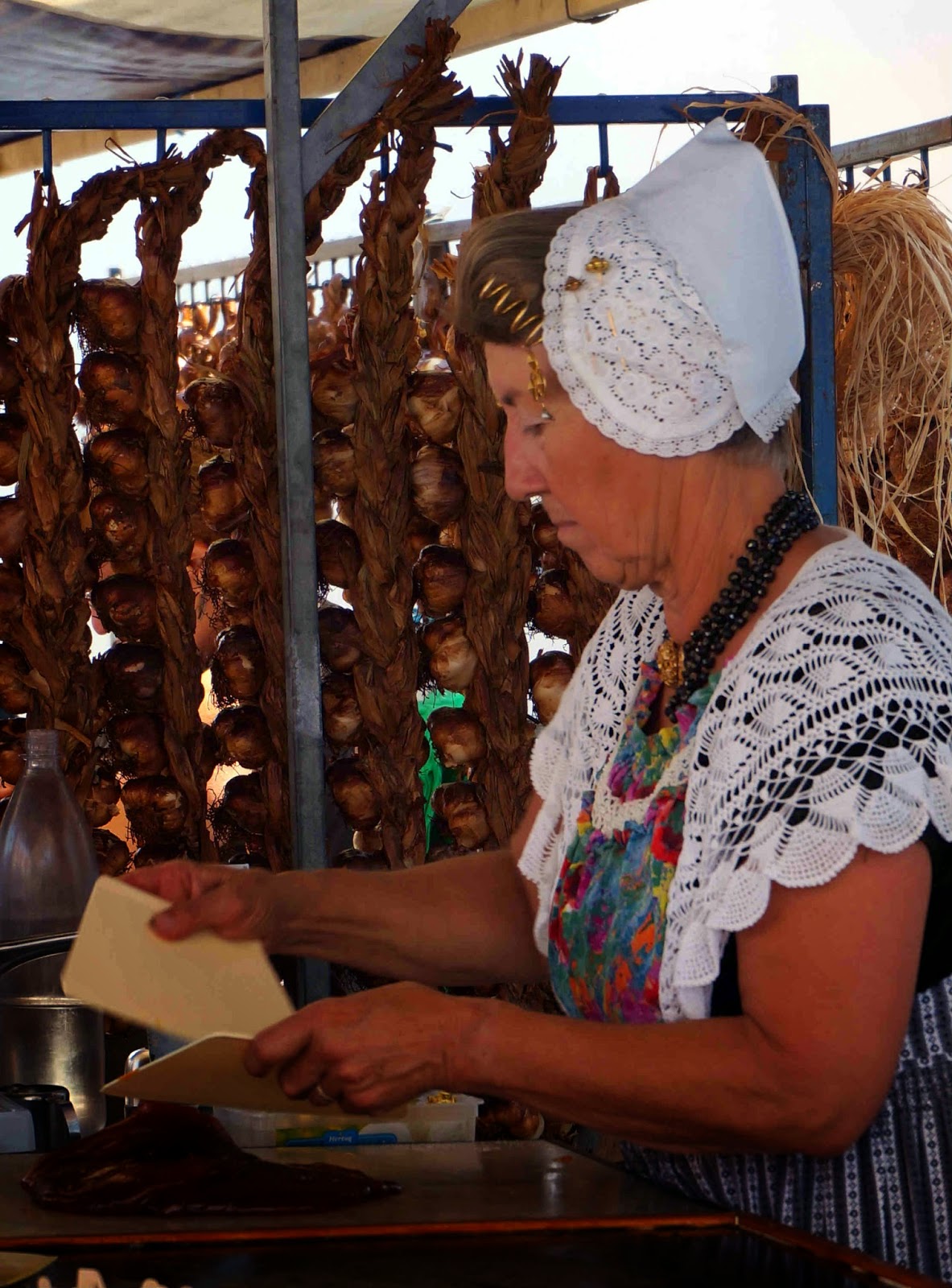
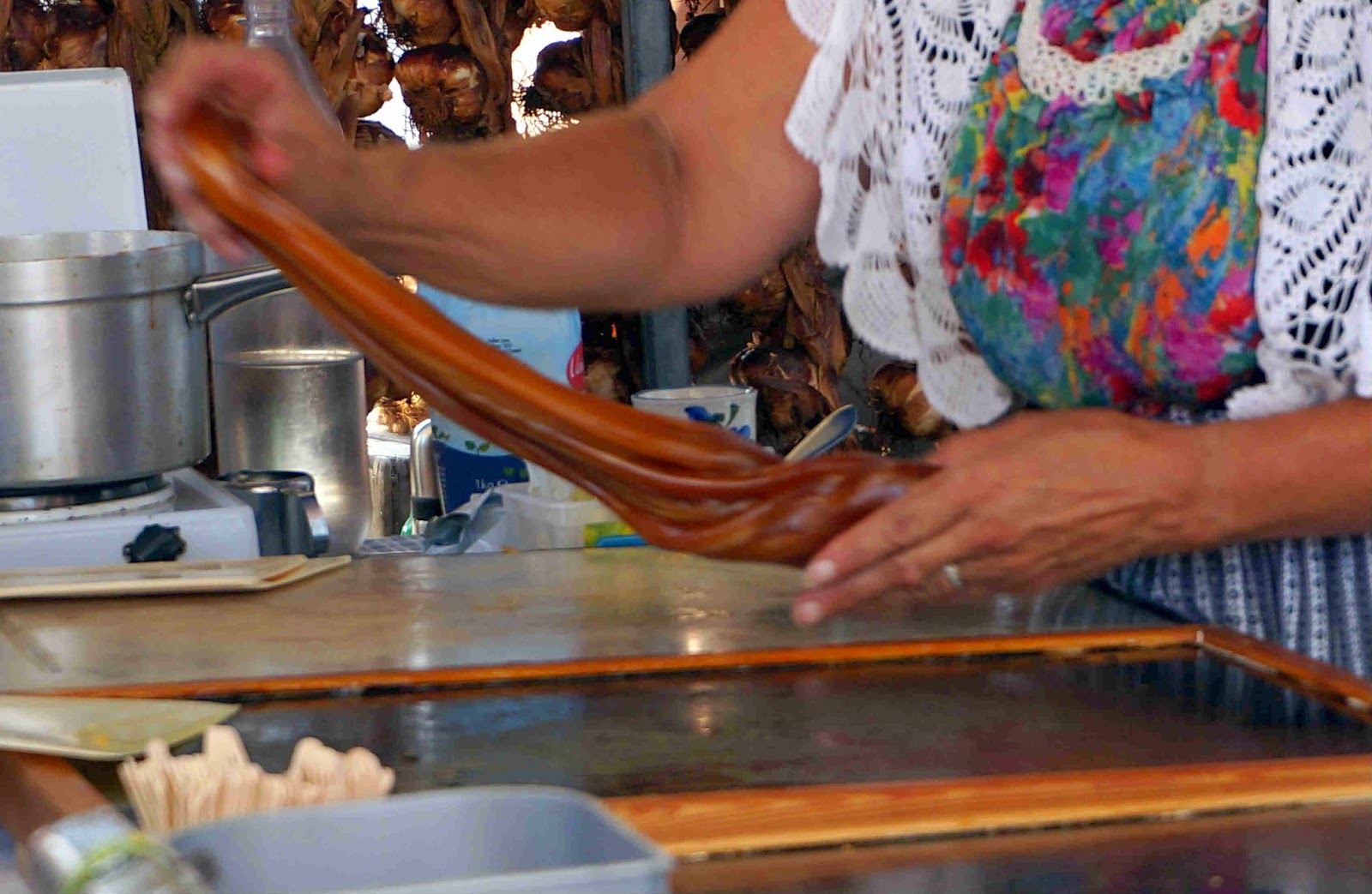
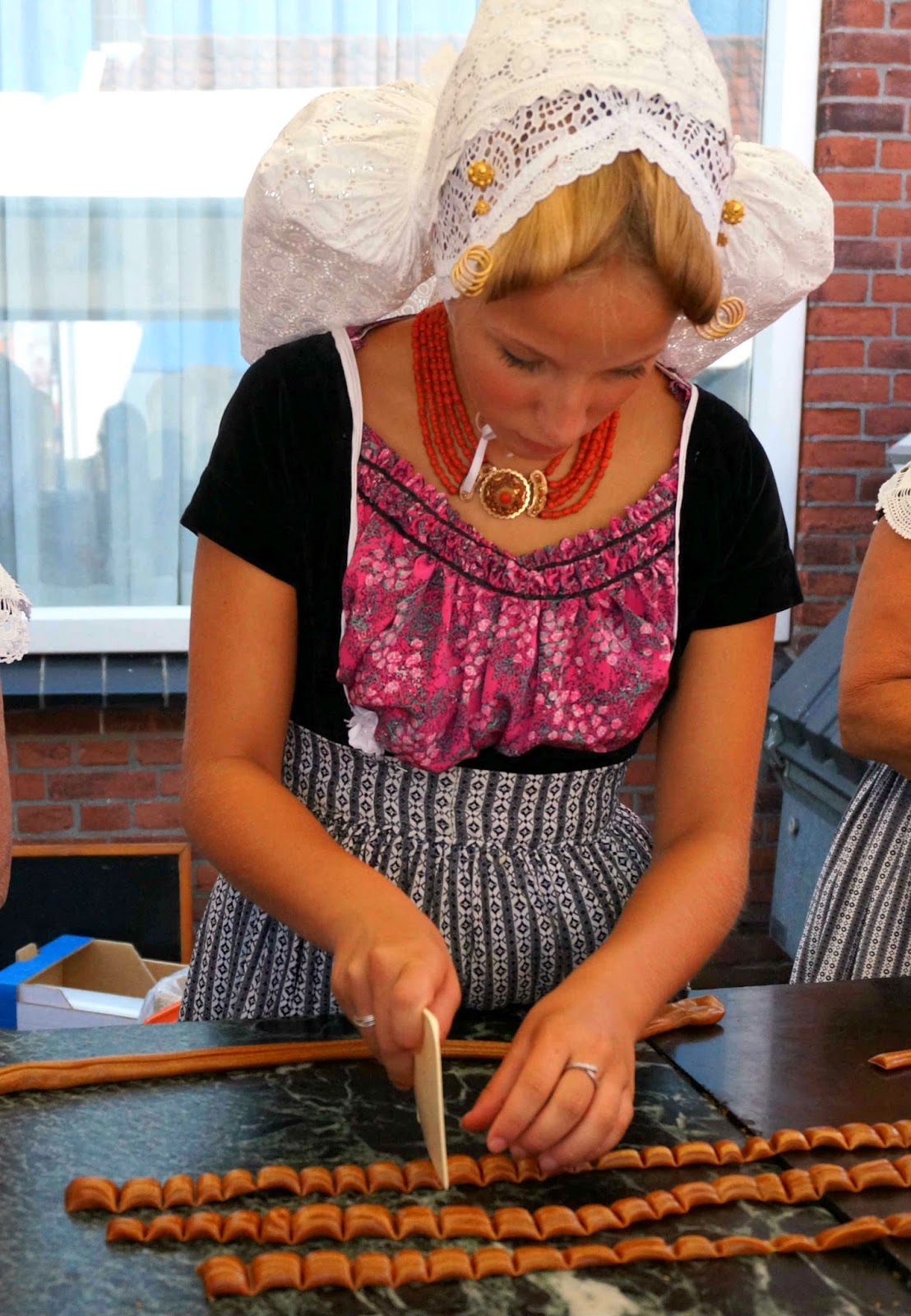
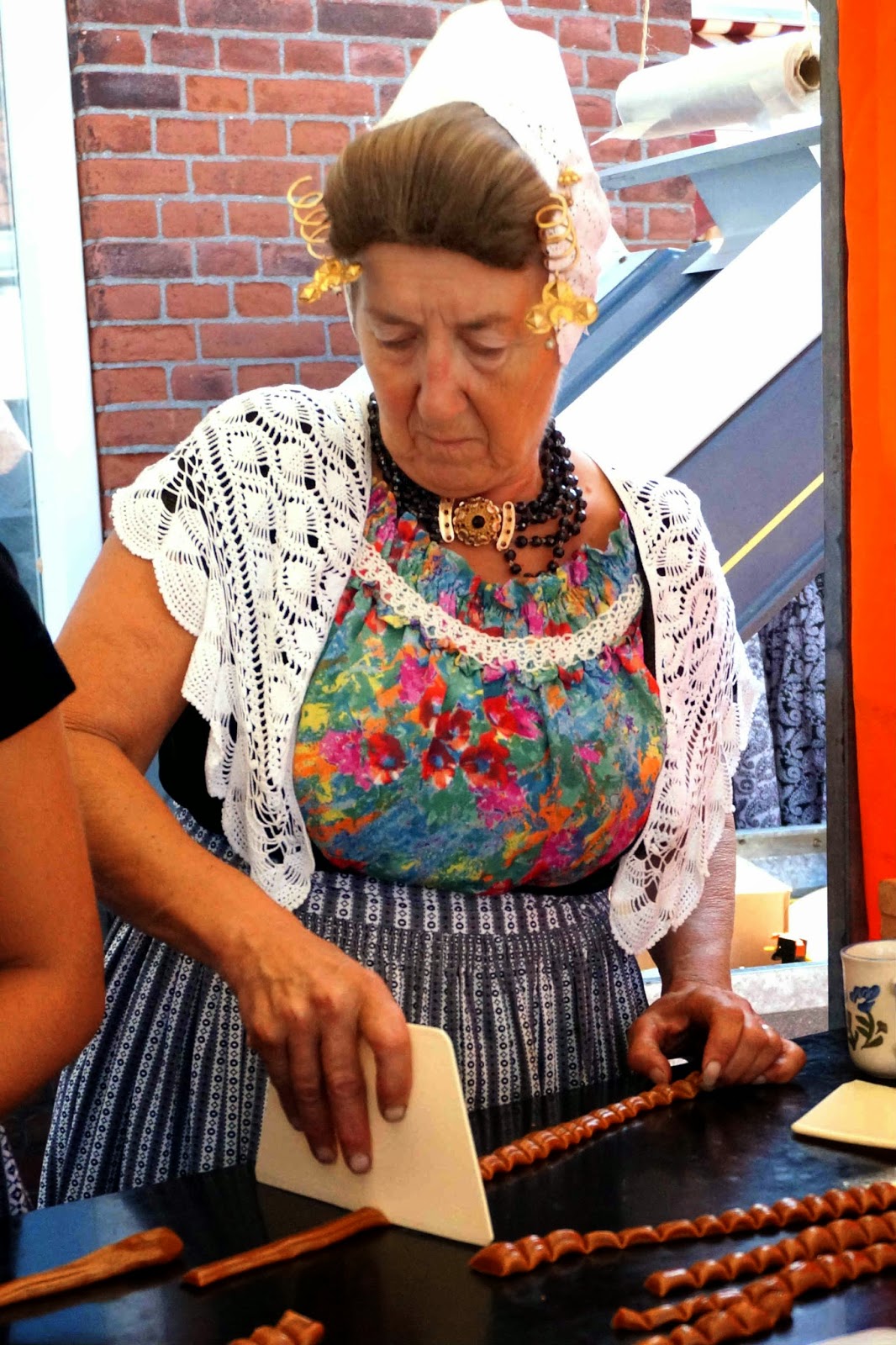
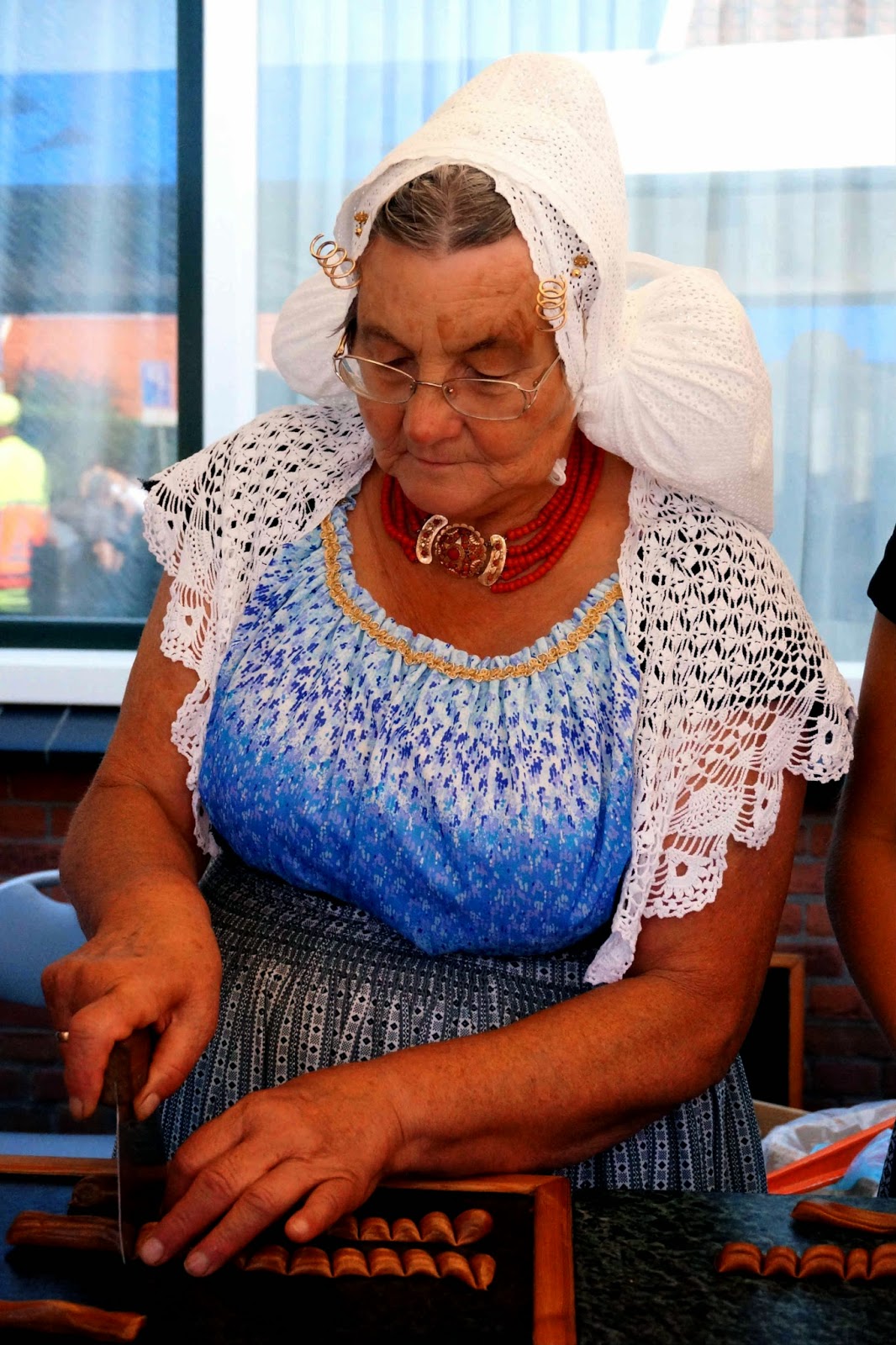
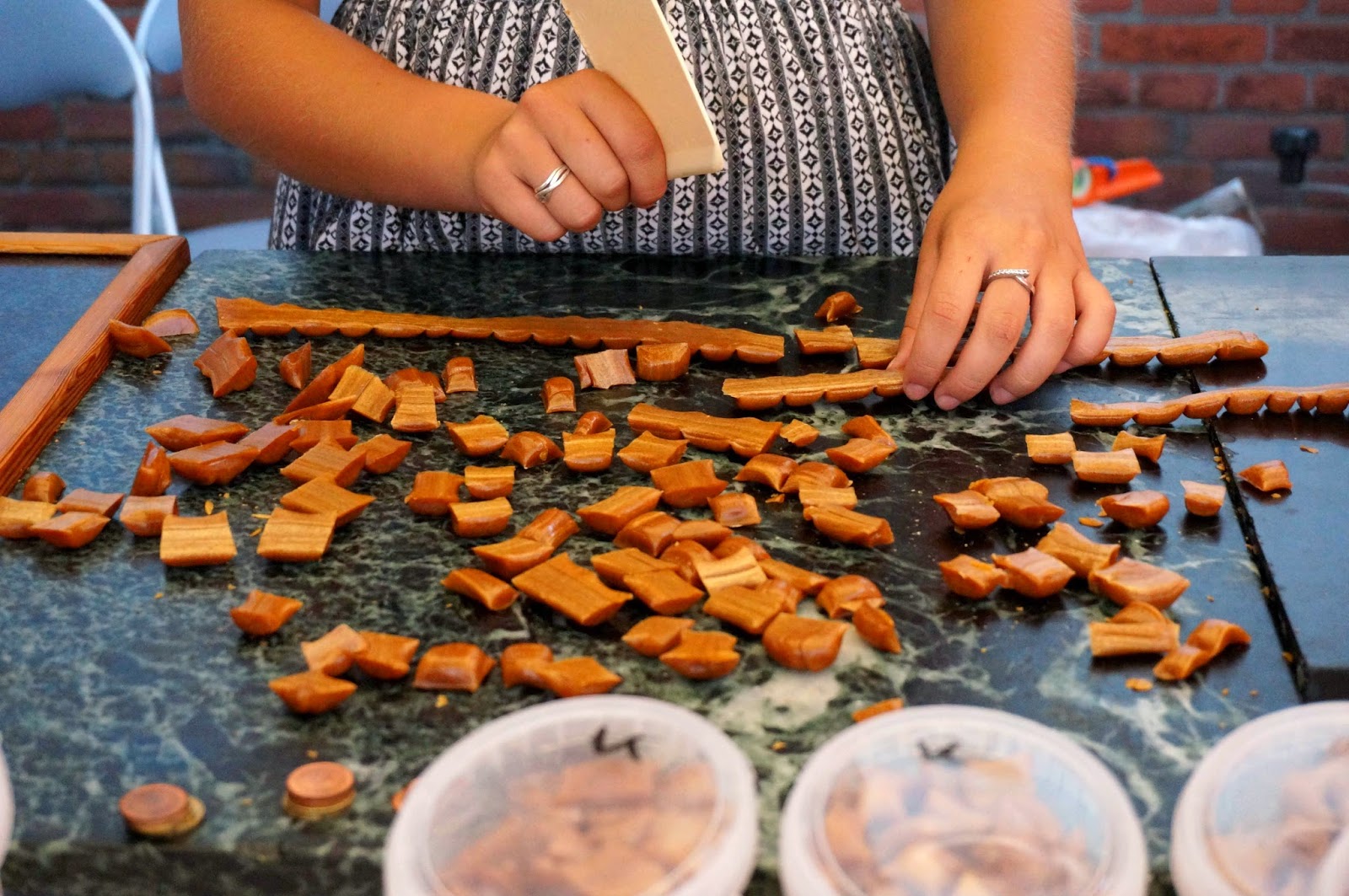
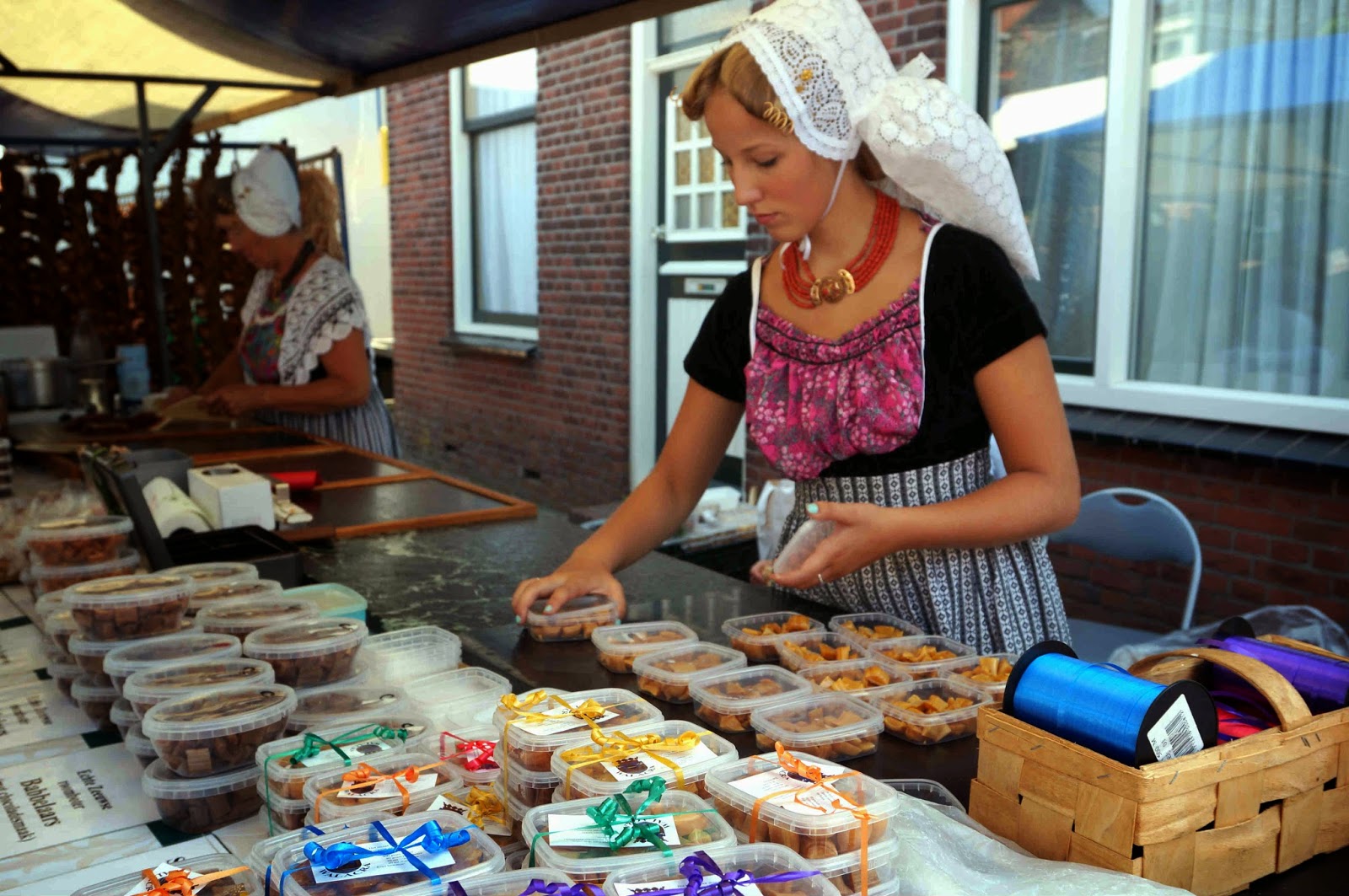
I was hoping to see some traditional clothing, which I did, a lot! But I will save that for a later post. Other than the traditional clothing I didn’t really know what to expect or what I wanted to see. So I just wandered around the market taking photos and trying to learn about some of the crafts that were shown there. The first stand which was closest so my home (and in front of the bakery where I work) was a booth with babbelaars. Babbelaars are traditional sweets from Zeeland, a province of the Netherlands and my ‘home province’. They are simple sweets with only five ingredients and are basically pure sugar. But they are good! It’s a traditional kind of Dutch butterscotch. Usually they are sold in cute tins with pictures of people in regional traditional costumes or Dutch sceneries. At the booth there were older women, a younger girl and a man all dressed folk costumes and they were making and selling the babbelaars on the spot. First they melt the sugar with the other ingredients and move it to a cold plate where they keep mixing it until it is cool enough to roll it out and make thin strips. They then make nicks in the strips and when it’s completely cooled and hardened they break them and there you have the candies! At this particular booth they also sold special babbelaars with chocolate and cinnamon flavor. I bought them and cinnamon flavor is approved! I am not sure what to think about the chocolate ones though…

cooling the batter

stretching and rolling

making nicks

breaking into pieces
packing the yummies

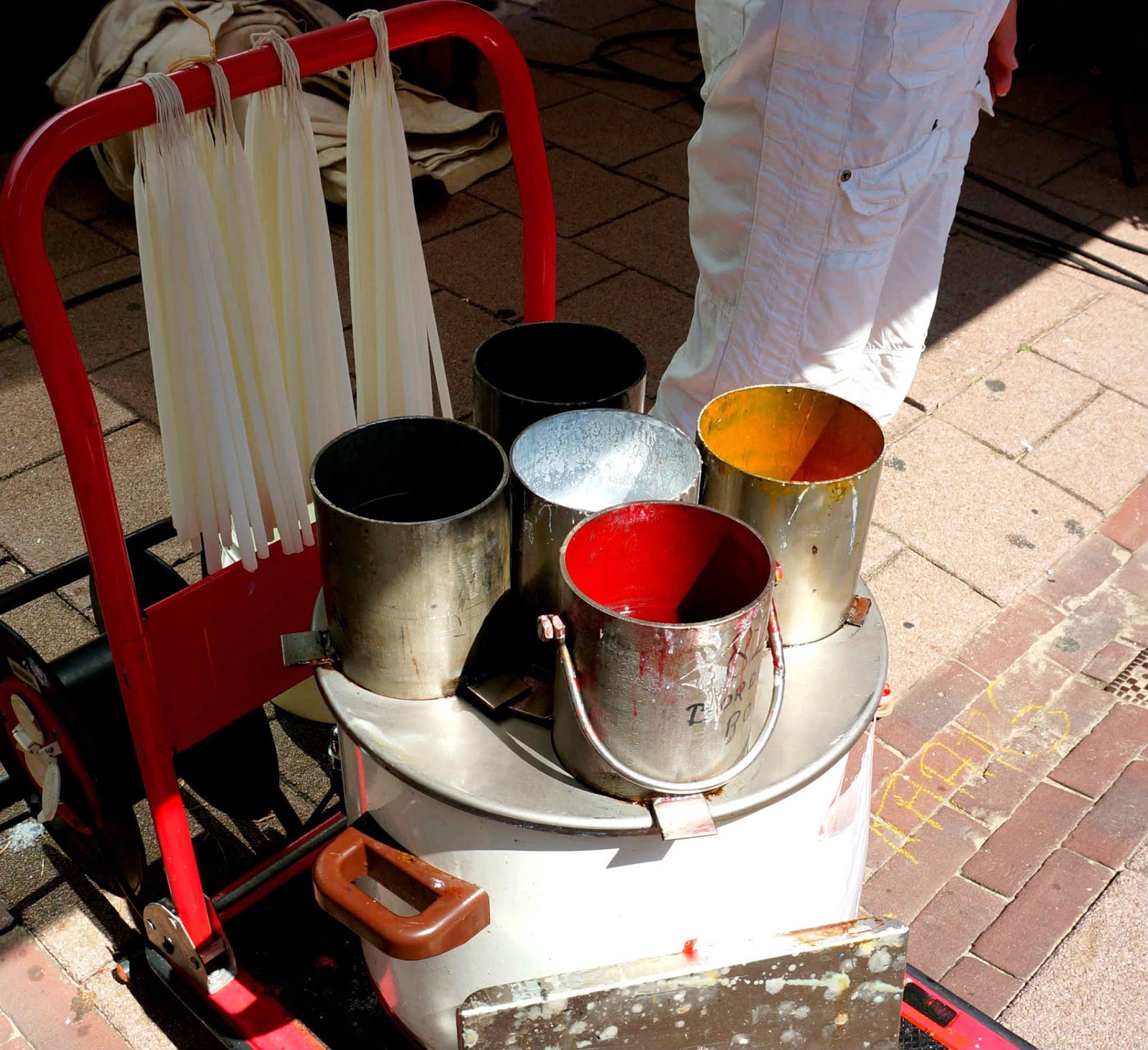
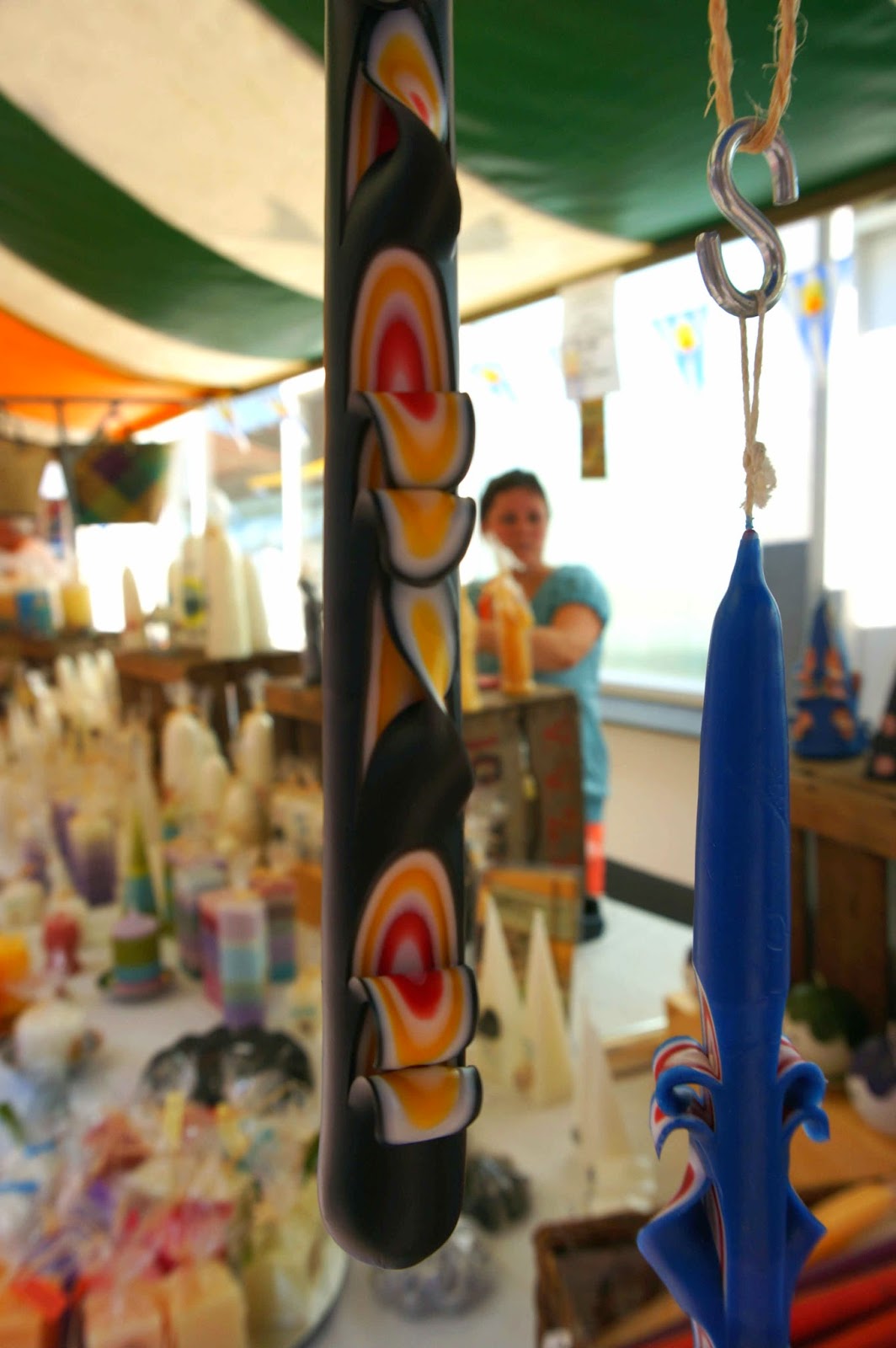
Just to mention it, ‘my’ bakery also had a stall. My colleagues sold oliebollen there. An oliebol is something like a deep-fried donut. It is Dutch New Years food and I love it! But it is not something I would eat in summer, I think it’s a Dutch mental thing; oliebol is winter food. So I didn’t eat any of them. I did eat some soft serve ice-cream because the ones at our bakery are very good. Sorry, I didn’t take photos of our bakery and the booth. Next were some gift shops booths. One of the was a booth with candles. One of the ladies there was making some candles on the spot by dipping the base in different colors (of wax I assume) and letting the layer dry and then dipping it in the next color. She told me that it took long today because it was too hot and the layers wouldn’t dry very well. But they also shouldn’t get too cold otherwise the next layer won’t hold. Candles are not some old Dutch craft, but at least it was interesting to see. Next to the candle booth was a stand with metal jewelry. A guy was making some of the jewelry next to the booth. This is something I used to do with my grandfather too, but again not traditionally Dutch per se.

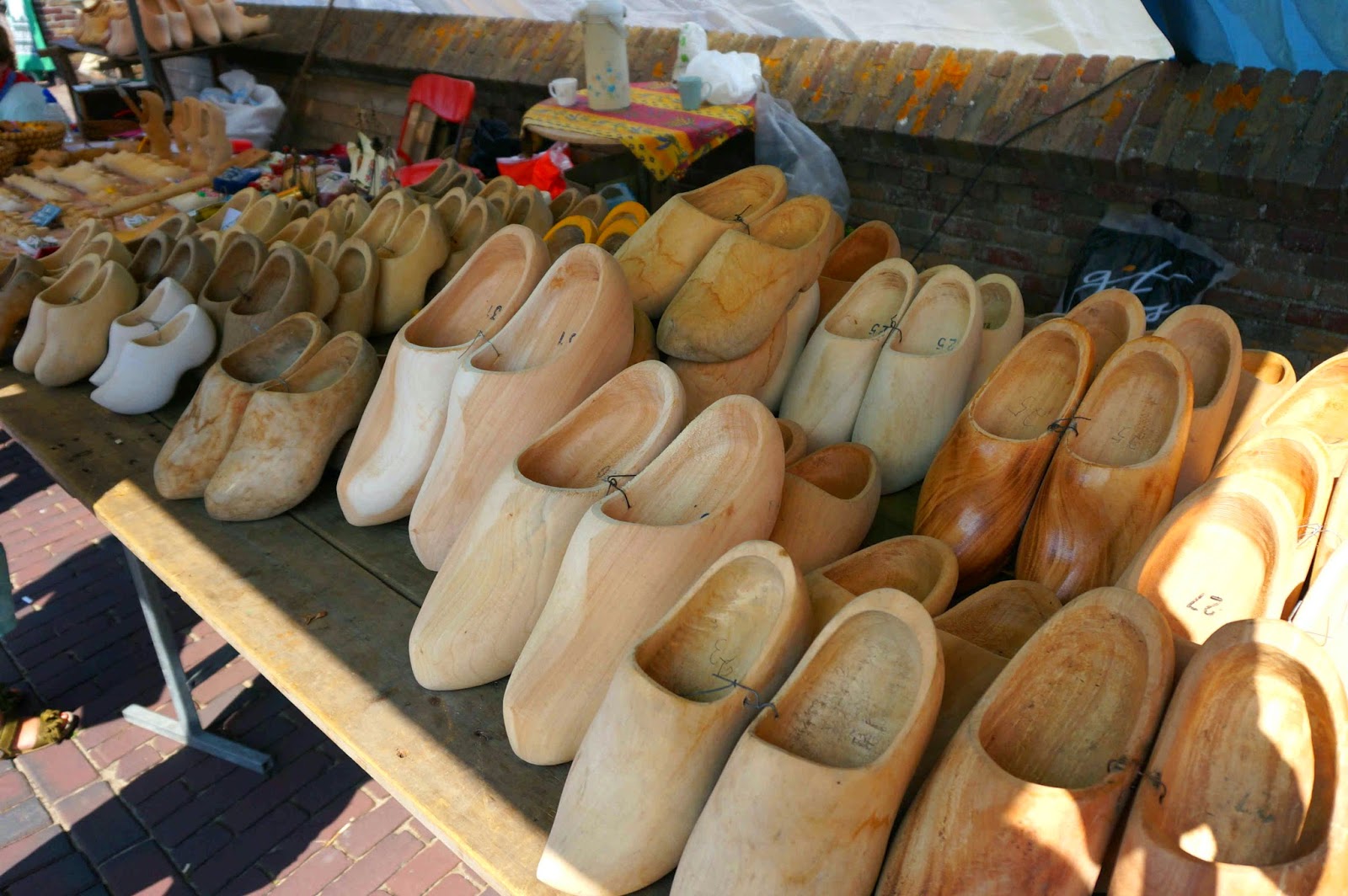
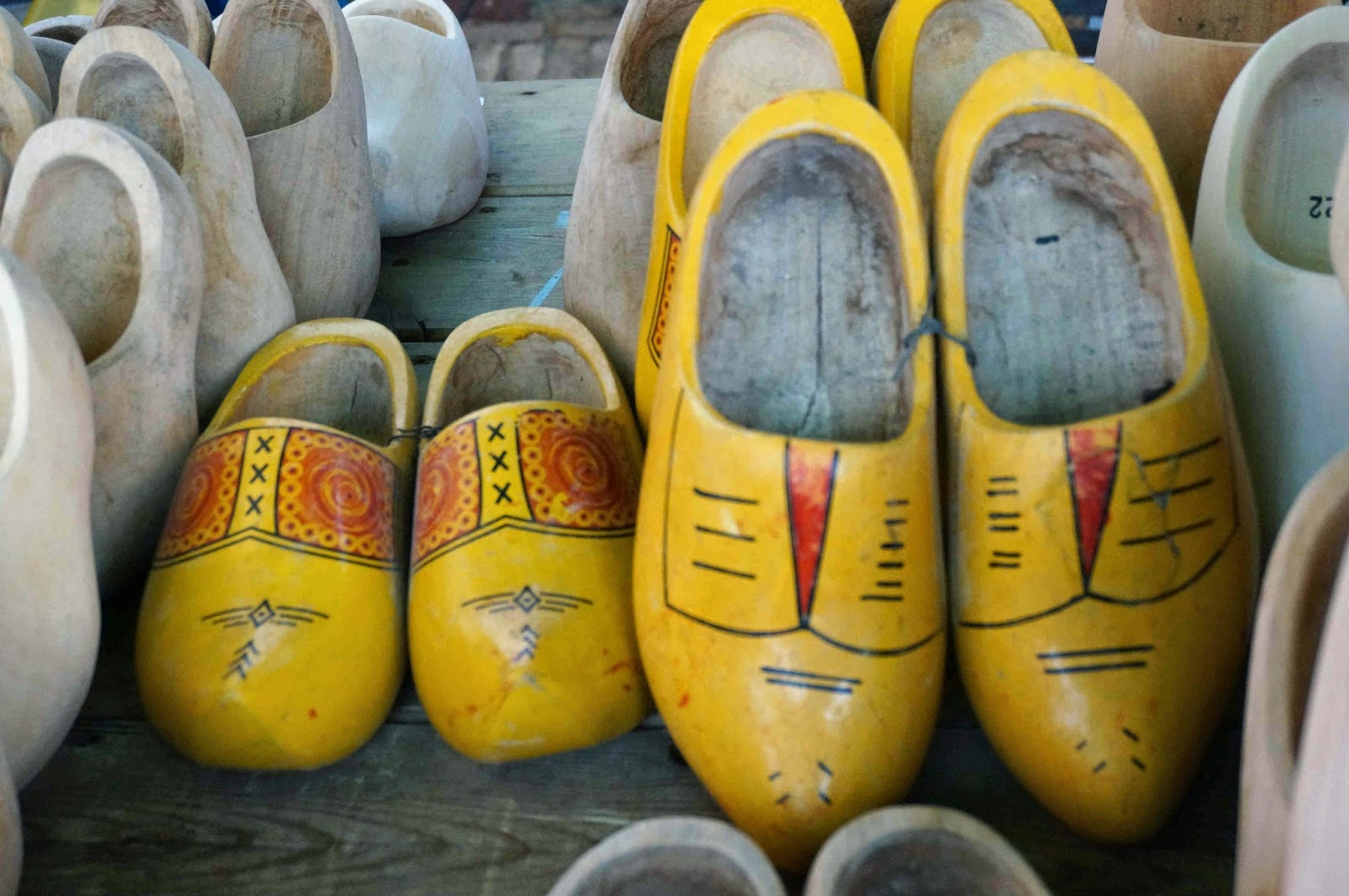
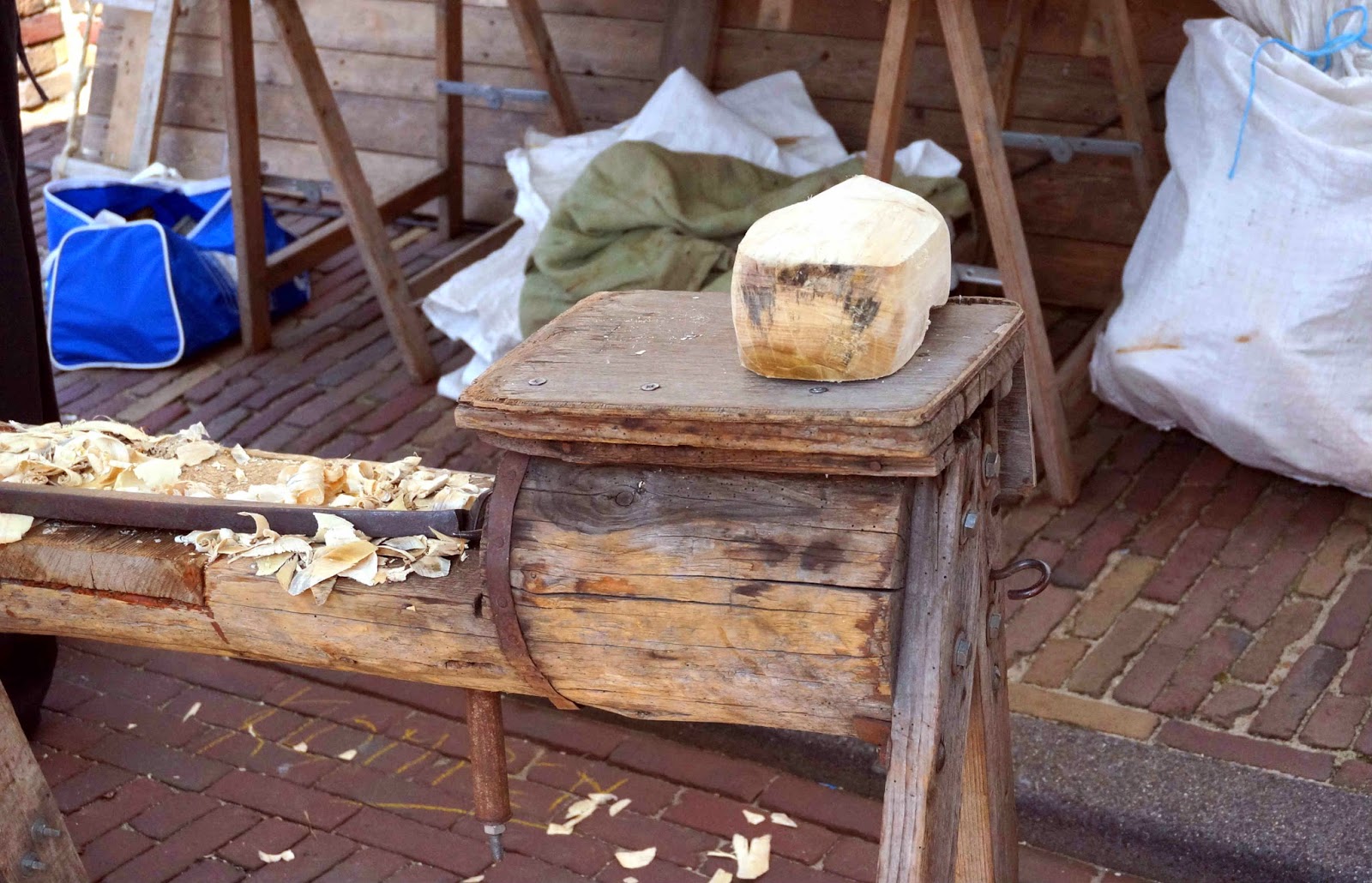
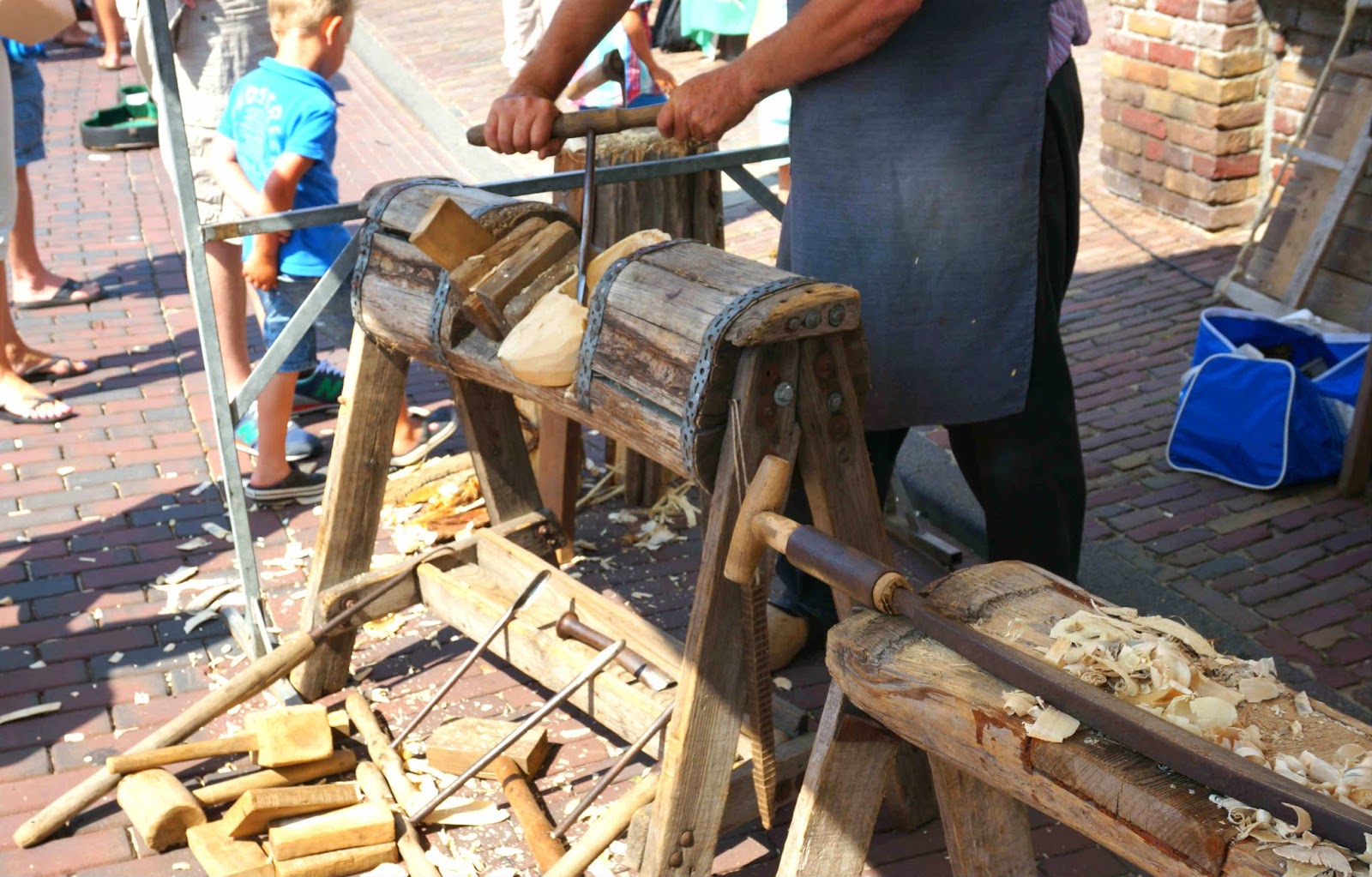
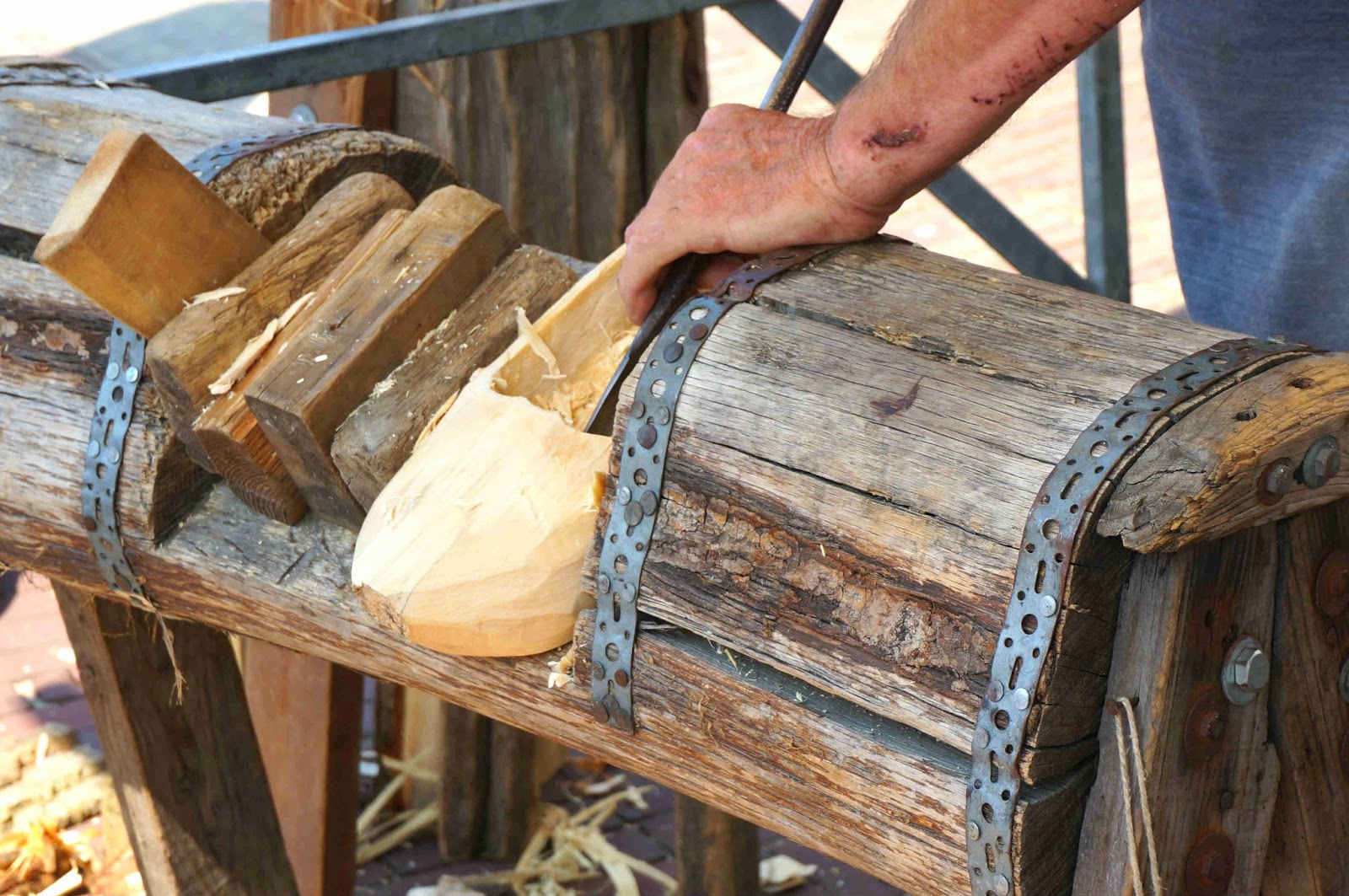
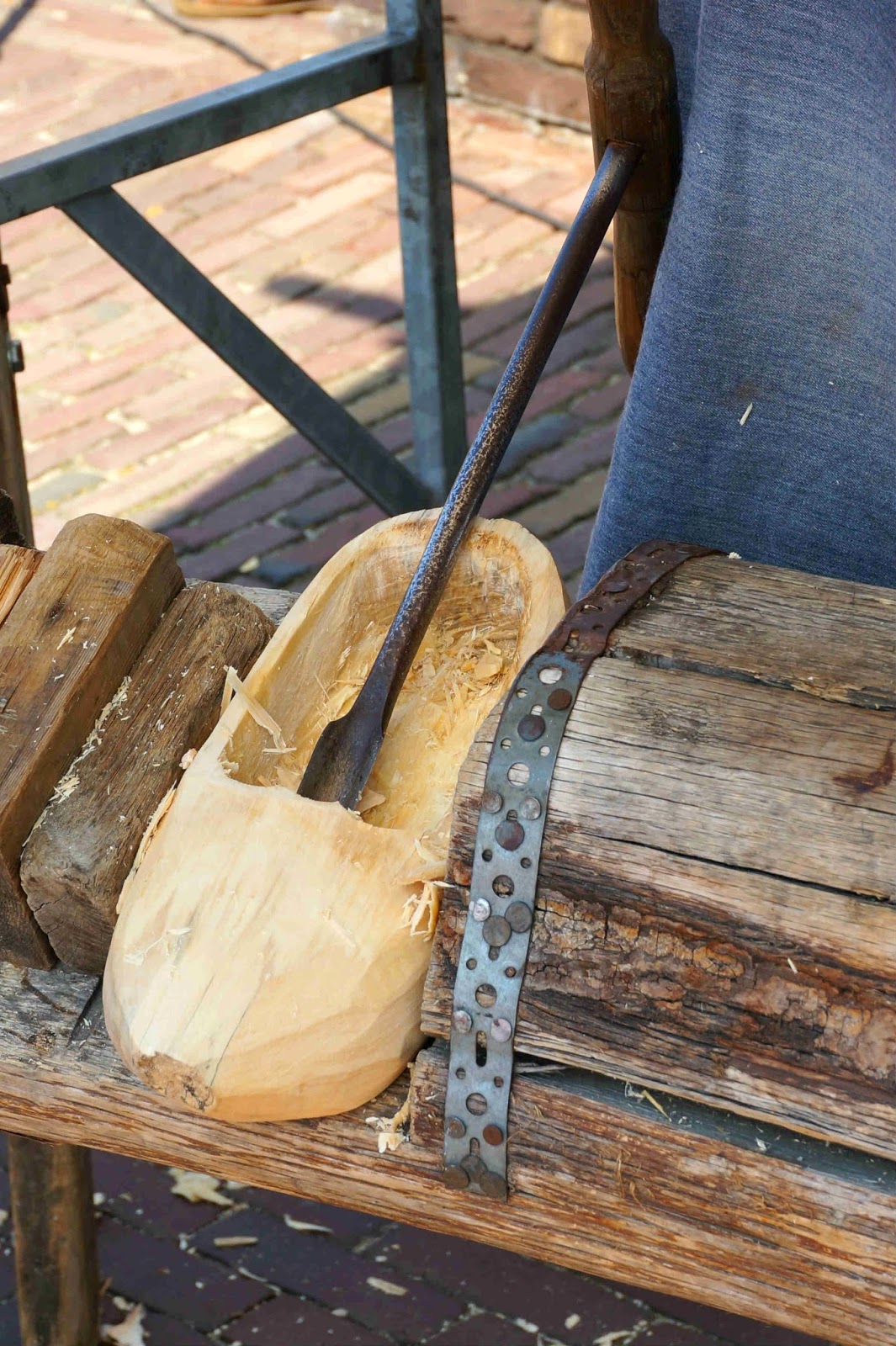
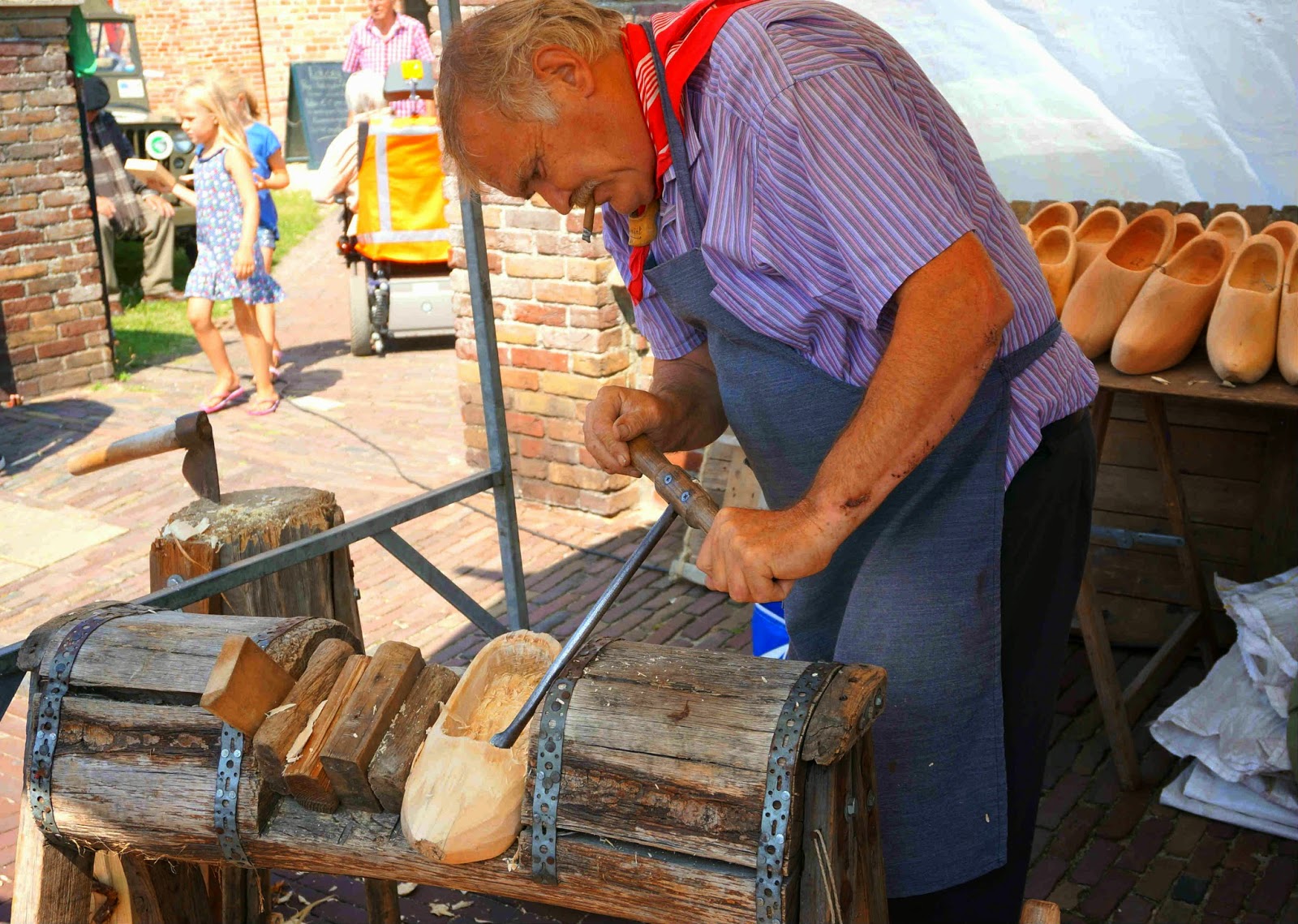
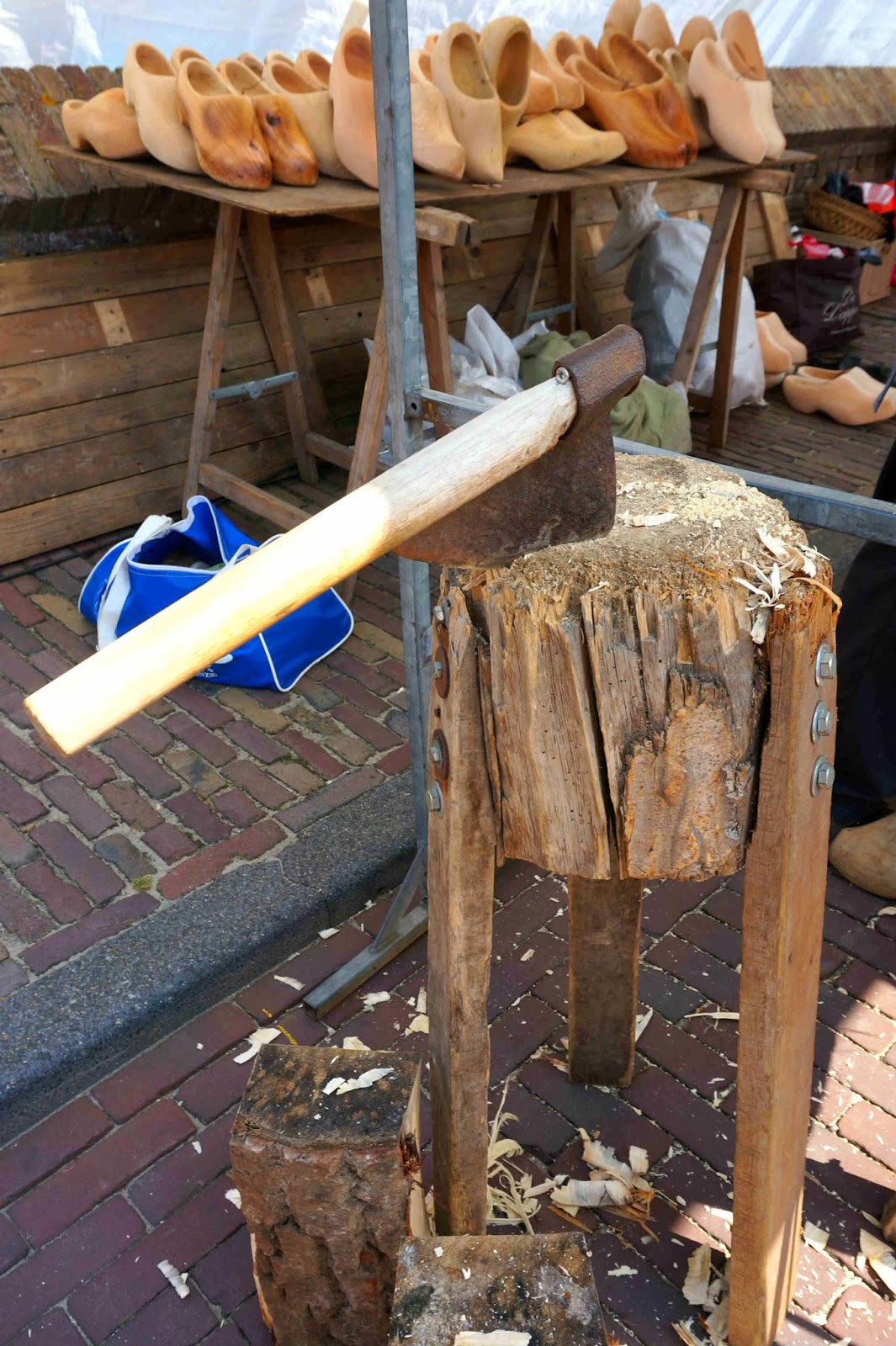
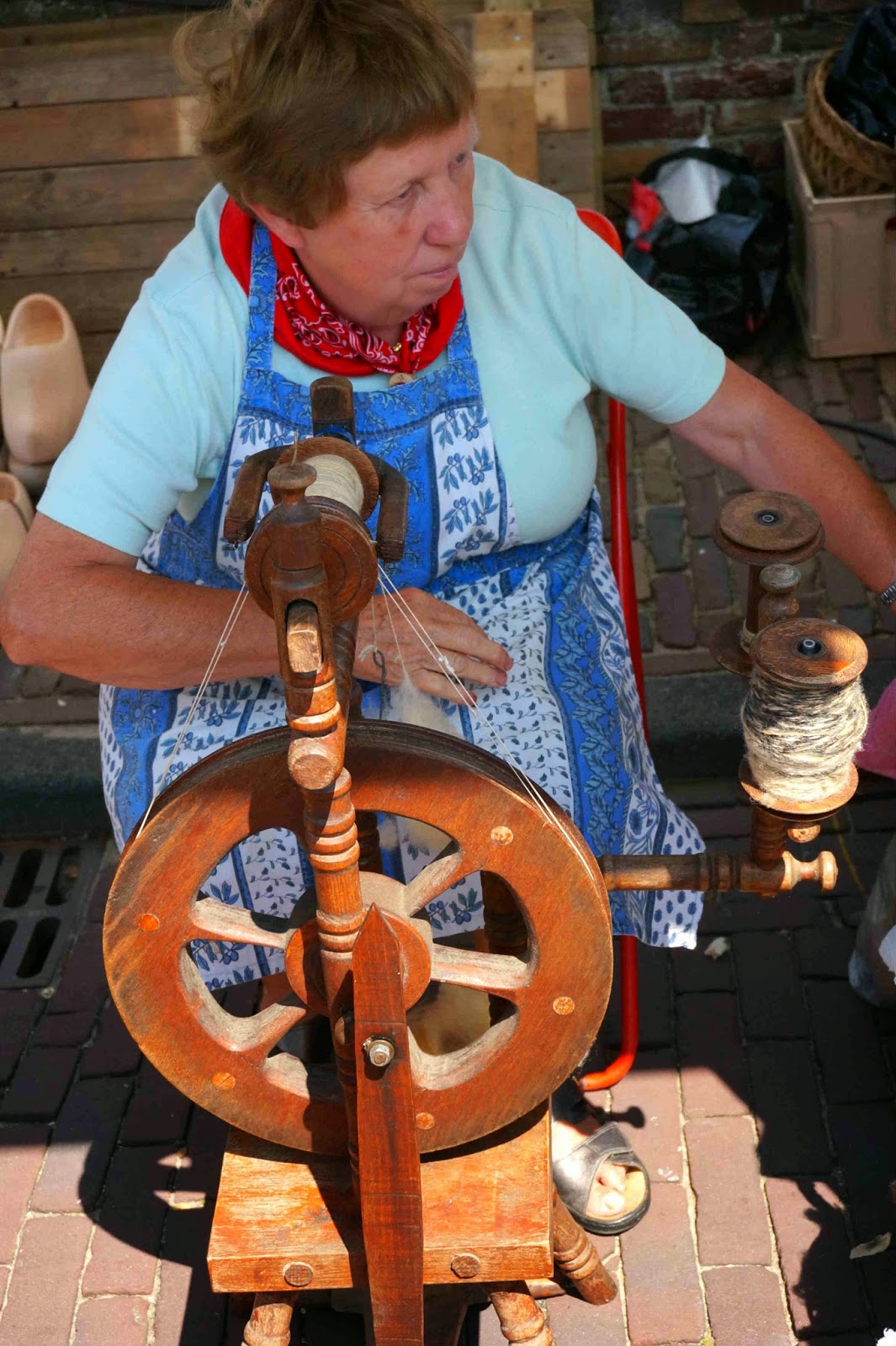
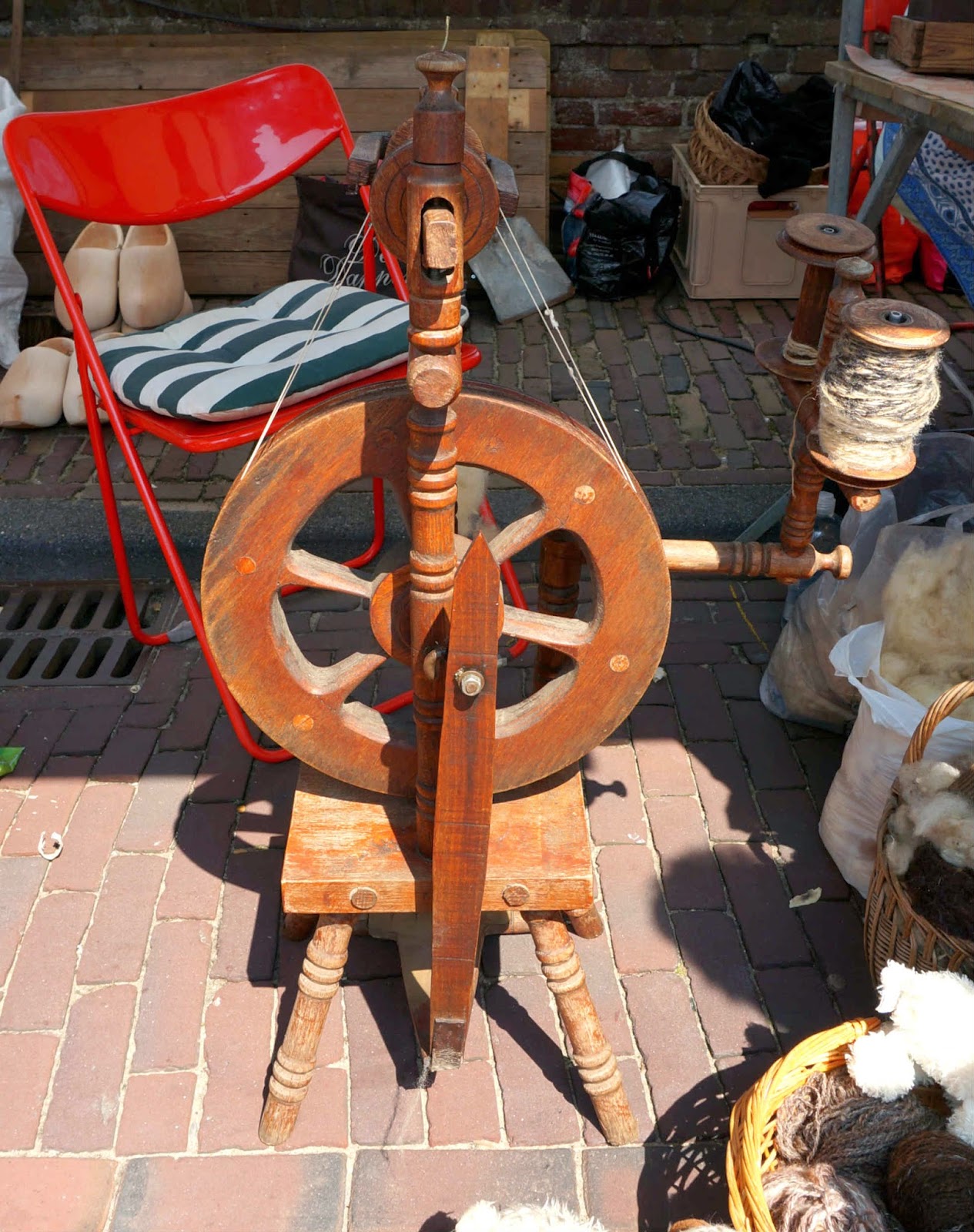
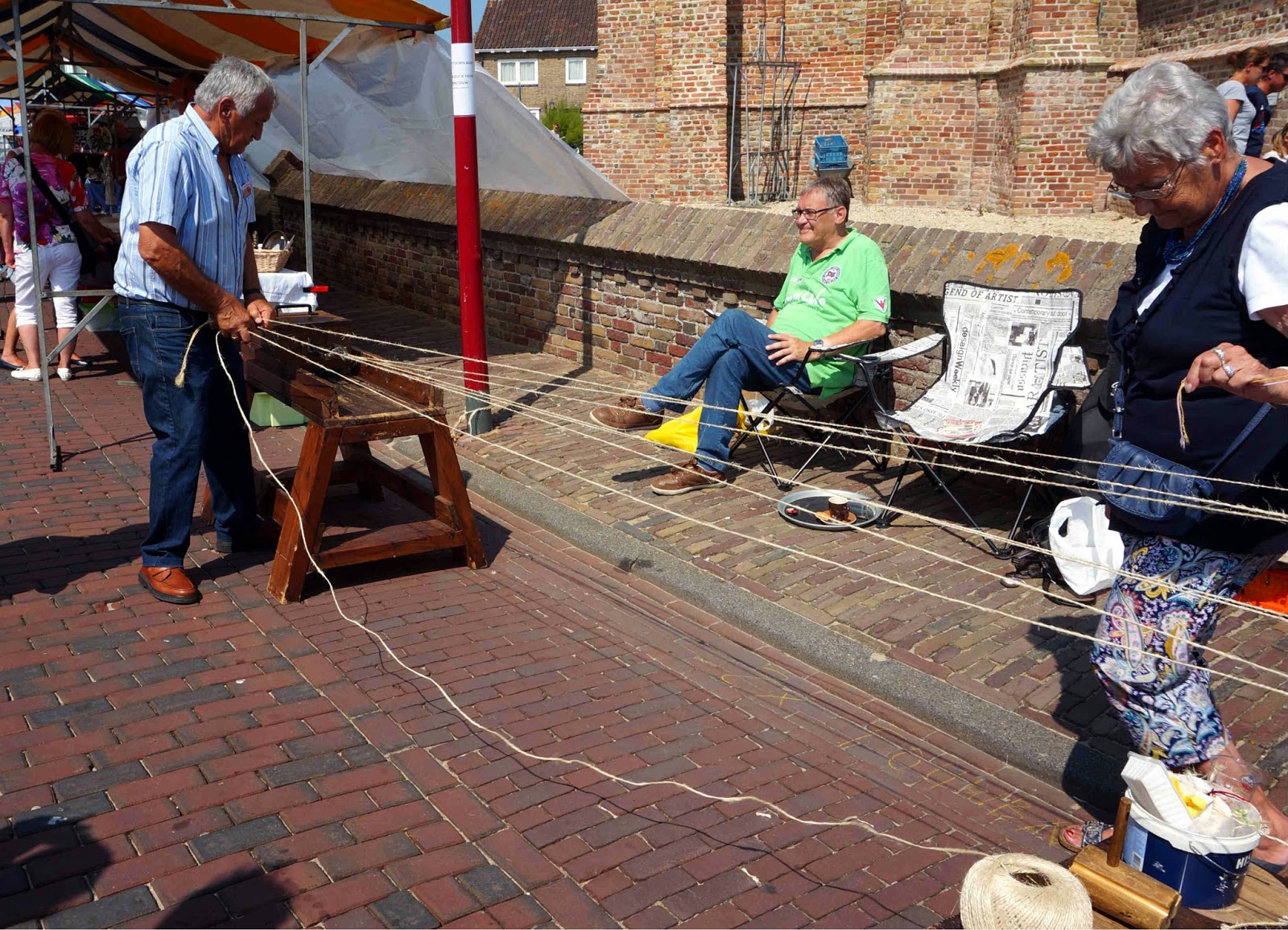
In front of the church were some interesting booths. One of them, my favorite, was the wooden shoos booth. Believe it or not, but some people still wear. Mostly farmers, like the shoes are intended for. Other than that, no, people in the Netherlands don’t walk around in wooden shoes. I only wore them once in my life. They are heavy and not so comfortable. It was the first time I saw someone making them though. The guy who was making them was actually from Belgium, but he said that most wooden shoes makers and wearers are still Dutch. There are just not many left though. The shoe he was working on already had a rough shape and he was scraping out the wood where the food has to go in. He told me that there are also wooden shoes with leather which the farmers wear on fancy occasions. I can’t imagine haha. His wife, I suppose, was working with a spinning wheel. That is also something I only saw in museums and the Sleeping Beauty.

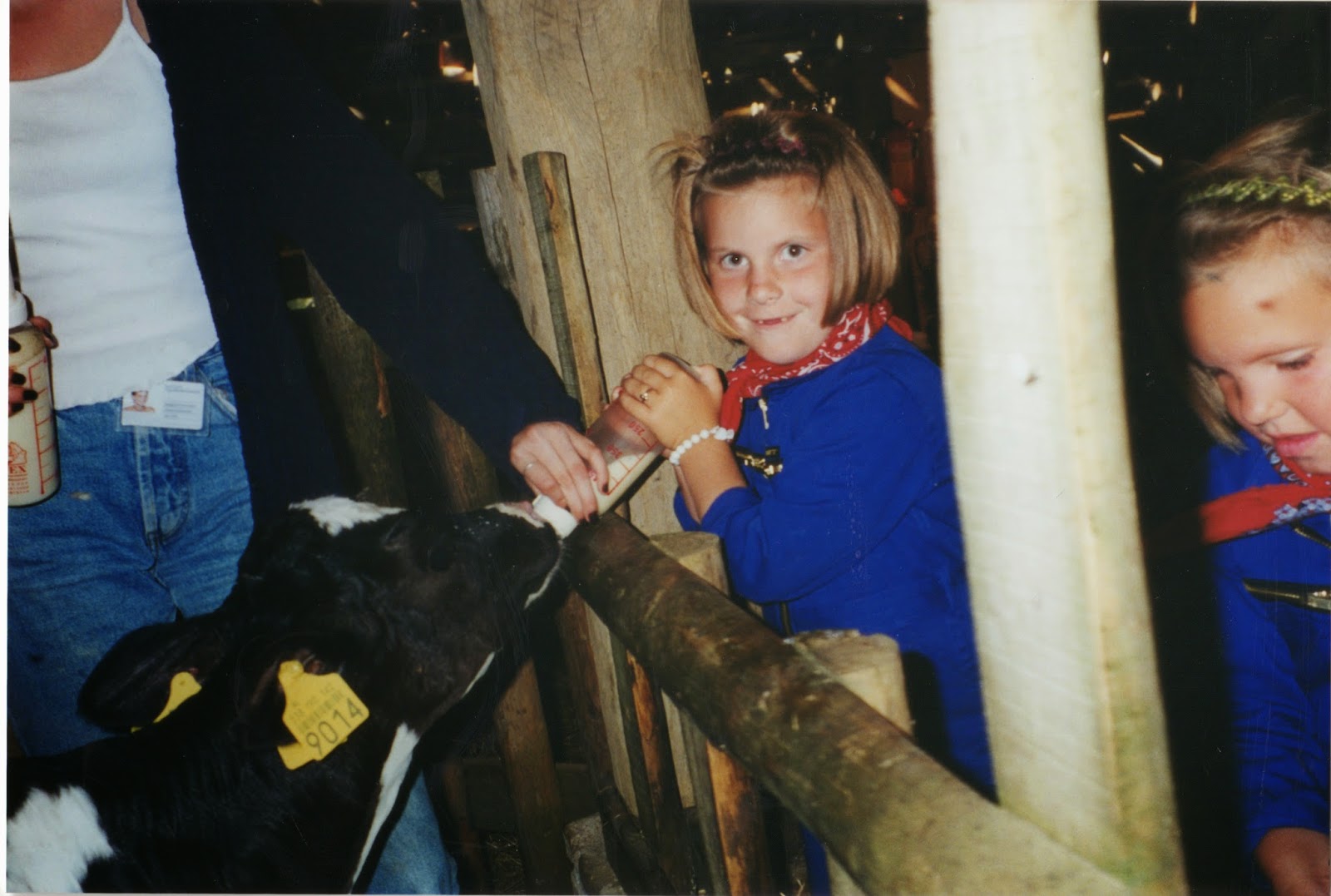
The only time I ever wore wooden shoes, and a farmers suit. I even milked cows and ate cheese, it doesn’t get more Dutch except for tulips and wind mills.

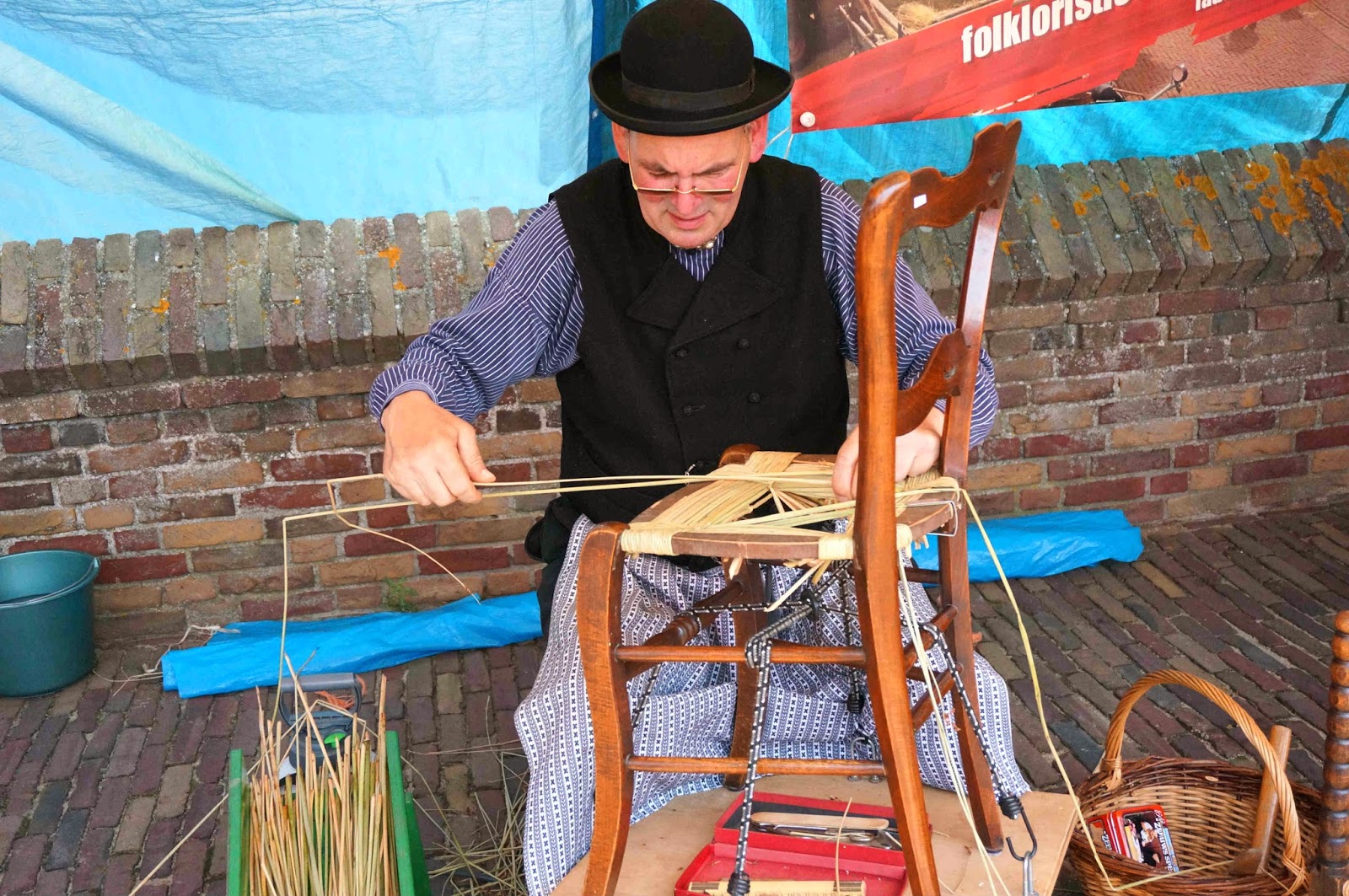
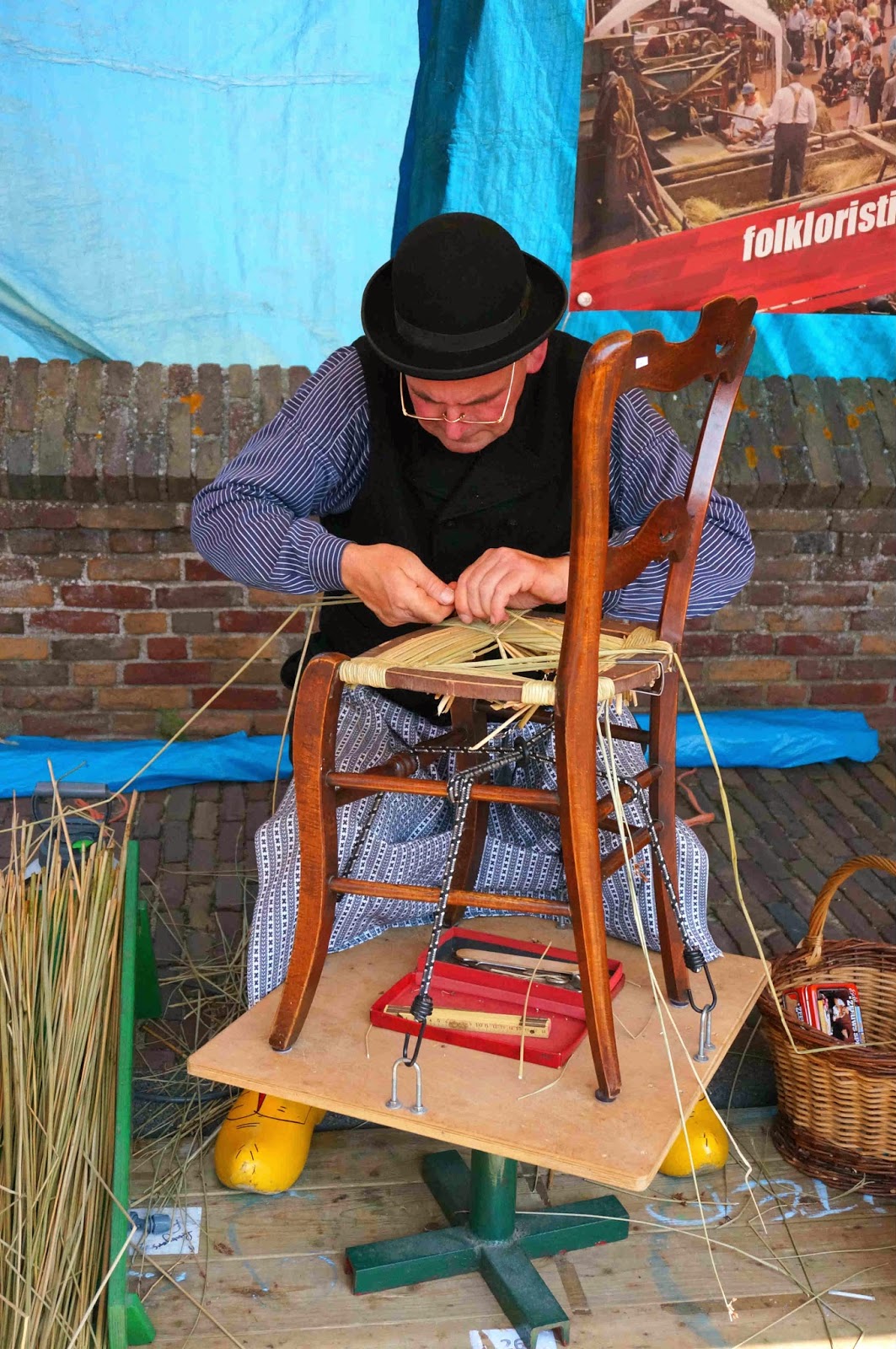
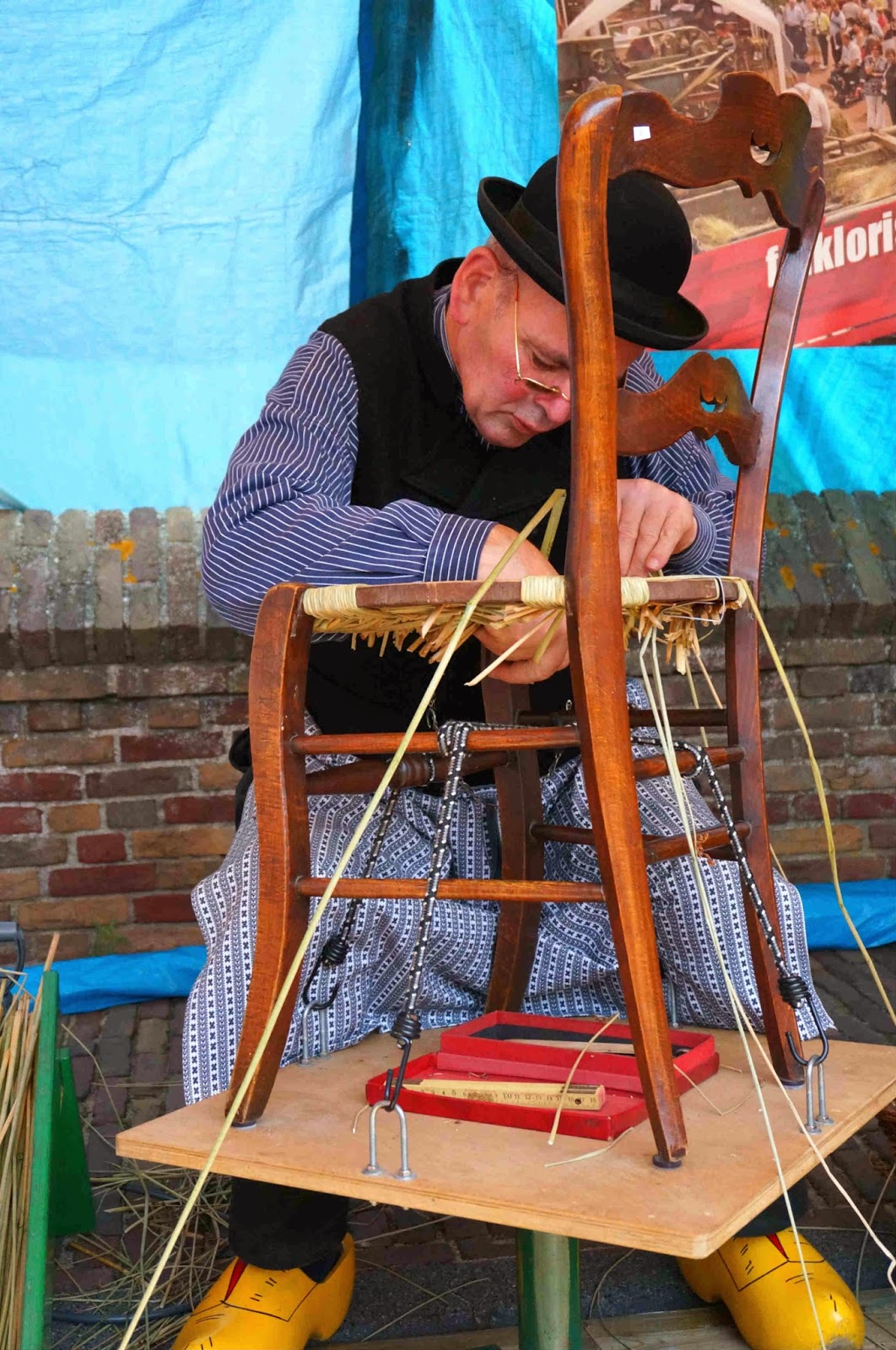
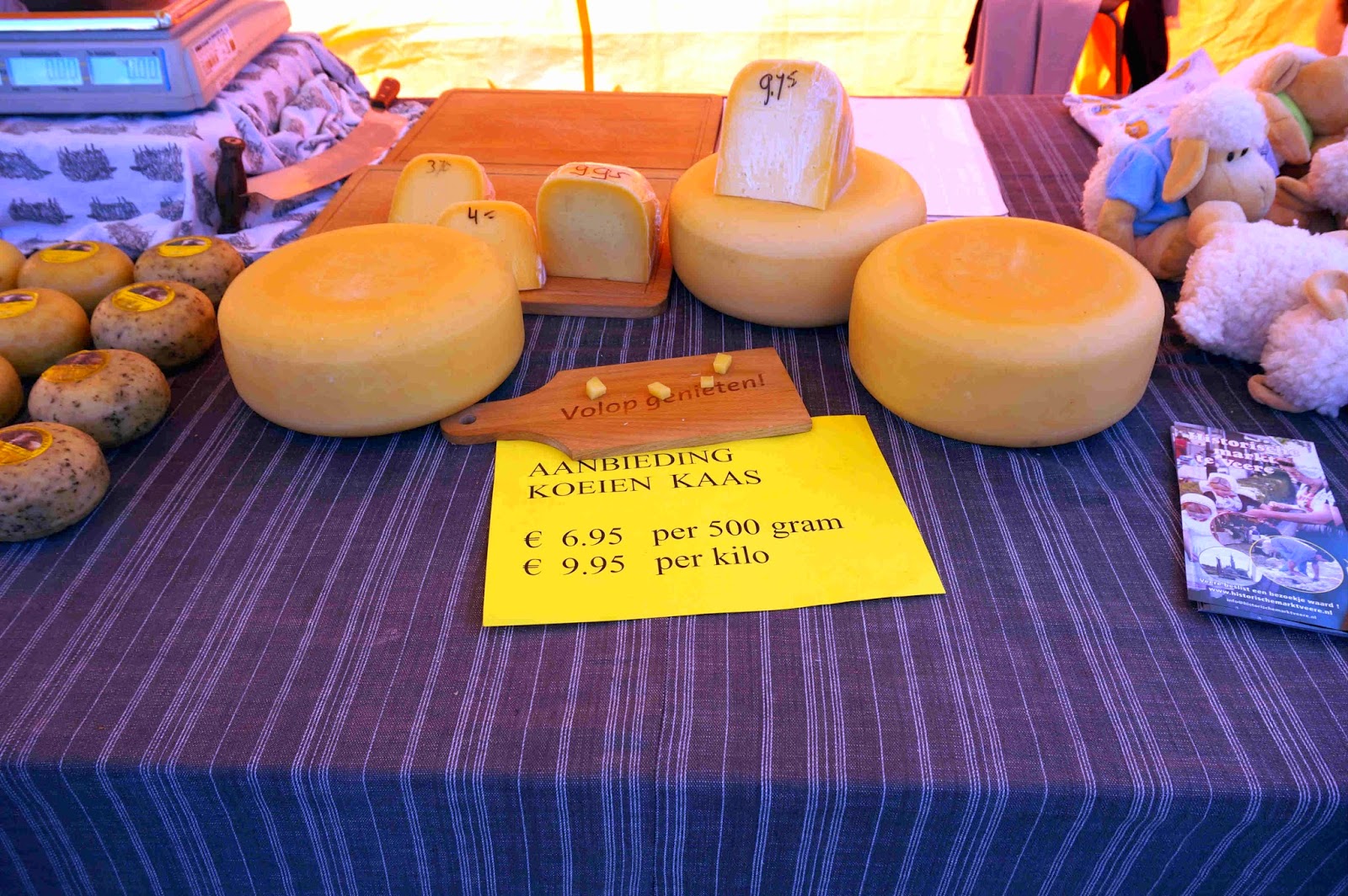
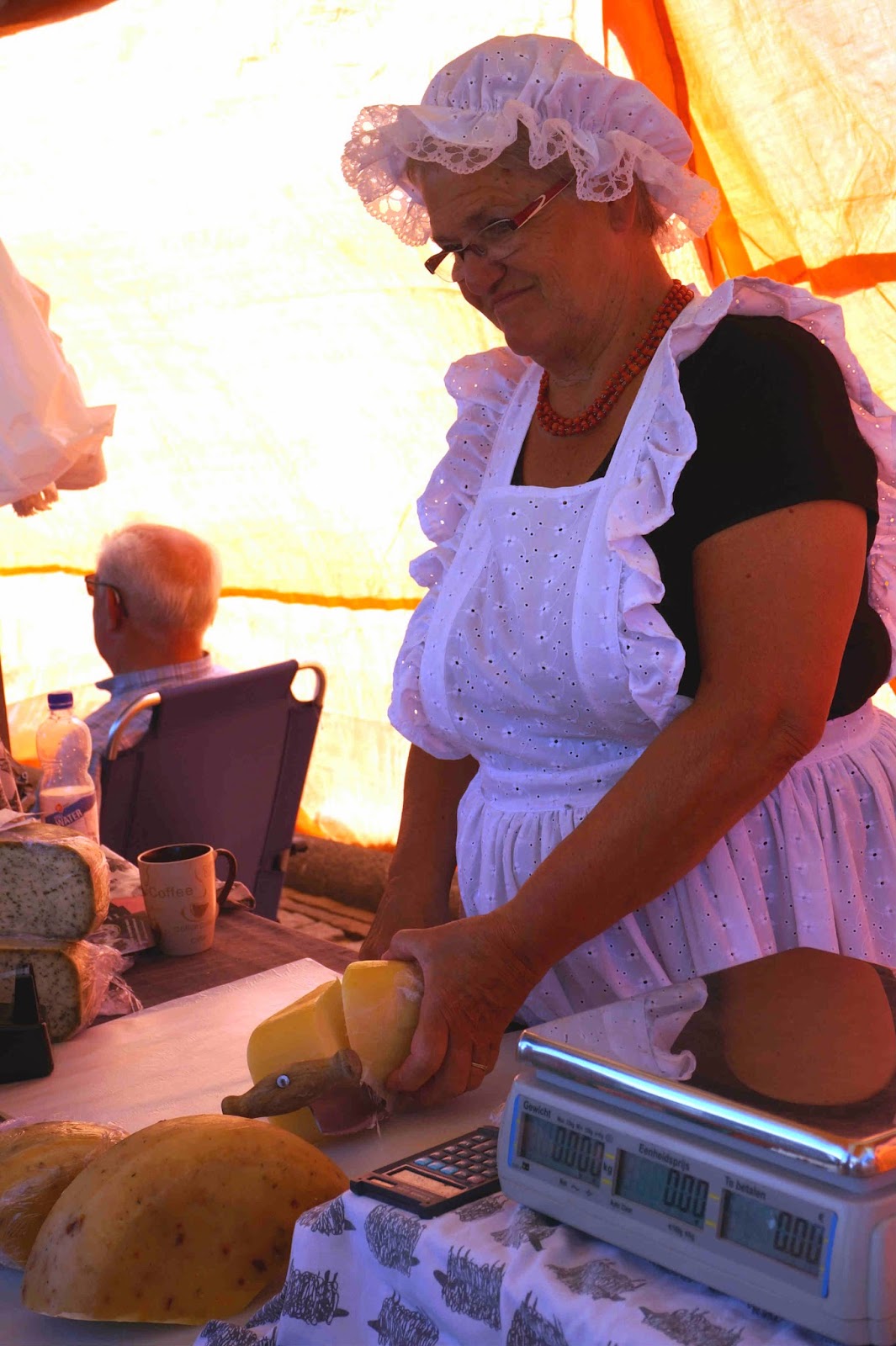
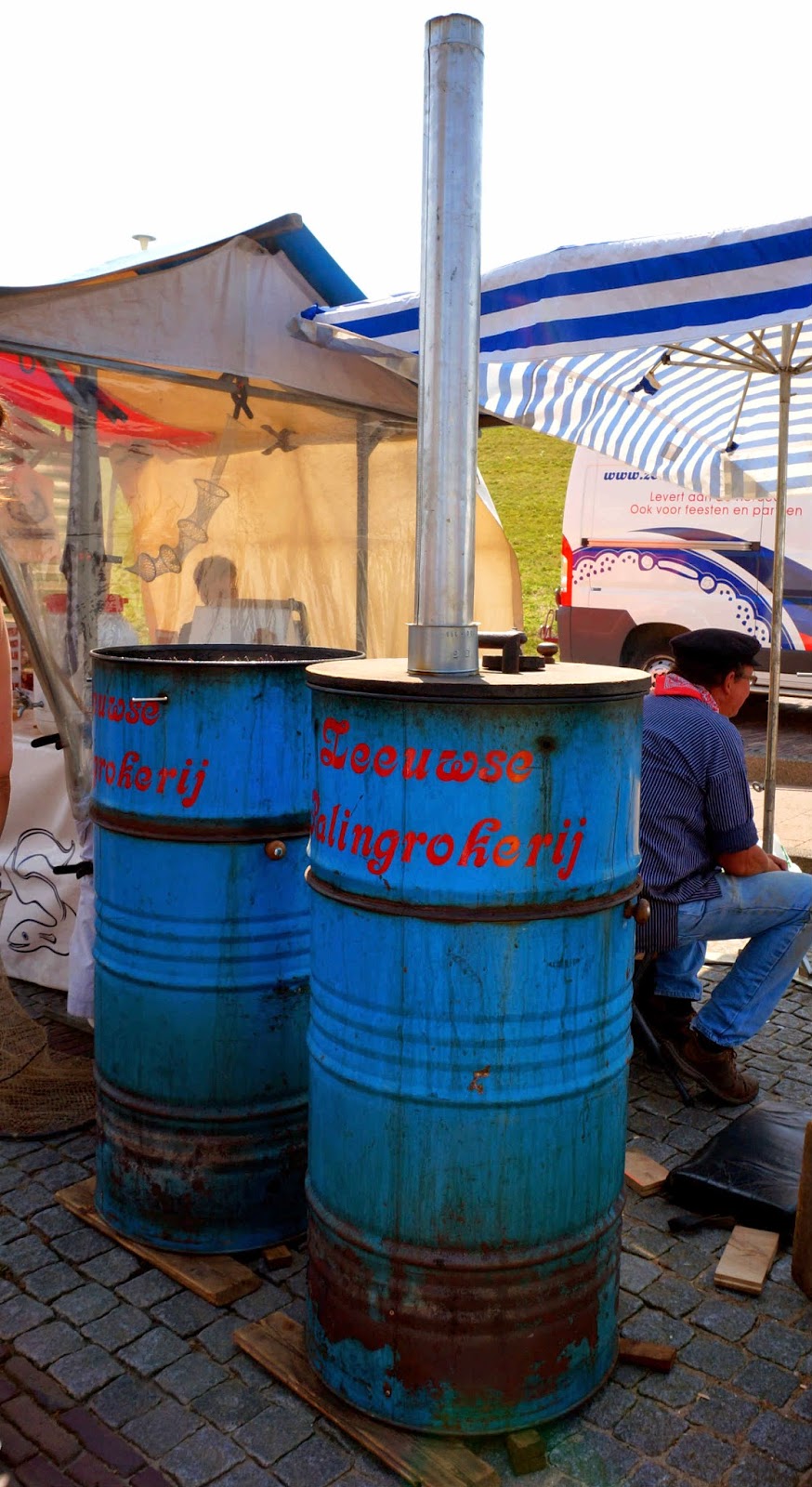
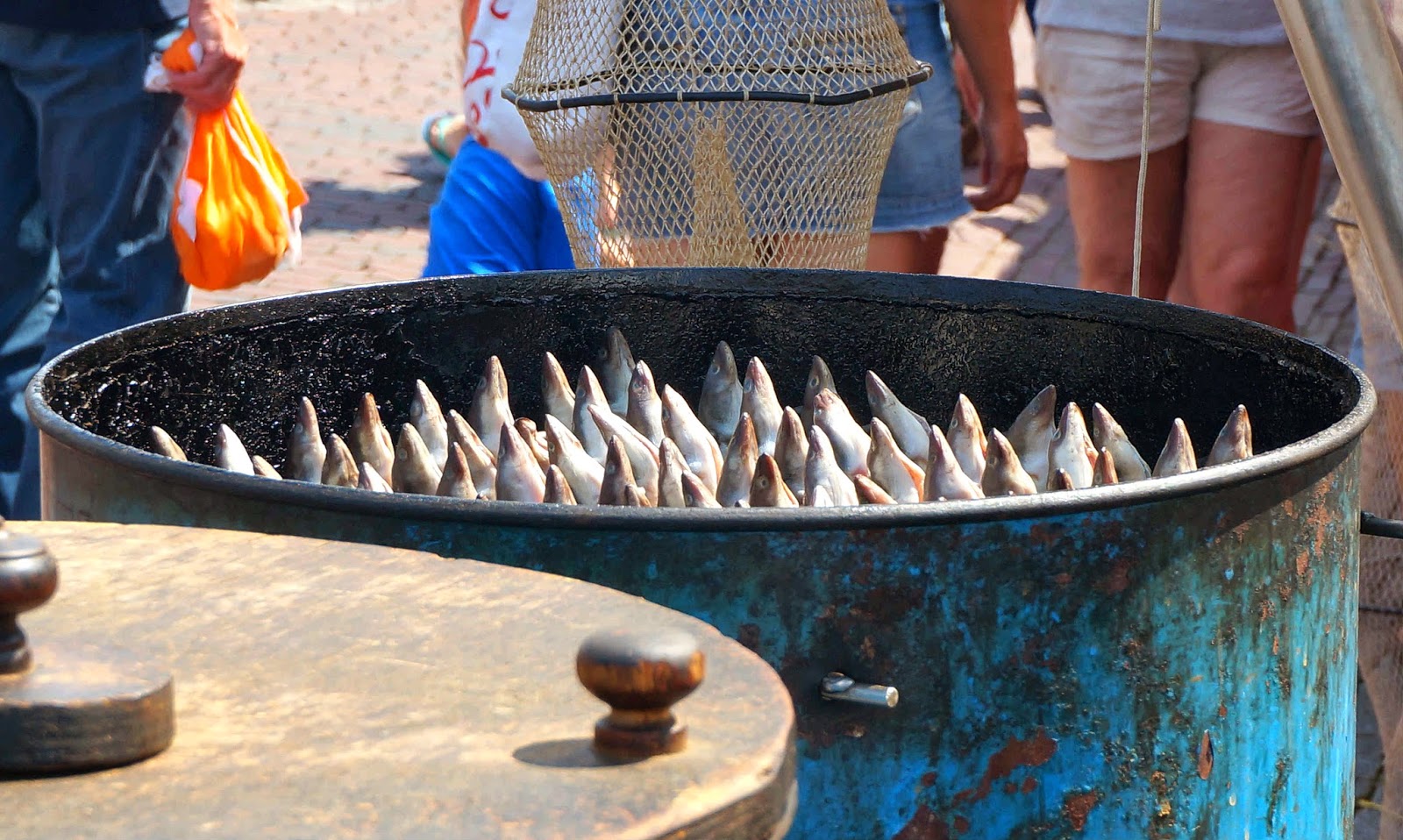
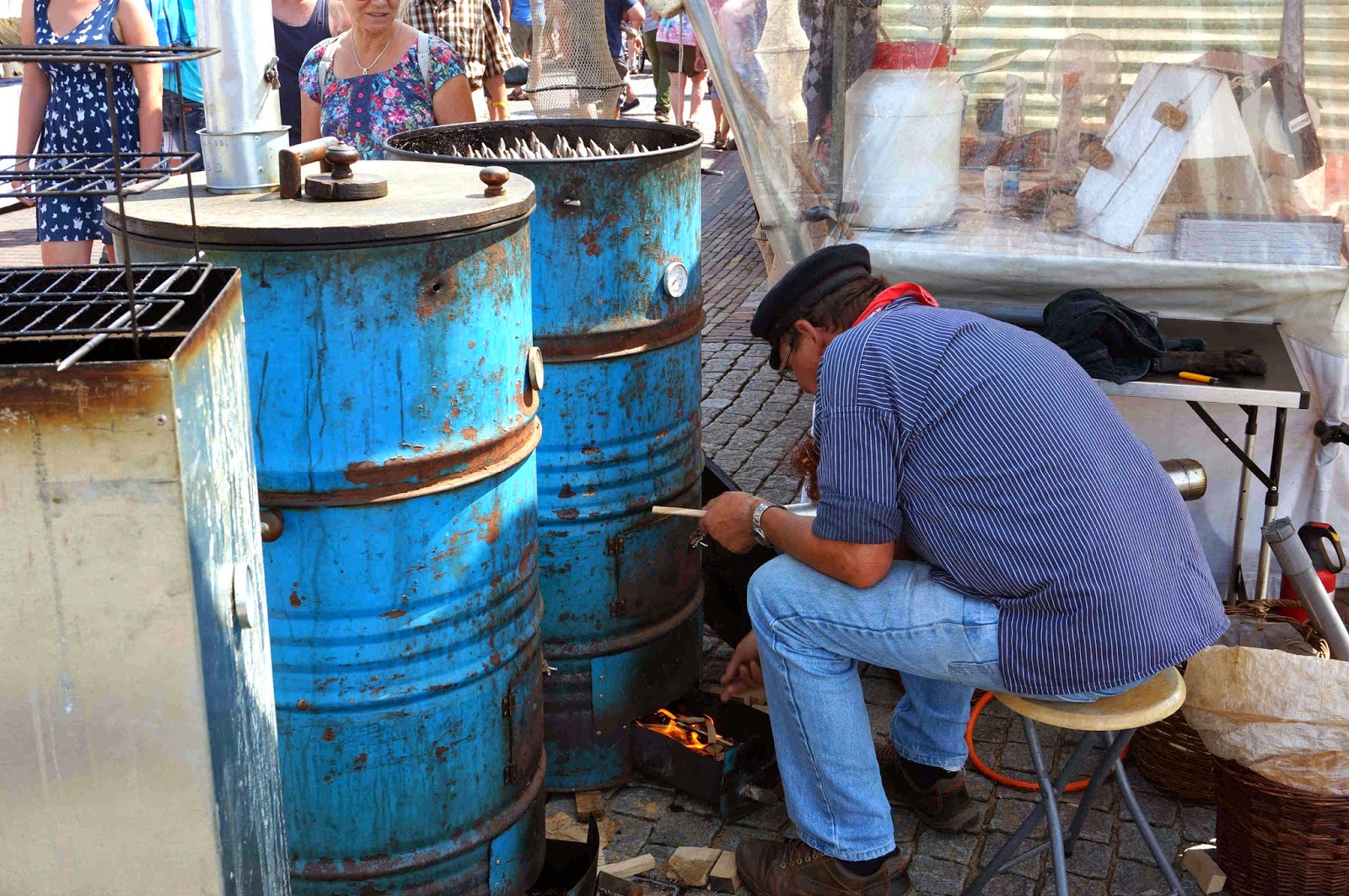
There was another booth that I found really mesmerizing, which was one where there were only two home made chairs and an old guy making a third chair. He was weaving the seating of the chair. We used to have those wicker chairs at home, not those hip modern ones or the one you put in the garden, but real classis ones. That’s why it intrigued me so much. I used to always sit on them but it never occurred to me how they were made and how much time and effort that took. And the guy was so concentrated on the weaving, for some reason it touched me. Close to that booth was a booth with different kind of cheeses, not to be missed of course, and a booth where they were ‘smoking’ (preparing food with hot smoke) eels. My grandfather also does this sometimes. It is funny how most booths reminded me of my grandparents because they either did those things or told me about their (grand)parents doing it. I have a new found respect for what they did and what our old traditions are.

Cutting the cheesy goods

Notes;

  • Seeing traditional crafts of your hometown makes you appreciate and respect your local customs more
  • These kind of markets are really touristic though
  • Putting on traditional clothes makes everything a thousand times better
  • Babbelaars are typical Zeeuws. You won’t find them in the rest of the Netherlands, let alone the rest of the world.
  • It takes a lot of work to make wooden shoes
  • Wooden shoes are heavy and uncomfy
  • Wicker chairs make me feel nostalgic
  • Yummy, cheese

I will tell you more about the market next time!

101 Things to Do in Japan

So it’s your first time going to Japan, but you don’t really know what you can do in Japan. Or it’s your 5th trip to Japan, but after visiting Kiyomizu-dera and Tokyo Tower you just don’t have any inspiration anymore. Then this is list is for you! It is inspired by my first trip to Japan, my future exchange year in Fukuoka and my never ending bucket list.

General places
  1. (Après) ski (Party) in Hokkaido
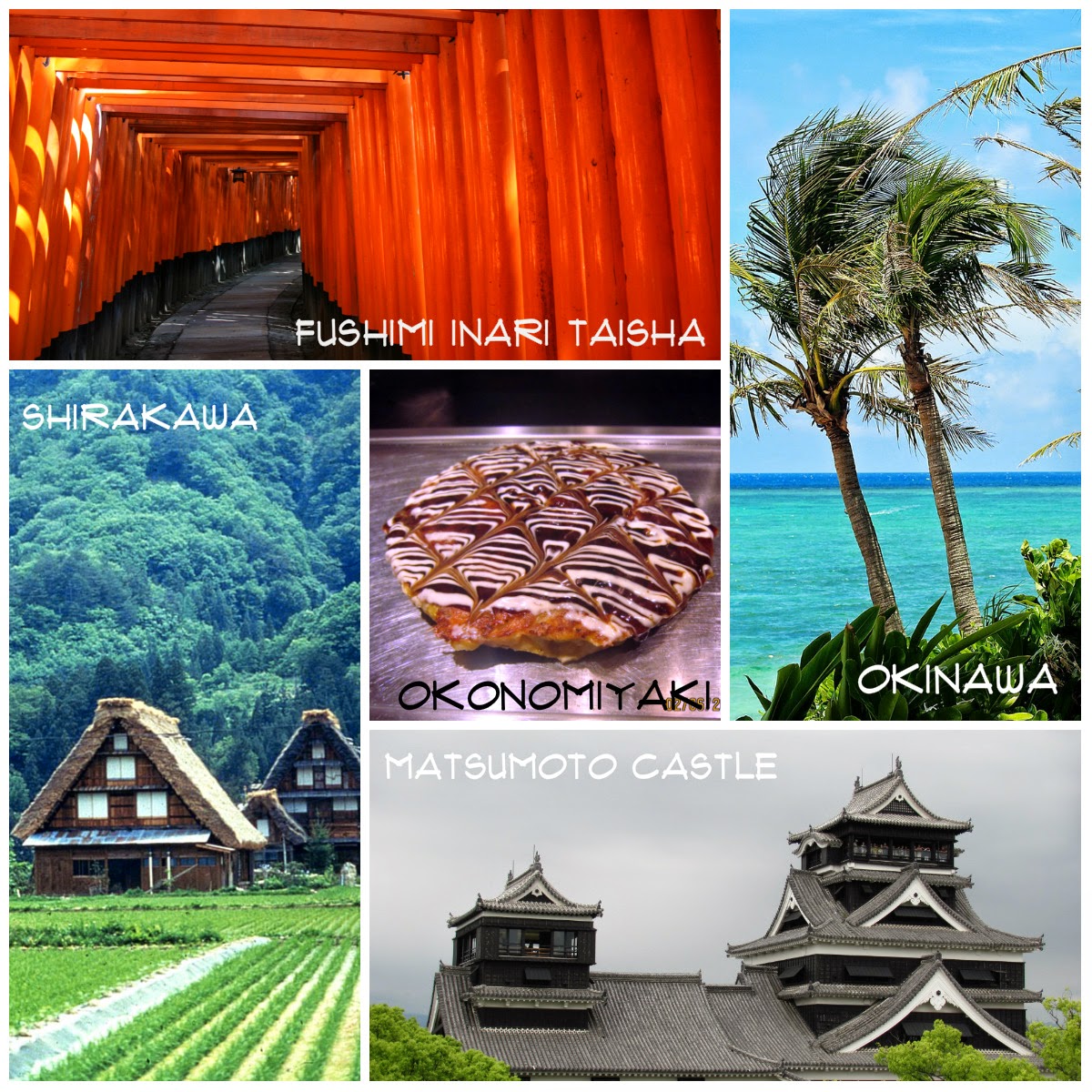
  2. Exotic getaway in Okinawa
  3. Exploring temples in Kyoto
  4. And especially make sure to visit Fushimi Inari Taisha in Fushimi
  5. Get your Chinese fix in China Town of Yokohama
  6. Crawl through the huge Buddha of Kamakura
  7. Shopping in Tokyo
  8. Eating lots in Osaka
  9. Go to historic Nara
  10. Enjoy the multicultural Nagasaki
  11. Visit Japan’s most beautiful castle in Himeji
  12. Enter the Buddhist world of Koyasan
  13. Be amazed by the black castle of Matsumoto
  14. Relive days gone by in traditional Takayama
  15. Learn about the unique architecture of Shirakawa houses
Traditional entertainment

  16. Attend a tea ceremony
  17. See a maiko or geisha dance
  18. Attend a Hanami party (cherry blossimg viewing party)
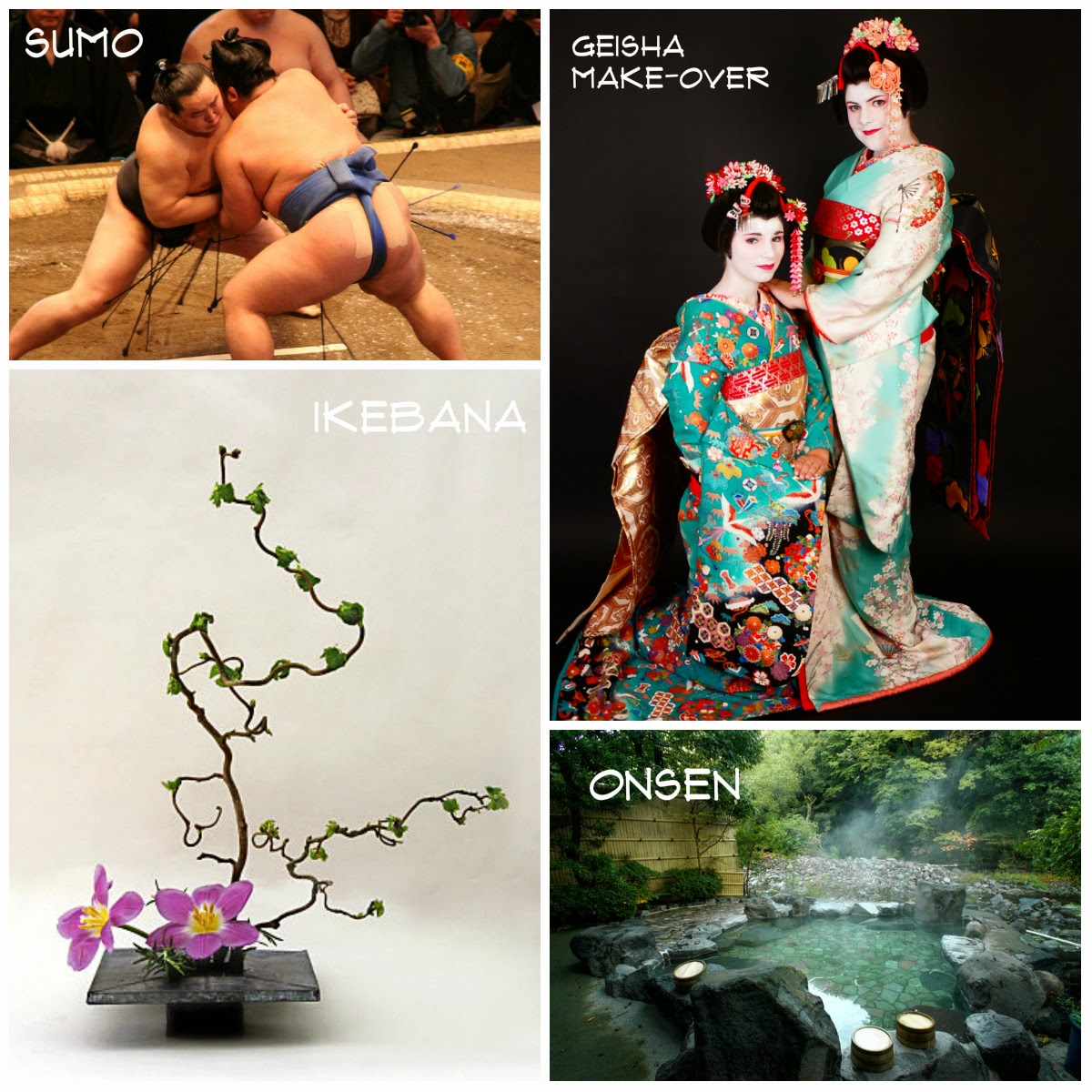
  19. Try Ikebana
  20. Relax in an Onsen (hot spring bath)
  21. Transform into a geisha
  22. Go on the 88 Temple Pilgrimage
  23. Indulgence for a Kabuki performance
  24. … and Sumo of course

Modern entertainment


  25. Sing karaoke
  26. Try your luck with a UFO-game at one of the game arcades
  28. Get creative with purikura, cute photo stickers
  29. Get your light sticks out for a Concert
  30. All-you-can-drink party at an izakaya, Japanese bar
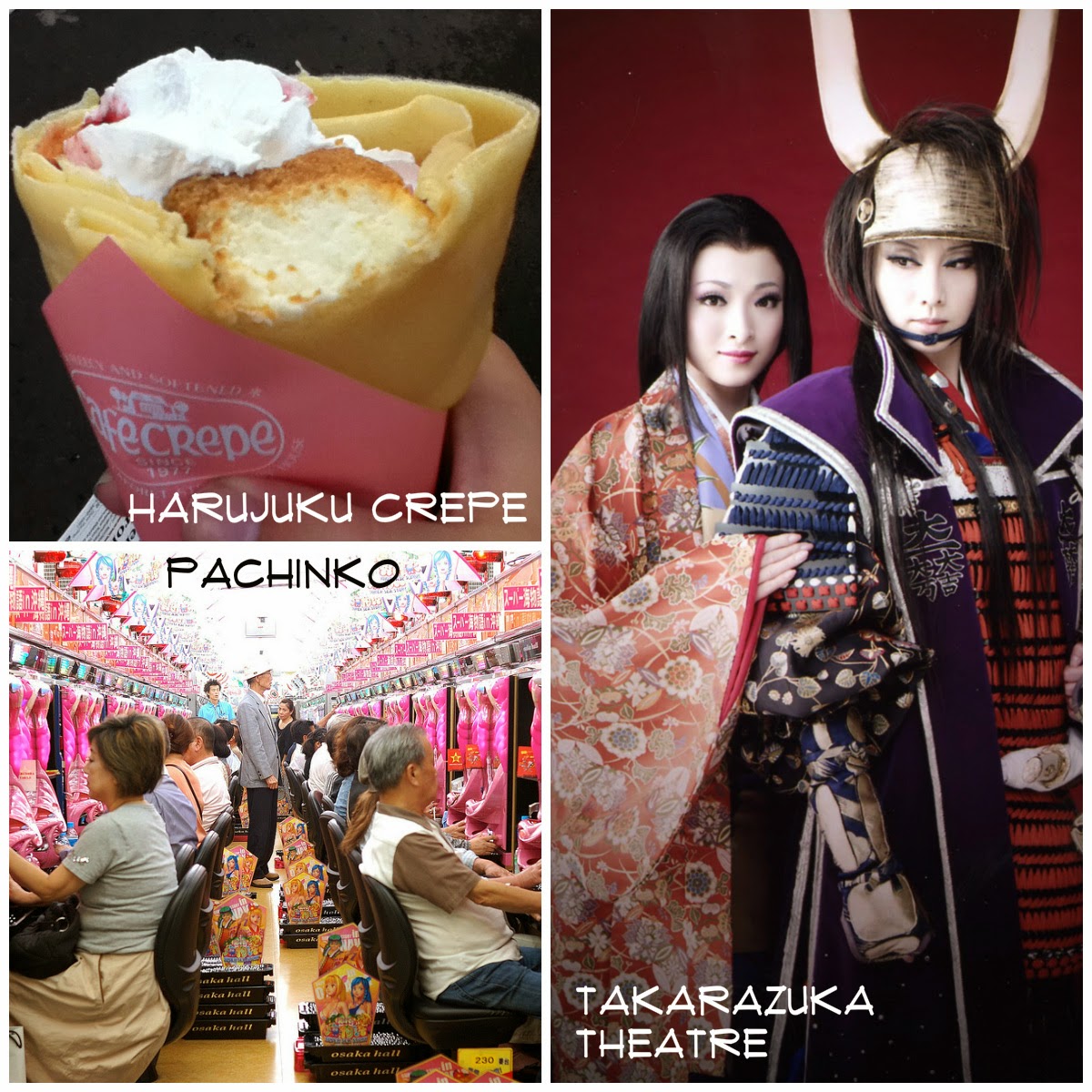
  31. Drop your jaws at the extravagant musicals of Takarazuka
  32. Eat Korean hotteok pancakes in Korea Town, Shin-Okubo
  33. Take a river cruise in Osaka or Odaiba, Tokyo
  34. Go to the 7/11 at 3AM
  35. A night out at a Host- or Hostess Club
  36. Fashionista time in Harajuku. Or eat crepes.
  37. Go deaf at a Pachinko parlor

Enjoy nature 

  38. Photograph the gorgeous colors of koyo, autumn foliage
  39. Catch some glowing fireflies or screeching cicadas
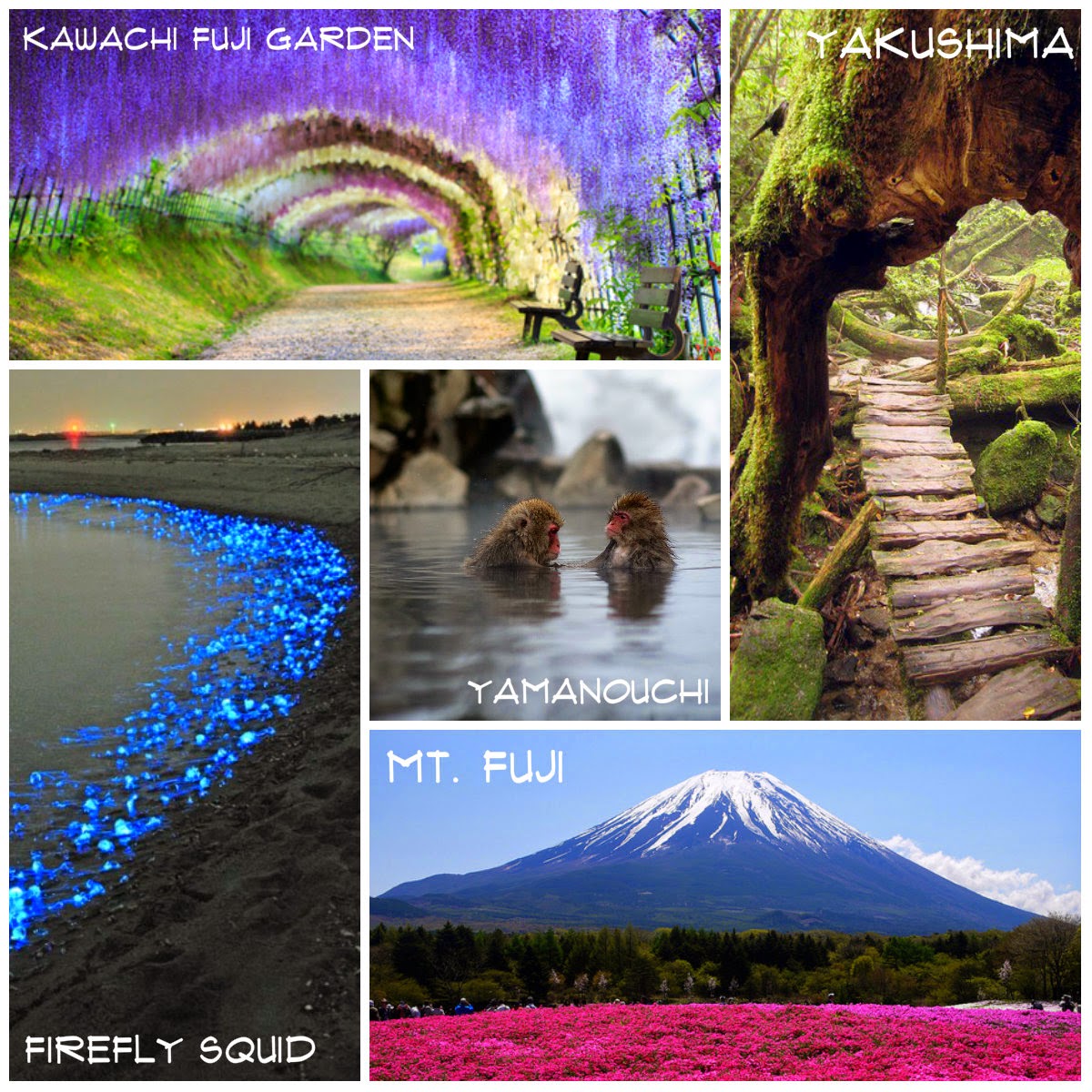
  40. Light up by watching the Firefly Squid
  41. Smell the lovely lavender of Furano in summer
  42. Explore the Gyokusendo Caves in Okinawa
  43. Gaze up at the Wisterias of Kawachi Fuji Garden
  44. Bathe with monkeys in the hot springs of Yamanouchi
  45. Climb to the top of Mount Fuji
  46. Search for princess Mononoke in Yakushima
  47. Dive the wonderful underwater world of Okinawa
  48. Enjoy the view of terraced paddy fields

Special places to eat

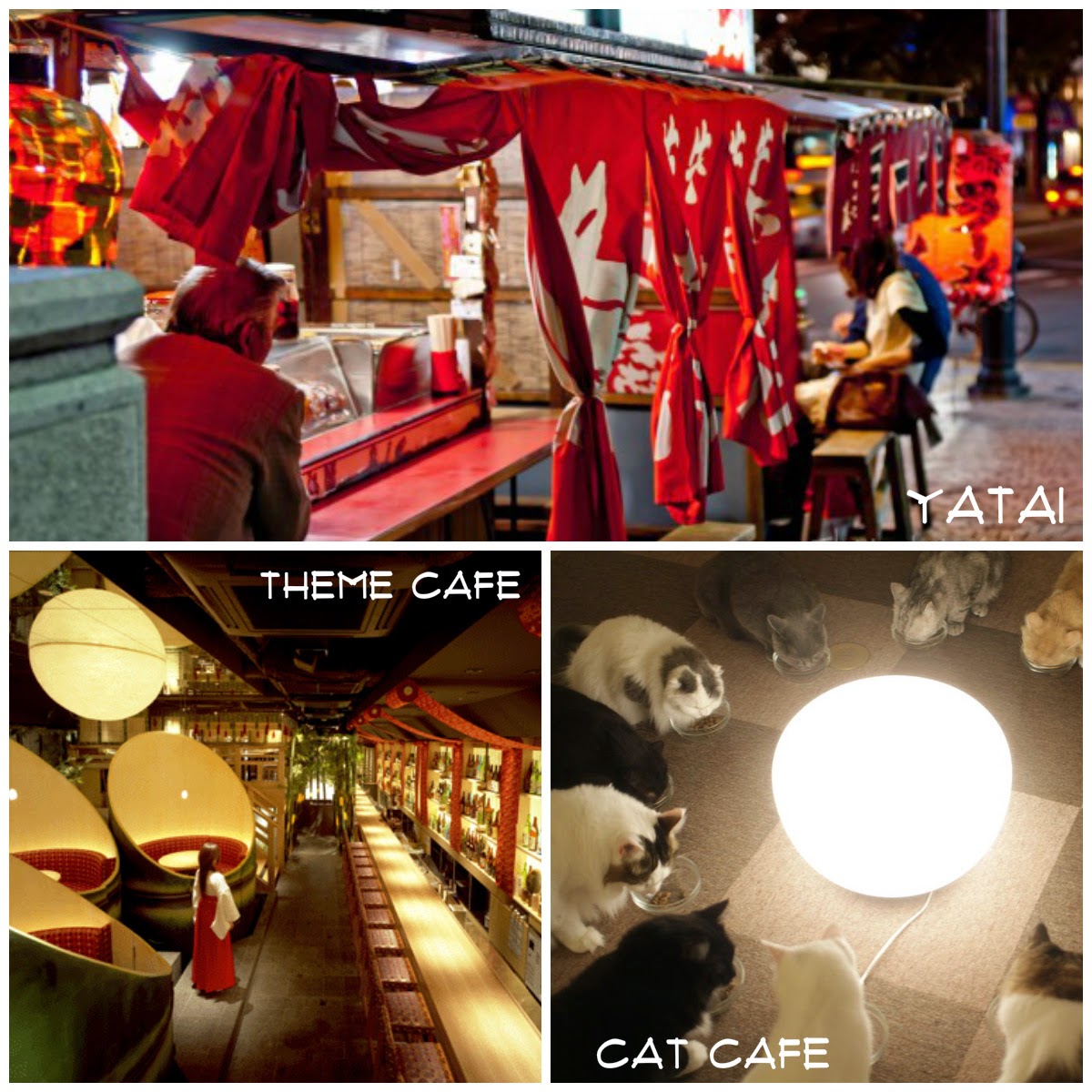
  49. Pet cute animals at a cat- dog- or owl cafe
  50. Feel like a true geek at a a geek cafe
  51. Nomming at a yatai, food stall
  52. Live a Japanese fairy tale in the theme cafe of the Bamboo Cutter
  53. Become a true Princess at the Princess theme cafe
  54. Catch your own fish at Zauo cafe
  55. Mysterious ninja restaurant, Ninja Akasaka
  56. Find your dream robot girl at Kabukicho Robot Restaurant

Festivals

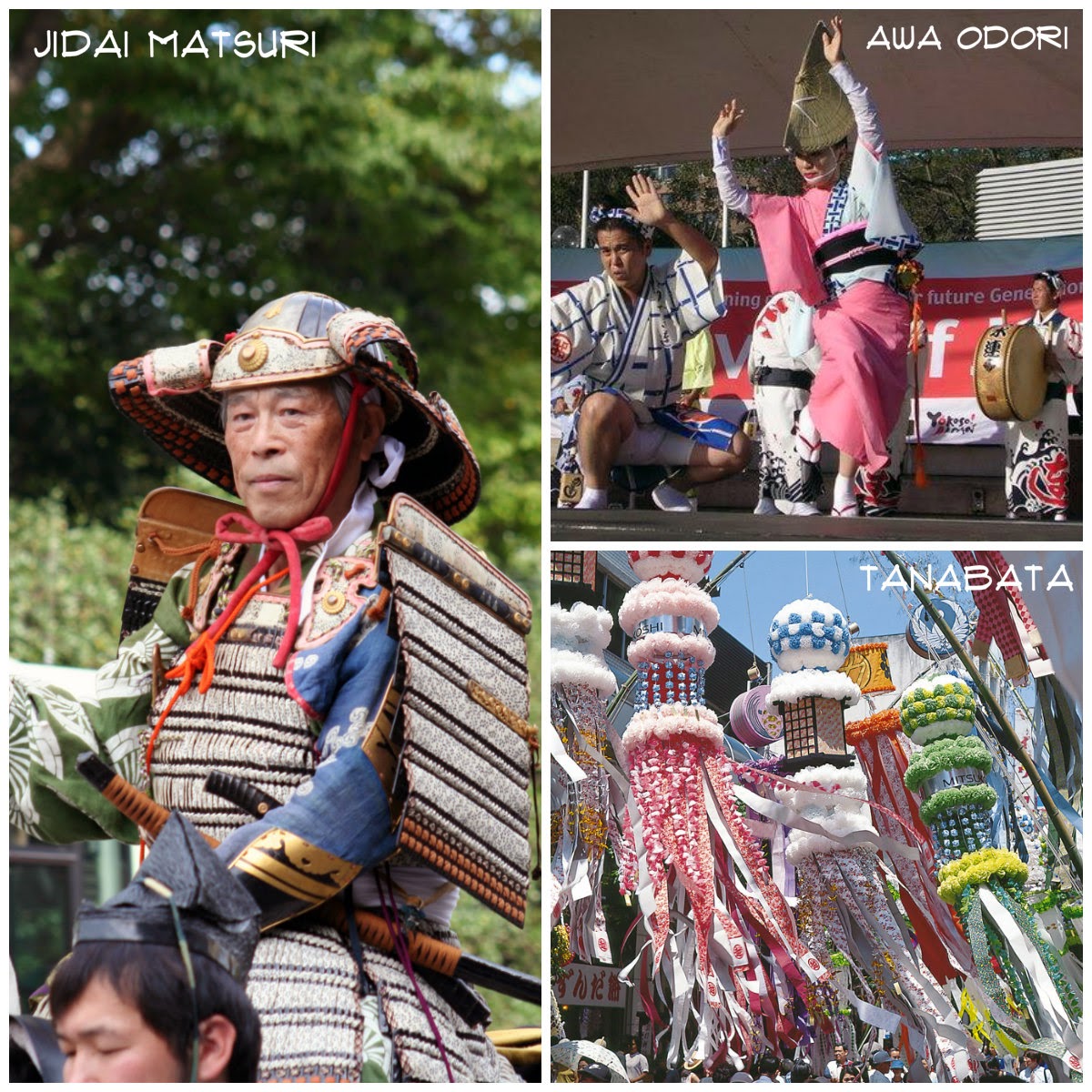
  57. Watch stars on Tanabata Star Festival
  58. Play at a matsuri (Summer Festival)
  59. Enjoy students’ creativity at a bunkasai, a cutural festival
  60. Be amazed by the snow statues of Sapporo Snow Festival
  61. Party with demons at the Oni Fireworks Festival in Hokkaido
  62. Stroll through fields of Sunflowers at Akeno Sunflower Festival
  63. See the historical parade of Jidai Matsuri
  64. Dance with the Awa Odori Dancers during Obon Matsuri

Famous sites

  65. Appreciate Japanese gardens, like Ritsurin Garden
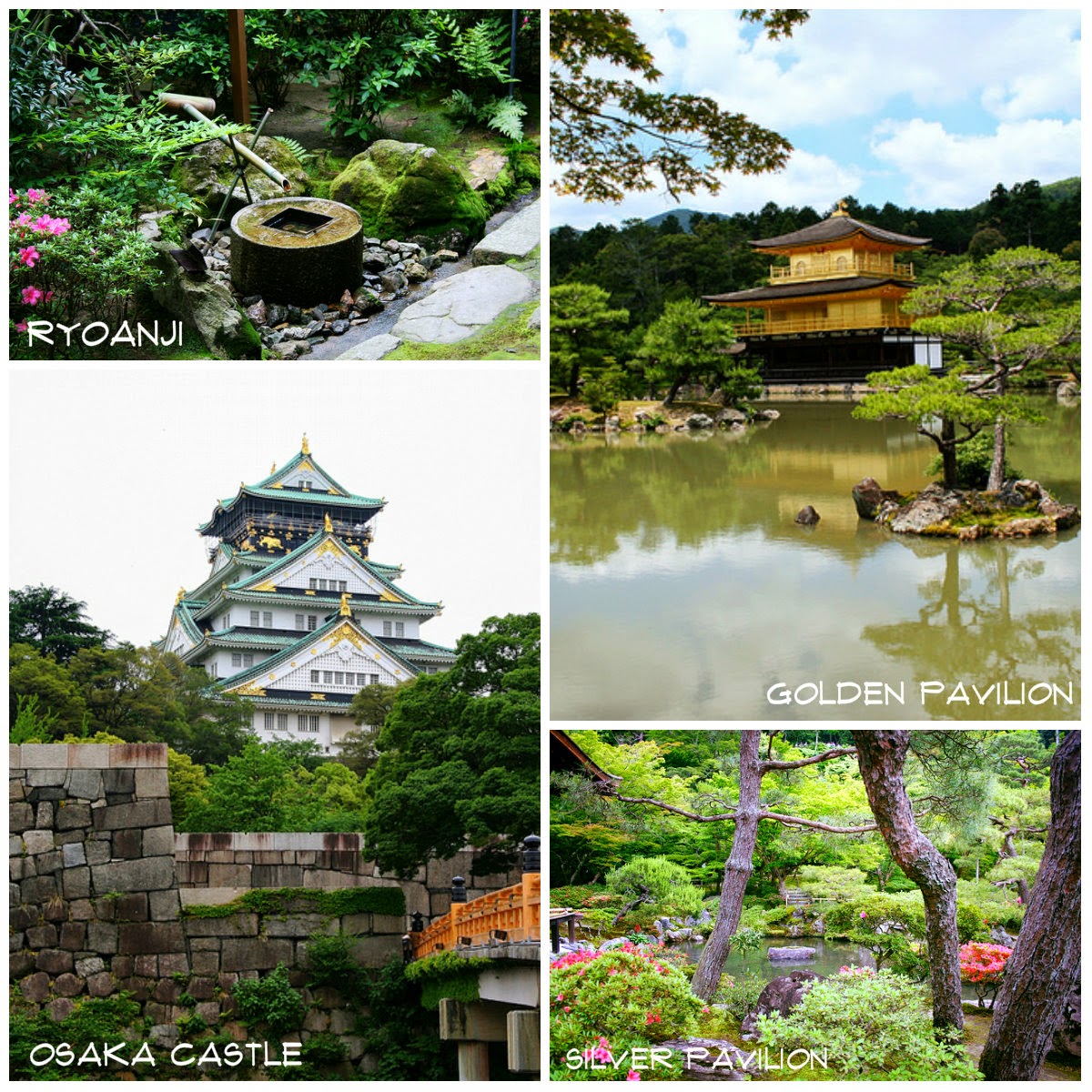
  66. Pose in front of the Golden Pavilion, Kinkakuji
  67. And visit the Silver Pavilion As Well
  68. Drink your portion of wisdom, health or longevity at Kiyomizudera
  69. Buy souvenirs at touristy Asakusa
  70. Calm down at the zen garden of Ryoanji
  71. Admire Osaka Castle
  72. Tokyo Imperial Palace
  73. Remember how lucky we are at Hiroshima Peace Memorial
  74. The largest wooden building in the world, Todaiji
  75. Oase of peace in Tokyo, Meiji Shrine
  76. Eiffel Tower’s red sister, Tokyo Tower.

Amusement parks

77. Visit Disney Sea Land, the only one worldwide
78. Feel like a ninja or geisha in Edo Wonderland
79. Get sick in one of the crazy rollercoasters of Fuji-Q Land
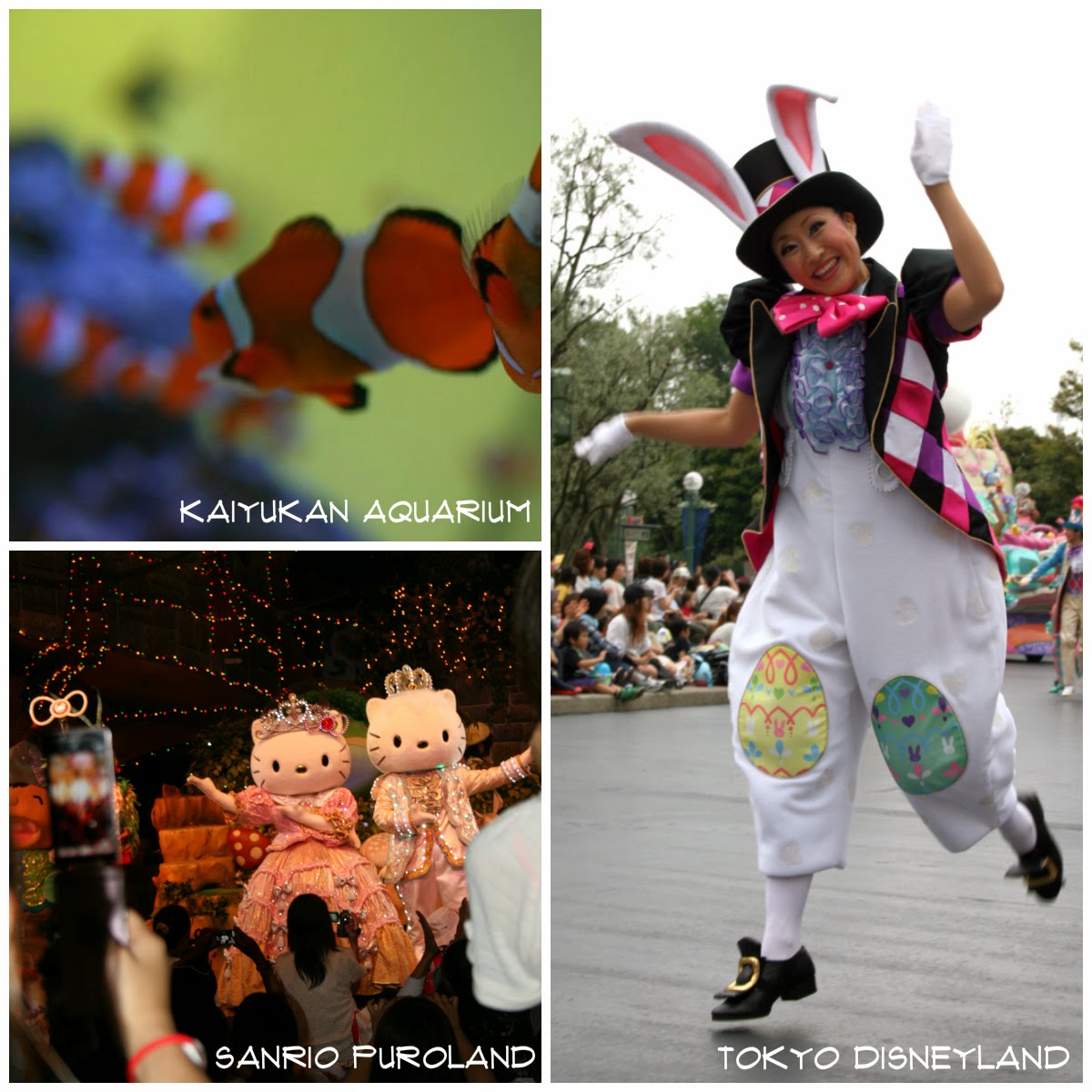
80. Watch fishies at Kaiyukan Aquarium
81. Become dizzy by the height of Tokyo Sky Tree
82. Act like a kid at Sanrio Puroland
83. Play in the first Universal Studios of Asia
84. Step into the Netherlands at Huis Ten Bosch
85. Water fun at Spa Resorts Hawaiian


Unusual places

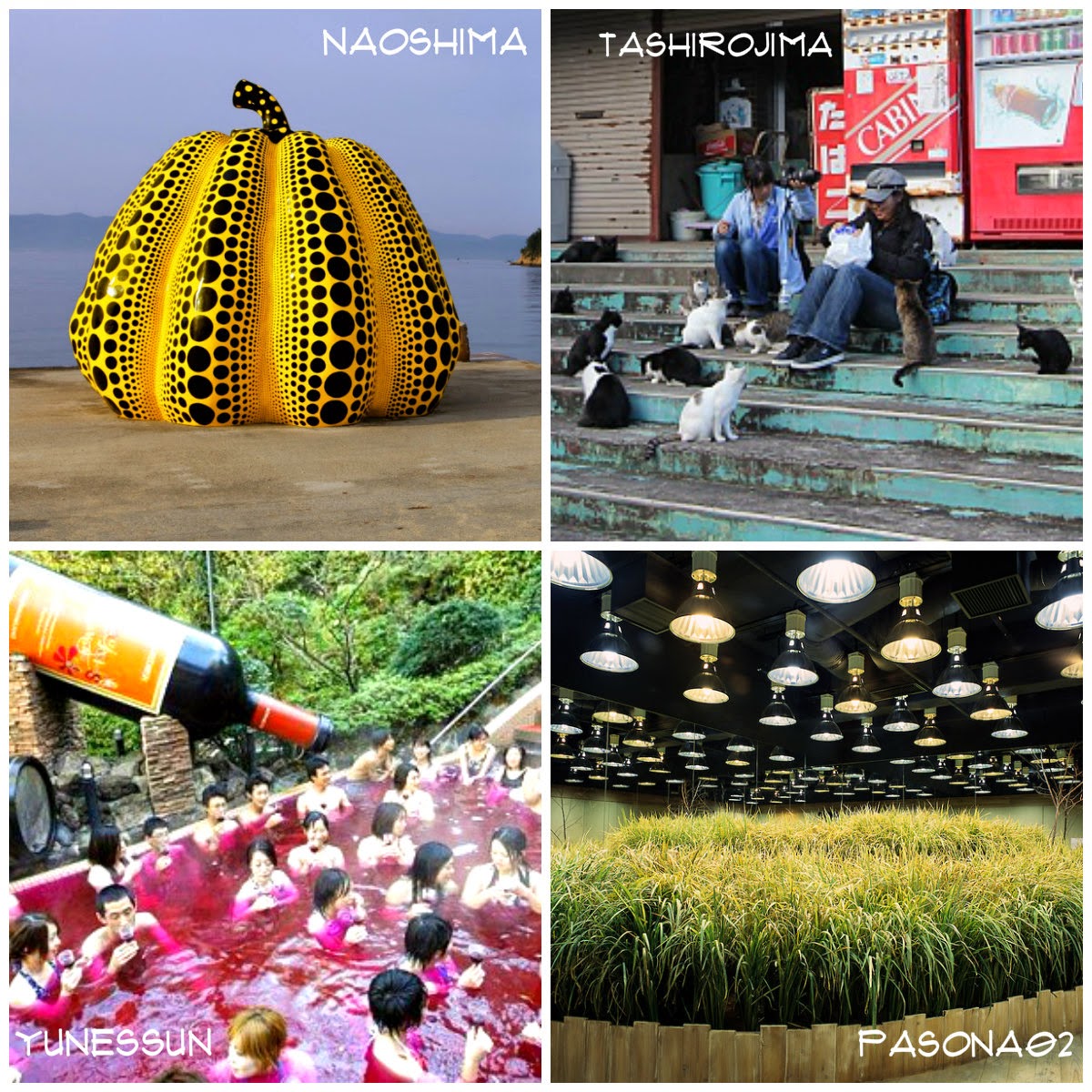
86. Paradise for cat lovers, Tashinojima
87. Naoshima, island of art
88. Eerie times at the deserted island of Hashima
89. Site of Reversible Destiny, Yoro Park
90. Yunessun Spa, refresh yourself in a hot bath of wine, tea or Ramen soup.
91. Yum,  Shin-Yokohama Ramen Museum!
92. Farming at Pasona02, an underground farm
93. Creepie doll city Nagoro
94. Meguro Parasitological Museum, for people with strong stomachs

Accomodations

95. Release your inner monk during a temple stay
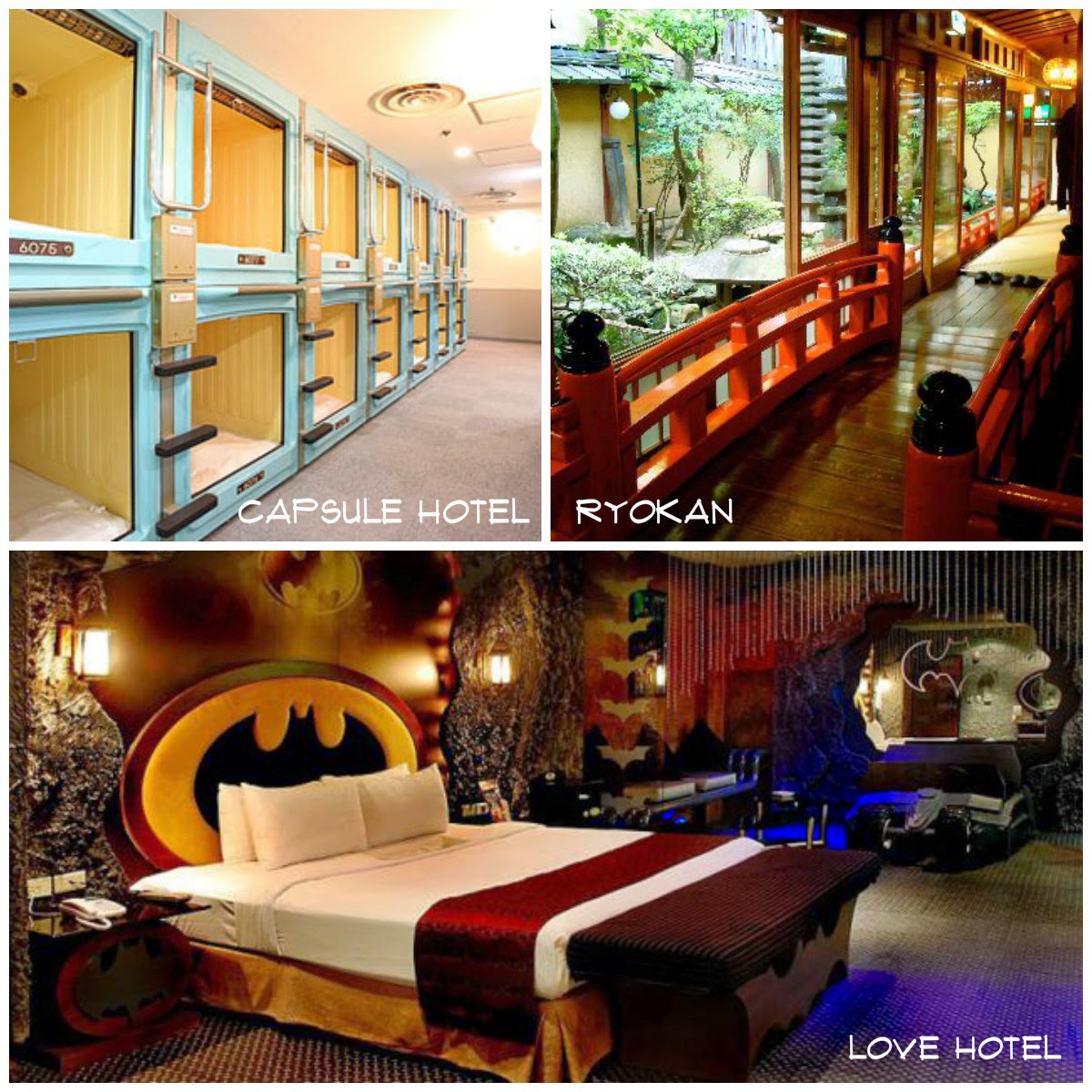
96. Get cosy and cramped in a capsule hotel
97. Feel the allure of traditional Japan while staying in a machiya
98. Treat yourself and stay at a ryokan. With private Onsen, just because you can.
99. You don’t need to be in love to enjoy the quirky love hotels
100. Go on the Cheap and spend a night in a Manga/Internet Cafe
101. Chilly stay at the Alpha Resort-Tomamu ice village